
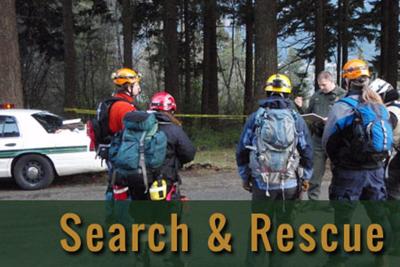
This isn’t a record year for Skamania County’s Search and Rescue, but it is an active one.
With beautiful weather becoming more frequent, Skamania County’s Sheriff Department and local Search and Rescue (SAR) teams, and volunteers, have been kept on their toes with calls for overdue or missing people. And it’s only going to get busier.
Skamania County Undersheriff Pat Bond says it’s just one of those years. “As far as Search and Rescue goes, we’re about on pace with where we were the last few years. What we’ve seen this year, this last eight week period, is a real spike in recreational accidents.”
There are two categories for SAR, “search for people, is when we’re out in the field. Overdue is when, that could be how the initial call comes in, so ‘my family member is overdue, they were hiking XYZ,’ and then we dispatch, depending on the time and how they’re prepared. Things like that,” Bond explained.
Comparing the past search year to date, January to May, in 2014 there were seven search operations launched for missing persons in Skamania County; six searches in 2015; and at last check, about 11 presently.
Overdue calls are a little more frequent. In 2014 there were about 15 overdue calls, 2015 had 26, and this year the number is up to 21.
Recreational accidents, such as fallen climbers or injured hikers, are the next category to inspect. In 2014, there were six recreational accidents the Skamania County Sheriff Department responded to, in 2015 there was only one, and year to date for 2016? So far there have been 11 recreational accidents, said Bond.
“It’s going to be busy,” said Bond, “this summer is just one of those ups and downs cycles and we’re in the cycle that says ‘get ready,’ you’re going to be going from call, to call, to call, on these types of incidents.”
Usually, those in need of a search and rescue call are from out of town. “Very rarely do we have an in county rescue for a resident,” noted Bond, “it’s very rare.” But anyone can be effected by a recreational accident, every now and then a local resident of Skamania County is on the other end of the call, noted Bond.
Looking for a missing person isn’t a free service, although SAR volunteers provide valuable time for no cost, the money comes from tax payers and federal Title III funding. “It’s paid for by everybody,” noted Bond. Skamania County’s Title III funding is a federal timber payments in lieu of logging.
The biggest cost when looking at a SAR mission recap, or a cost analysis, is air support. “A private helicopter, if we were to hire one, is $1,400 an hour,” said Bond. “The military aircraft are a lot more than that.”
Of the $126,005.77 spent during a SAR case in February of 2010, aircraft support made up for about $122,490 of it. Listed in the cost analysis for the search: $93,800 was spent on a US Navy aircraft for seven hours; two hours logged from the US Coast Guard for $26,800; and one and a half hours from a private helicopter billed $1,890.
A successful search depends on the circumstances, said Bond, but in general the majority of operations have led to finding a missing person. “We do find way more than are left out there, no question,” Bond said.
There are some circumstances where it seems like the department is looking for a needle in a hay stack, with the only information to work with being a name, and what color car the person was driving.
“We keep those cases open, in case we get additional information, or you know, the person pops up somewhere else,” said Bond. “We don’t ever close them.”
When searches are successful, Bond attributes the majority of it to volunteers. “The people that come out are invaluable,” noted Bond. “Our Search and Rescue people are, I can’t even tell you how important they are to the mission of our sheriff’s office, and all sheriff’s offices in the state. Without them, we wouldn’t be able to do it.”
Training missions are routinely conducted in areas where someone is still missing, Bond said. “It’s difficult to leave someone out there,” added Bond. “But the reality is we may not find everyone, which is a horrible thought, but there has to be some responsibility taken by the hiker, or the climber, or the kayaker, or whatever sport that have the possibility of danger, or not coming back.”
Preparation is key for meeting any unforeseen circumstance, says Bond. “The message is, just be prepared. Do your research fist, and be prepared.”
Even if you’re going for a day hike, pack extra food, water, and layers, Bond says. “The people in these search and rescues may have been going for a day-hike, then they’re out there for three days because something happened,” Bond explained. “It’s not paranoid, it’s preparation, and that’s the key- research where you’re going, tell somebody where you’re going, go with somebody, and prepare for the ‘what if.”
Over the long Memorial Day weekend Skamania County had several overdue calls, and one search involving 40 searchers. To top it off, eight cars were towed from the Dog Mountain parking lot by Washington State Police.


Commented