On Tuesday, March 26, the Francis Scott Key Bridge between Baltimore and Dundalk in Maryland collapsed into the river in a matter of seconds after a container ship lost power and struck one of its piers. Six are presumed dead.
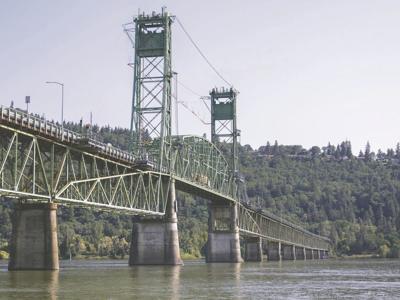
Could this sort of disaster happen to the Hood River bridge? Kevin Greenwood, executive director of the Port of Hood River, which owns and operates the bridge, explained why it’s unlikely.
Smaller vessels. Container ships, which typically weigh 100,000 to 150,000 tons, can’t traverse this part of the Columbia River because they’re limited by the Bonneville Dam and The Dalles Locks. Barges, which are much smaller at 10,000-14,000 tons, make up most of the local shipping traffic.
Redundancy systems. Barges themselves don’t have motors or a source of power. They rely on pushers and tugboats to move through the water. These vessels have redundant systems that minimize the chance of a power outage or other problems.
Warm engines. The container ship in Baltimore was just leaving the port. That’s when most issues happen, Greenwood explained, because the operators are working to get speeds and other settings dialed in. Hood River, however, is in the middle of a seven-hour leg, so engines are essentially on cruise control and issues are less likely.
Negligible damage from past collisions. Barges have struck the Hood River Bridge in the past. “It ends up causing more damage to the barge than the bridge,” Greenwood said. This is largely because the barges are comparatively small and have been empty.
What about the new bridge? Michael Shannon, director for the bridge replacement project, said the new piers on either side of the navigational channel will be 200 feet wider than the current structure. The piers will also have protective barriers to protect them from a collision.
•••
Rob Rich, vice president, Marine Services, at Shaver Transportation provided technical review for this article.



Commented