KLICKITAT CO. — A program to help Klickitat residents turn yards into rich wildlife habitat has handed out 10 certifications so far, said Corrie Podolak, project specialist at Underwood Conservation District (UCD), who took over the program this year. With an advocacy for less-neat yards and native plants, interest in the project seems to be growing.
Developed in 2021 by UCD staff and inspired by similar programs in Portland and Seattle, Yard by Yard provides a framework, free online resource, and eventual certification for habitat plots of about half an acre.
“There’s just been more and more interest in making space for wildlife in our backyard,” Podolak said.
The program could have a real conservation impact, by creating scattered islands of good habitat in rural and urban areas. “Our yards can create crucial habitat and corridors between public and private lands and ultimately create sanctuaries for wildlife in a time when they can use all of the help they can get,” Podolak explained.
It also gives agency to participants. “People can take action in their own yard,” Podolak said. “Versus, in a state, public lands we don’t have as much control over.”
Making a difference in conservation can feel daunting, Podolak pointed out, but if participants own a yard, they can do whatever they want with it. “Even a patchwork, connected ... from one yard to another, whether it’s a little bit of distance in between, it can make a really big difference for species,” she noted.
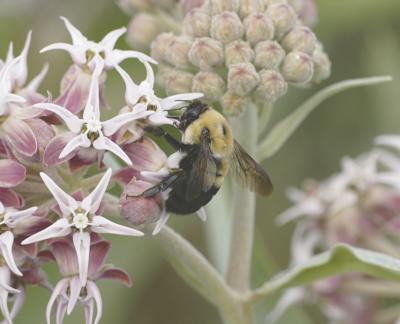
Participants can “actually watch the birds come into your backyard and see more wildlife interaction. And the native species that you’re planting, and watching them bloom,” she said.
That involves “changing our traditional view of what a yard should look like,” she said. Huge expanses of nonnative lawn grass, for instance, change to incorporate areas of leaf litter and herbs, which add organic matter, moisture, and shelter for animals and their invertebrate prey. “Messy isn’t necessarily bad,” Podolak said. “It also makes less work for you!”
In the future, Podolak would like a tiered certification program with bronze, silver and gold certifications, encouraging people to “grow” their habitat.
For now, participants download a printable checklist that covers the provisioning of soil, water, food, and habitat to native species, and information about handling problematic wildlife interactions. Gardeners eliminate pesticides and implement at least five items from the list, using their own time and money. The Yard by Yard program also provides information and assistance with planning.
That can include replacing single-species, shallow-rooted grass lawns with a more native diverse mix that helps with water infiltration, and takes less work and water; integrating rocks and snags, or having natives flowering year-round.
The participant then gets a certification, a sign to hang in the yard, and the chance to share photos with the Yard-By-Yard community.
Some concerns participants face are problematic interactions with wildlife, and occasional bias against messiness and native plants, Podolak said. So the program includes information on how to invite animals to a yard without creating dangers, like scavenging bears.
Sometimes a lack of public knowledge about native plants can be a concern.
Natives need less water, less maintenance, less fertilizer; they’re more resilient to climate fluctuations; and they already host complex, symbiotic interactions with local wildlife, Podolak said, making them vital to the program.
For instance, oaks are one of the biggest hosts for native moth and butterfly caterpillars — food for hungry birds.
“I don’t think that you should say nonnative species are bad, but I think it’s having a combination of the two is much more beneficial,” Podolak noted.
As the program’s funding grows, people seem more interested this year than ever. “Once people know about it, I think they can get really excited,” Podolak said. “It can be really fun to watch the wildlife come in.”



Commented
Sorry, there are no recent results for popular commented articles.