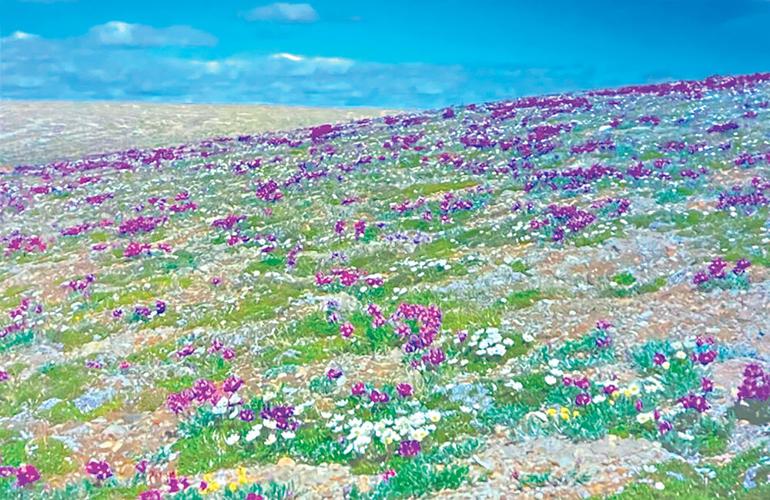
The tundra is filled with bright flowers for its six-week summer. Pedicularis are an example of Arctic plants growing “fur” to protect themselves from the cold and wind.
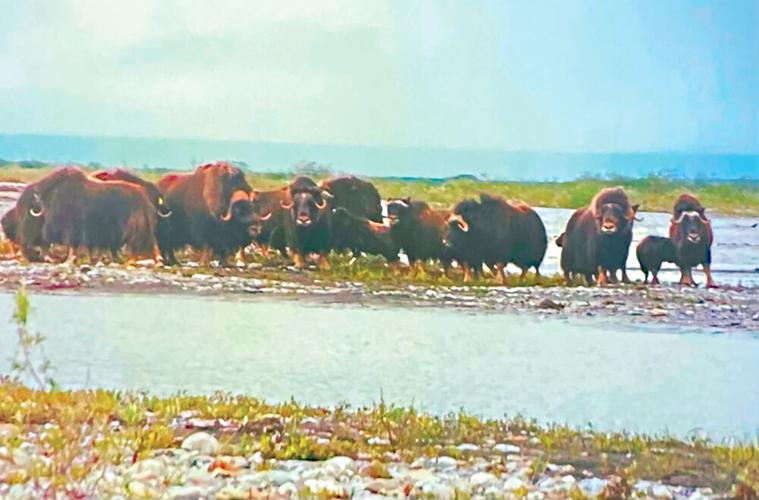
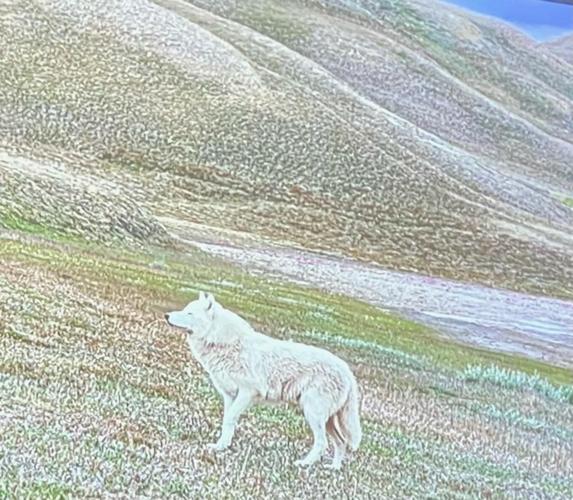
Musk ox, like those pictured above, and curious wolves come visiting.
Joan Chantler photo
The tundra is filled with bright flowers for its six-week summer. Pedicularis are an example of Arctic plants growing “fur” to protect themselves from the cold and wind.
WHITE SALMON — Wild About Nature is organized by Joy Markgraf, and sponsored by the White Salmon Community Library. The series returns next April.
As Far North as You Can Paddle: Banks Island, NWT Flora and Fauna
Banks Island has no bears and few people. Veronica Wisniewski arrived by bush plane and paddled to 74 degrees north, which is as far north as it is possible to paddle. The island appears barren from the air, and filled with strange geometric shapes called tundra polygons.
Seen from the ground, the tundra is not barren, but alive. There are miniature colorful flowers and shrubs, including willow “trees” only inches high. Everything is in miniature because the growing season only lasts six weeks, the island only receives six inches of rain a year, and the soil is not fertile.
Why would some spots on the island have more vibrant growth? One cause was Inuit camps where game was processed. The blood from animals provided nutrients that nourished the flowers.
Banks Island History: In the mid-1800s the search was on for the Northwest Passage that would link Europe to China through the Arctic, Franklin’s lost expedition was a failed British voyage to find that Northwest Passage. The McClure Arctic expedition was trying to find the missing Franklin expedition. McClure’s ship locked into the sea ice in north Banks Island. The Copper Inuit made many trips to the abandoned ship to salvage highly prized metals and materials.
Flora and Fauna: While the island has miniature flora, some fauna is large: Caribou, musk ox, and wolves. Musk ox numbers on Banks Island have varied from almost none to a peak of 65,000 in 2001, which was more than half of the world’s population at the time. They are now at 10,000, having been reduced by disease. The Peary caribou population was down to 435 and has recovered to around 1,000. During her stay, Wisniewski observed several pair of wolves and found them to be as curious about her as she was about them.
Natural History of the Kodiak Island Ice Age Refugium
Adventurer and professor Eric DeChine, of Western Washington University, documented the plants in special areas called refugiums. A refugium is a sheltered place where organisms can survive an ice age. Kodiak Island had such refuges during the last ice age, about 20,000 years ago. Kodiak Island, Alaska is the second largest island in the United States, Hawaii being the largest. A wildlife refuge encompasses two thirds of the island. Nicknamed the Emerald Island, it gets about 80 inches of rainfall and life flourishes here.
Whose big feet are these?
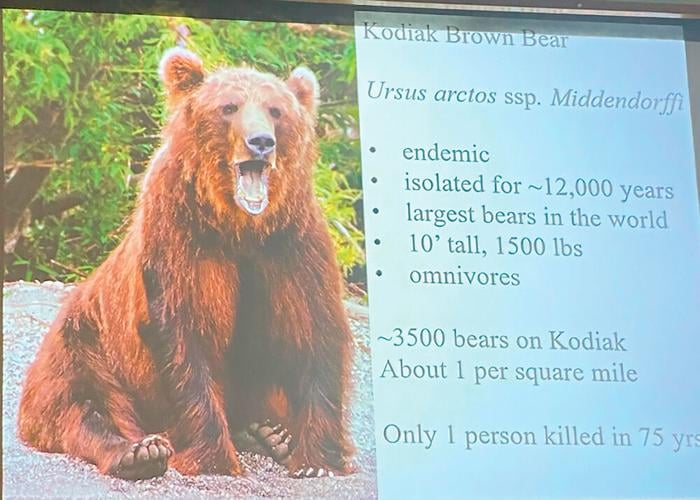
On a ridgetop, DeChine and his companion noticed strange footprints which sank down to the bedrock and showed long strides. They were not alone. They were sharing the island with the highest density of the biggest bears in the US — Kodiak Brown Bears (grizzlies).
Kodiak bears, isolated for 12,000 years on Kodiak Island, evolved to be the world’s largest bears.
Photo courtesy Joan Chantler
“Don’t set up your tent on a bear trail,” is great backcountry advice. However, that is impossible on Kodiak Island as bear trails crisscross the island.
While there, a bear rose up out of the grass right next to their tent. The encounter was startling but peaceful.
Bears perform the important function of bringing nutrients from the sea to the forest. They drag salmon into the woods and eat only the richest, fattest parts. The rest decays into the soil and helps the forest flourish. Given the choice, bears prefer red elderberries over Salmon as they have more calories. Harvest used to be conveniently staggered so that elderberries filled a gap between salmon runs. With climate change, the elderberry harvest and the fall salmon run come at the same time, leaving a summer gap.
Alaska has introduced mountain goats along with Sitka black tailed deer, elk, caribou, and beaver to Kodiak Island, despite the fact that they were never there historically. This was done to provide game for hunters, and, unintentionally, for the Kodiak bears.
Land Bridge, Human Bridges Broken
DeChine was once involved with projects in cooperation with Russian counterparts. Plants reached across the ice age Bering Land Bridge, now sea covered. We still share flora with Siberia. (Once can actually see Russia from the westernmost parts of Alaska.) Since the invasion of Ukraine, that cooperation with Russia is now broken. The group has shifted to working with indigenous populations.
For those interested in learning more see the books The Kodiak Island Refugium by Thor N.V. Karlstrom, and for Alaskan grizzlies Lonesome for Bears by local author Linda Jo Hunter .
A trip to the Chinese Himalayas is next on DeChine’s agenda. He promises to come back next year with new stories to tell.



Commented