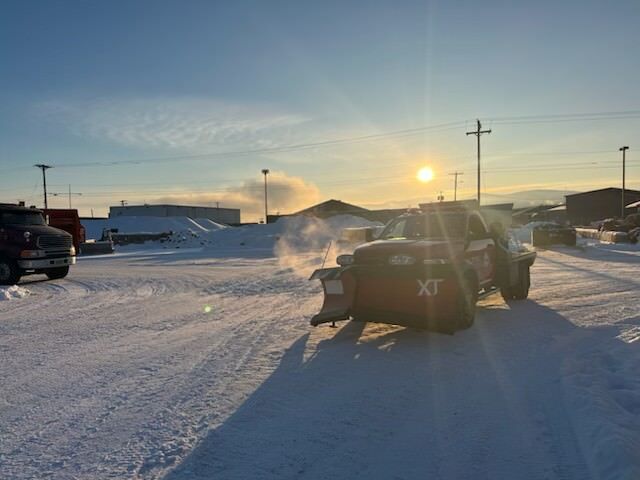
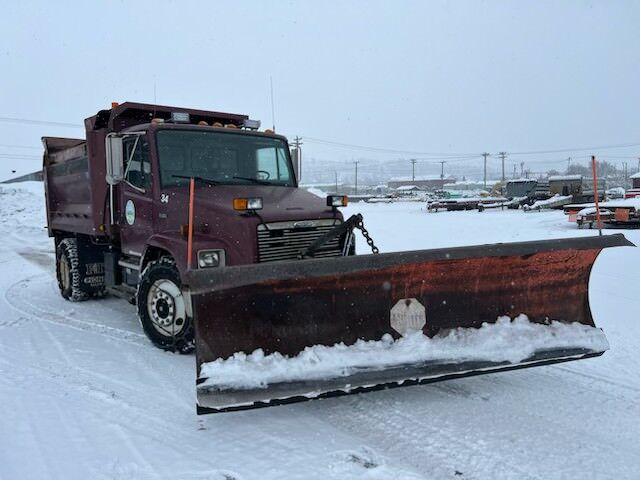
The Dalles Public Works' transportation division worked 24 hours a day to plow the roads during the two weeks during and immediately after the winter storm.
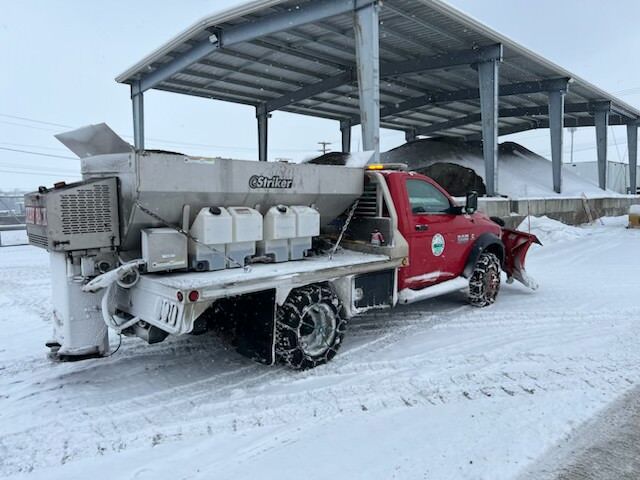
The Dalles Public Works' transportation division worked 24 hours a day to plow the roads during the two weeks during and immediately after the winter storm.
The Dalles Public Works' transportation division worked 24 hours a day to plow the roads during the two weeks during and immediately after the winter storm.
The Dalles Public Works' transportation division worked 24 hours a day to plow the roads during the two weeks during and immediately after the winter storm.
The Dalles Public Works' transportation division worked 24 hours a day to plow the roads during the two weeks during and immediately after the winter storm.
The Dalles Public Works' transportation division worked 24 hours a day to plow the roads during the two weeks during and immediately after the winter storm.
THE DALLES — Things are finally starting to return to normal following January’s winter storm. Kids are back in school, adults are back in the office and those working at The Dalles Public Works Department are finally able to take a breather.
Ever since the storm began, The Dalles Public Works has been working 24 hours a day to keep roads as clear as possible. It’s been two weeks of straight plowing, grating and sanding for the transportation division, which is made up of eight operators and one manager, split between day and night shifts.
“Our transportation division has been on day and night shifts since Friday the 12th,” Public Works Director Dave Anderson said. “And most of those have been 12-hour shifts with one half the crew working the night shift and the other half the crew working a day shift. So they’ve been pretty busy. They haven’t had a day off since that Friday.”
Friday Jan. 26, marked the first day in two weeks when public works employees returned to eight-hour shifts. Saturday and Sunday marked their first days off since the storm started.
Managing the roads of a city during a storm requires a lot of planning, Anderson said. When it comes to plowing in particular, they'd have three plows and one grader going at a time and tackle the roads according to their winter weather response plan, which is available online at thedalles.org/department/public_works/public_works_divisions/transportation.php.
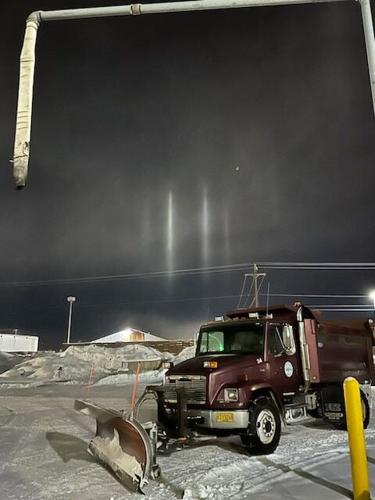
The Dalles Public Works' transportation division worked 24 hours a day to plow the roads during the two weeks during and immediately after the winter storm.
Photo courtesy The Dalles Public Works Department
The response plan includes four main phases, which can vary depending on the severity and length of a storm. Phase one takes place while the storm is ongoing. The city focuses on sanding, deicing and plow intersections at stop signs and stop lights on arterials, defined as the primary roadway network within a region, usually with high traffic volume and minimal local activity. Steep north / south arterials take priority, as do school bus snow routes.
“The reality is we do have a limited amount of equipment, we have a limited amount of people,” Anderson said. “This is a series of storms that went on for a while, and we’d get things kind of pretty well cleaned up and then we’d get another significant dumping of snow and kind of have to start back over again.”
After the storm ends, the city crews enter phase two, where they will start sanding, deicing and plowing “collectors,” which are the streets connecting local neighborhoods or district traffic to the arterials. These usually have medium traffic volume. They will also focus on steep streets that would be hazardous without sanding, deicing or plowing. To be steep, a street must have grades in excess of 5%. School bus routes are once again prioritized if school is in session.
It’s also worth noting that throughout all phases of the plan, sidewalks aren’t the responsibility of public works. It falls to the owner of the adjacent property to keep them clear and shoveled.
After phases one and two are completed, in phase three the city will focus on local streets, including neighborhoods and requests from citizens needing sanding, plowing or deicing. They will also restore parking along curb lines in the downtown area.
Local streets in particular can often be a point of contention, with people wondering why their neighborhoods aren’t plowed, or being frustrated that their driveways are blocked by snow from the plows.
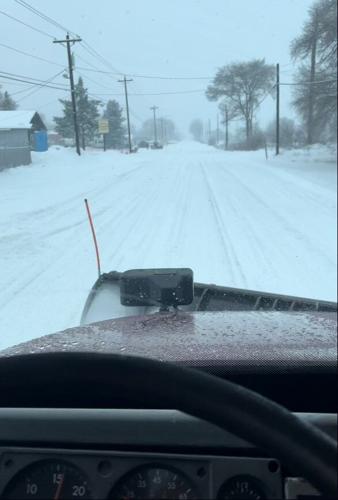
The Dalles Public Works' transportation division worked 24 hours a day to plow the roads during the two weeks during and immediately after the winter storm.
Photo courtesy The Dalles Public Works Department
“It’s a priority for us, it’s just the third level of priority,” Anderson said of plowing the local streets. “There’s also a real challenge when we get into those neighborhoods and that if we go in and plow those streets, we’re usually creating a berm with that snow that’s being plowed off the street and that makes it difficult to get out with your cars and blocks in driveways and things like that. So we’ll have people calling and wanting us to come down their street, and we’ll have their neighbors calling and asking us not to come plow the street anymore, because they have their driveway all cleared out and don’t want to have to start over again.”
Finally, there’s phase four. Unlike the other phases, phase four isn’t sequential. It's only activated when snow depth and weather conditions are extreme, and often has to happen before phases one and two. It includes loading snow from the downtown area into trucks and physically packing it away.
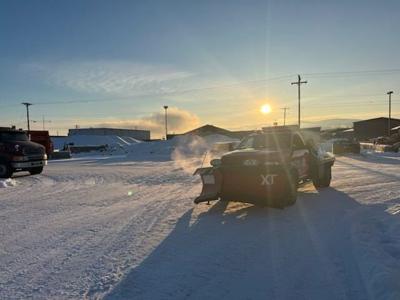
The Dalles Public Works' transportation division worked 24 hours a day to plow the roads during the two weeks during and immediately after the winter storm.
Photo courtesy The Dalles Public Works Department
To keep up with the weather with their limited staff, Anderson said they’ve gotten help from the water and wastewater collection divisions, particularly for phase four.
“We have added staffing from our water distribution and wastewater collection divisions go down to our downtown area at night and actually load up the snow and haul it away from the downtown area so that we could have the streets and the parking lanes clear,” Anderson said. “We aren’t just piling the snow there and adding to those piles that are along the roadways. We’ve been actually hauling it out of the downtown area.”
According to Anderson, they have a few locations where they take the snow, including an area behind the public swimming pool that the Parks and Recreation District allows them to use and Riverfront Park, which is closed to public use this time of year.
“It’s pretty labor intensive to do, to scoop it all up and put it in a dump truck and haul it away,” Anderson said. “And we’ll be running two or three trucks at a time. It’s a fair amount of effort.”
Even now, as the winter weather wraps up, Anderson and his team aren’t done yet. As the snow melts, they’ll be dealing with the runoff, and then they’ll sweep up all the sand and gravel they put on the streets to be cleaned, screened and potentially reused. They are often able to reclaim about 60% of the sand they put out, he said.
The Dalles Public Works' transportation division worked 24 hours a day to plow the roads during the two weeks during and immediately after the winter storm.
Photo courtesy The Dalles Public Works Department
For now, they can take a moment to sit back and reflect on the work that was done during the storm. Though it can get frustrating when the weather is bad, Anderson said he hopes people can understand that public works is a small team doing their best.
“We appreciate people being able to be patient,” he said. “We don’t control the weather. We’re just trying to respond to it too.”
He also encouraged people to do their best to be prepared and equip their vehicles properly.
“All of these efforts and the tools that we have to try to improve the conditions during a storm event, they certainly do not completely replace the use of appropriate traction tires or traction devices,” Anderson said. “We’re not going to be able to, immediately after a snowstorm, restore streets to dry clear pavement status. Careful driving and properly equipping vehicles is really important.”





Commented