
A subscriber’s recent call about undelivered issues of the Columbia Gorge News revealed something much more: The subscriber’s mail had been forwarded without his knowledge or permission.
The subscriber, who lives in Hood River County and asked that his name not be used, called the News last month saying he hadn’t been getting his paper.
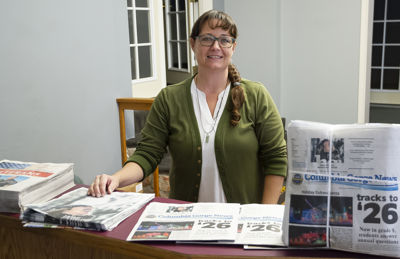
News Circulation Manager Tanya Lindsey quickly looked into it, calling a postal distribution center in Hood River. She learned his mail had been forwarded.
This was news to the subscriber. But it explained why he hadn’t gotten his first paycheck from his new job, or the second one they sent to replace it.
The subscriber was grateful to the News for taking his complaint seriously and looking into it. “She’s my hero,” the subscriber said of Lindsey.
Lindsey said she was “just doing my job.” But she added the subscriber “almost brought me to tears. He said, ‘I’m so appreciative to you for doing it.’ I just told him I was glad I was able to help and wished him the best.”
The forwarding was done online. It used the subscriber’s legal name, which he rarely uses, and it sent his mail to a small town in Wisconsin called Little Chute. It was a temporary forward, from Nov. 10 through Jan. 23.
There were lots of odd aspects to the mail getting forwarded. Lindsey said third class mail like newspapers isn’t even supposed to be forwarded.
And the subscriber said some mail that should’ve been forwarded wasn’t, like a batch of checks that he’d ordered. He’d closed that bank account because of the fraudulent forwarding, and was grateful to U.S. Bank for quickly agreeing to send him a new batch of checks for his new account for free.
He also found on a subsequent call to the post office that a stop order on the forwarding apparently hadn’t actually gone into effect, meaning mail was still being forwarded. A staffer there put in a second stop order just to be safe, he said.
All along he’d still been getting some mail, and so was his wife, “so it wasn’t really suspicious.”
When Lindsey told him his mail had been forwarded, his reaction was, “What the hell? I don’t know anyone in Wisconsin. I’ve never lived there. I was just like, wow, I can’t believe this is happening.”
The postal inspection service was alerted, and the mail at the Wisconsin address was going to be impounded and sent to the Hood River Post Office. (It ended up being sent directly to the subscriber.)
He said he was told that some other mail was also being forwarded to that same address. “So they caught a few other fish as well.”
“The postmaster at the Hood River Post Office was very helpful and professional,” he said.
The subscriber said the bigger issue was how easy it is to forward his mail “without any sort of identifying data or need to prove that they were me.”
Forwarding can be done in person at the post office, by dropping a change of address card in your mailbox, or online, where a $1 payment is required from a credit card.
The subscriber said he talked to someone at the post office who didn’t seem surprised and told him they’d heard of this happening before.
But Ernie Swanson, a communications specialist for the U.S. Postal Service, said, “I think it’s very rare. I’ve only heard of it happening once or twice before.”
Swanson said, “Apparently the person put in the fraudulent change of address order via the internet. It’s difficult to — well, we can’t stop that, obviously, and our postal inspection service has been alerted about this particular case and they will be looking into it. I don’t know if there’s something we can procedurally change or not. If there is we will certainly investigate it.”
He said he didn’t know how the postal inspection service works necessarily, “but you’d think there would be some kind of trail there they could track down.”
The subscriber said he didn’t have “a lot of confidence in the whole process.” He said he was told he’d be getting a call from a postal inspector, but didn’t. He felt that postal officials “didn’t agree the system was weak.”
The subscriber not only changed his bank account but he notified his credit card companies to be on the lookout for suspicious activity. And he also fixed his missing paycheck problem — he set up direct deposit.


Commented