THE GORGE — As an important funding window nears closing with the end of the 2024 legislative session March 10, the Columbia Gorge Resolution Center Advisory Council is asking for community support to help make the project a reality.
The advisory council, which started in October 2019, is made up of regional community partners from Wasco, Hood River and Sherman counties, all with the objective of building a regional facility for individuals, both adults and juveniles, experiencing mental and behavioral crises or drug and alcohol addiction.
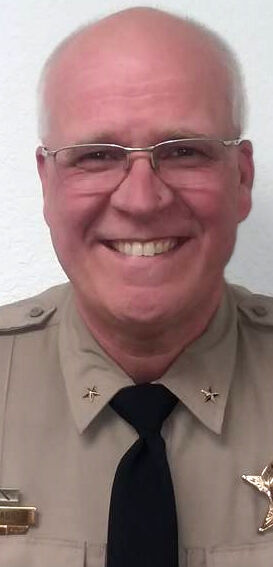
According to Wasco County Sheriff Lane Magill, who also serves as co-chair of the advisory council, the project was able to acquire $4.6 million of Oregon lottery funds for the project. Then, as they progressed through the process, the CGRC advisory council partnered with another organization, ColumbiaCare, that was going to build and run the facility. They acquired more than $9.3 million in grants from the Oregon Health Authority (OHA) for the project.
“We were on track and rolling to break ground this January, on Jan. 2 of 2024,” Magill said. “We were going to be shovel ready. And then on Aug. 3, that organization that got all of that money and was going to build it, they backed out. They withdrew from the project.”
The facility was originally going to be a $15 million project, intended only to have a secure residential treatment facility (SRTF) and a walk-in crisis center. There wasn’t going to be a residential treatment facility (RTF), as that already existed in the form of Creekside. However, Creekside closed when the agreement fell through, as it was run by ColumbiaCare.
Following the loss of that partnership, Magill said the advisory council went into “full-blown scramble mode,” trying to figure out what they would do, or how they would make up the funds that were lost. Eventually, they got in contact with OHA who decided that, rather than grants, they would directly fund the project for the same amount of $9.3 million.
What came next was deciding on a new partner for the project, Magill said, and they ultimately selected Mid-Columbia Center for Living.
“They’re well-positioned to do this, they’re well-positioned to manage it and run it and everything,” Magill said. “They’ve hired around 80 people in the last 18 months and they’re financially stable. They’re in a great position right now. They’ve got amazing leadership over there, all the way from the top all the way down to the bottom.”
In their new partnership, they sat down and took a new look at what they wanted the resolution center to be, especially with the dissolution of Creekside. Now there will be a 16-bed RTF for those in crisis, as well as a 16-bed SRTF, where officers can take people on police officer hold. There will also be a crisis stabilization center which will have 10 recliners, rather than beds, due to regulations.
Through their discussions, they came to the conclusion that a residential treatment facility for drug and alcohol was needed. This will also have 16 beds. There will also be a drop-in center with Mid-Columbia Center for Living.
The whole project will be approximately 70,000 square feet of facilities, with various buildings for the different services. Together, it will be one complete mental health campus, Magill said.
Of course, with the additions to the plan comes a higher cost. The new version of the project will cost nearly $50.4 million, Magill said. Though this is a big number, he said they already have the $4.6 million from the lottery, $9.3 million from the OHA, $2 million in donations of property from Wasco County and $1 million in services from Mid-Columbia Center for Living.
To help get the rest of the funding from the state, the advisory council is working to get community signatures on a letter to legislators.
“We’re looking at about a $36 million gap that we need to get closed in this short legislative session,” Magill said. “That’s, suffice to say, why we have this letter out there.”
The county is working to get a meeting with the governor, but the letter is expected to also go in front of 90 legislators, representatives and senators. Currently, the letter has just under 200 signatures, Magill said, but his goal is 500.
“We’re just trying to get as many signatures as possible and as much momentum right now as we possibly can,” he said.



Commented