A mix of clouds and sun this morning followed by increasing clouds with showers developing this afternoon. High near 55F. Winds light and variable. Chance of rain 60%. Locally heavy rainfall possible..
Tonight
Rain showers this evening with overcast skies overnight. Low 41F. Winds light and variable. Chance of rain 60%. Locally heavy rainfall possible.
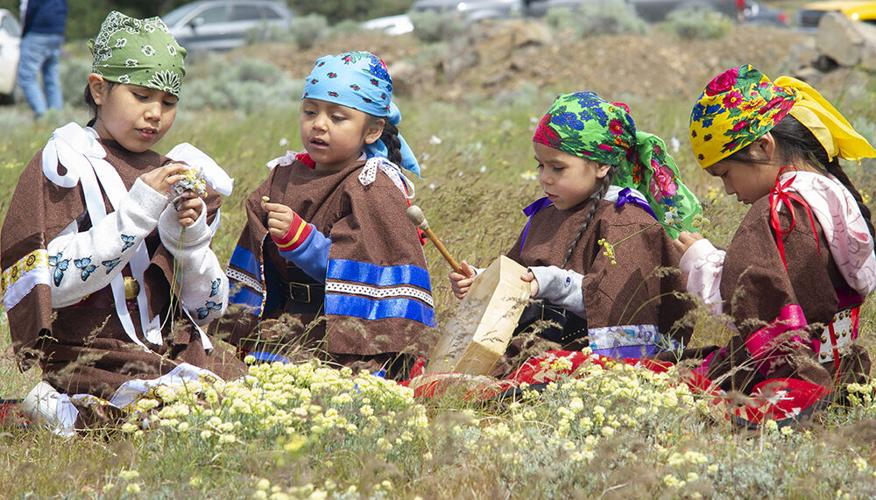
Left to right: Josephine Olney, 7 and her siblings Raven, 5, Miracle, 4, and Liam, 2, gather a bouquet of wildflowers and first foods, and examine a drum on May 8 at a Pushpum event.
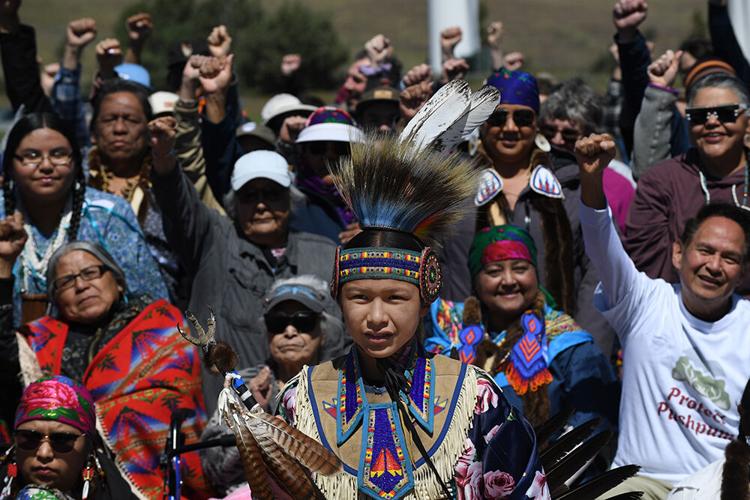
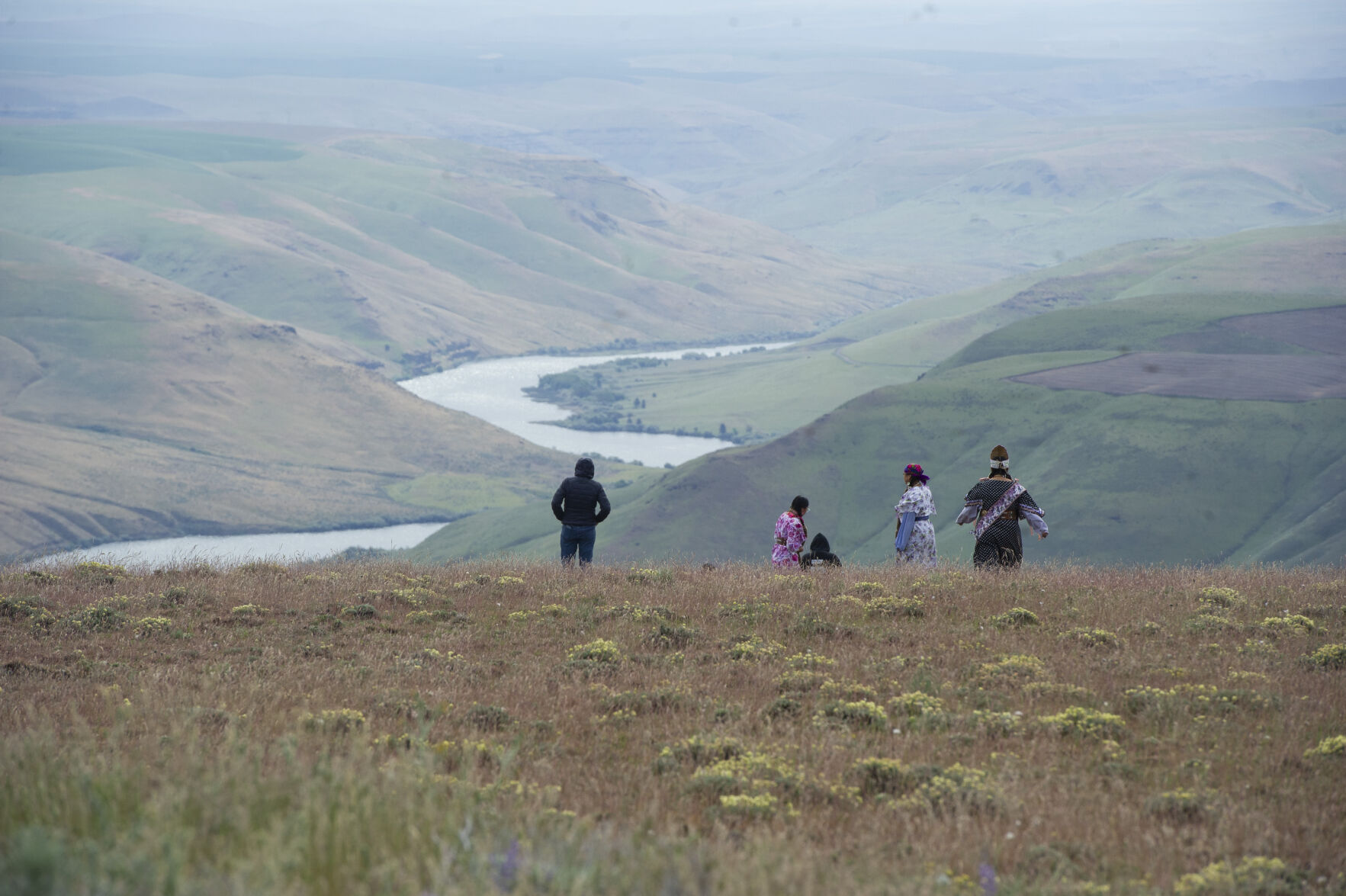
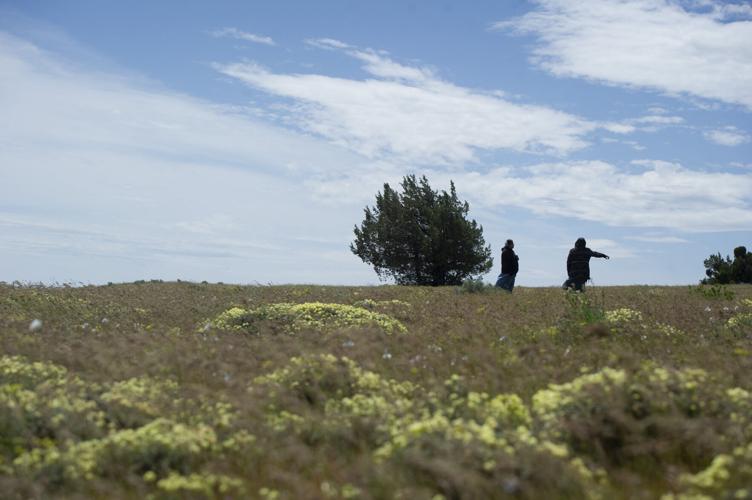
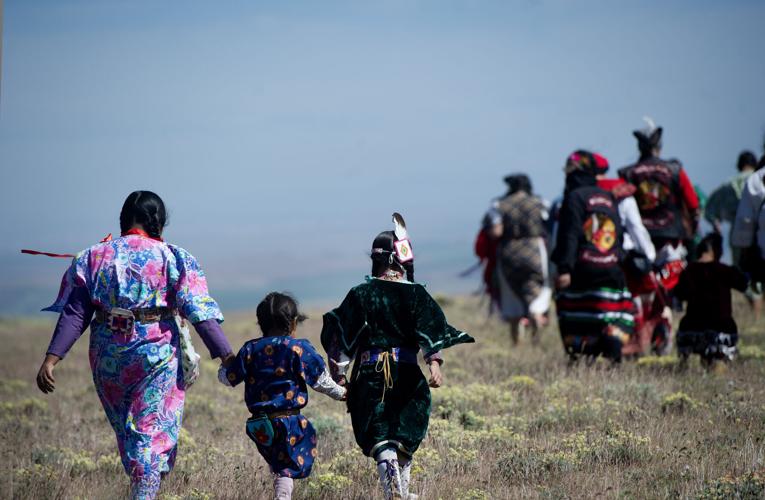
GOLDENDALE, WA- Dancers walk to an overlook to view the Columbia River below during a "Protect Pushpum" event near Goldendale, Washington on May 7, 2026. The "Protect Pushpum" event was organized by the Yakama Nation and allies to oppose the proposed Goldendale Pumped Storage project, which threatens a sacred site known as Pushpum or “The Mother of All Roots”. The Pushpum site is a highly contested area for renewable energy, where the Yakama Nation’s treaty-protected root gathering grounds overlap with existing wind turbines (Juniper Point) and a proposed $2 billion, 1,200-megawatt pumped-storage hydro project. While federal regulators approved the storage project in early 2026, it faces intense opposition for destroying sacred tribal site. (Photo by Flora Martin Gibson/Columbia Gorge News)
Left to right: Josephine Olney, 7 and her siblings Raven, 5, Miracle, 4, and Liam, 2, gather a bouquet of wildflowers and first foods, and examine a drum on May 8 at a Pushpum event.
Martin Gibson photo
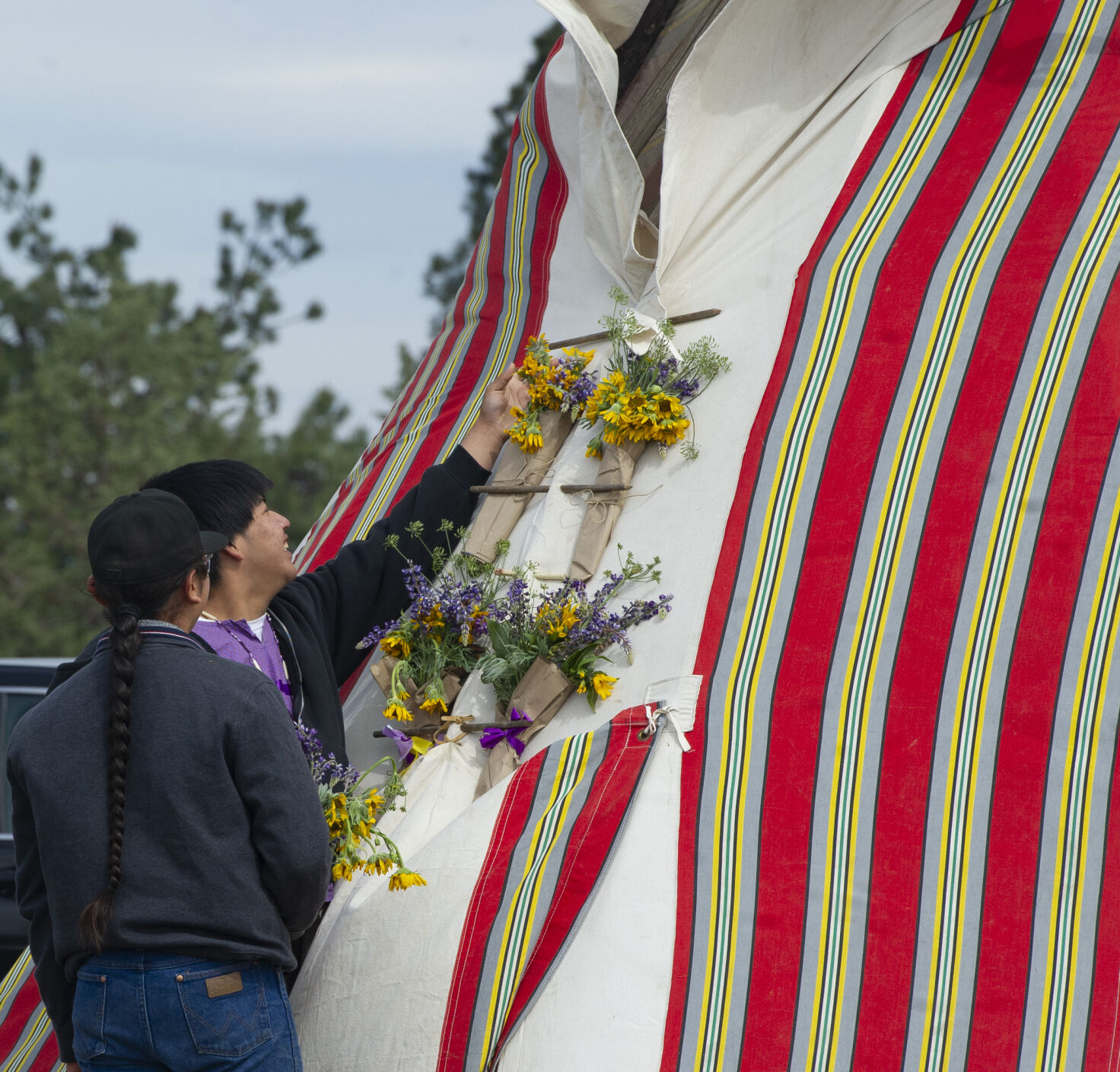
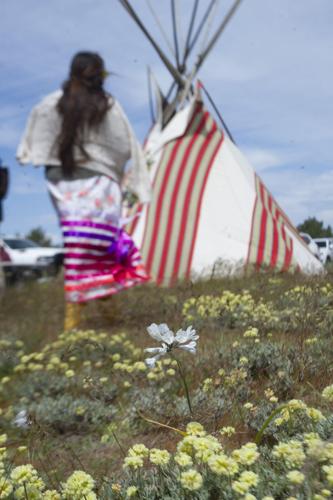
Balsamroot and lupine are put on the tepees.
Martin Gibson photo
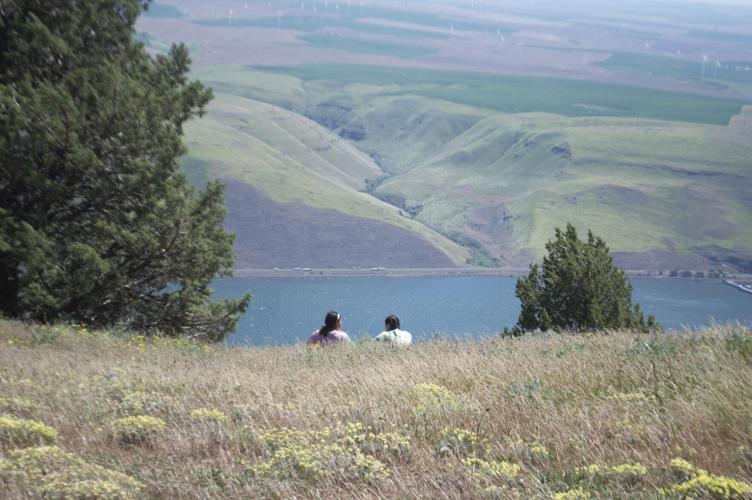
Looking toward the John Day River.
Martin Gibson photo
Martin Gibson photo
Martin Gibson photo
Martin Gibson photo
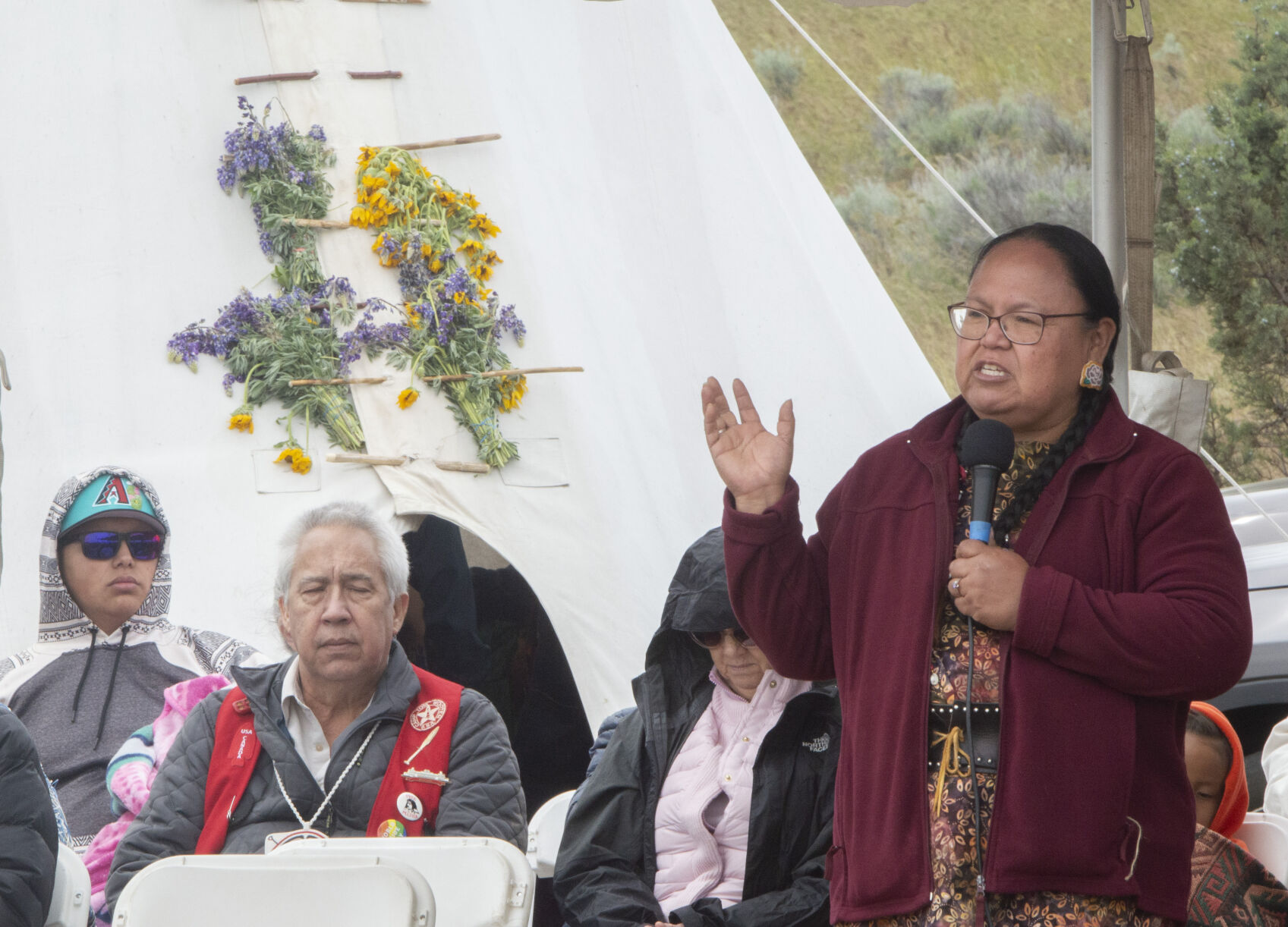
Elaine Harvey speaks about first foods.
Martin Gibson photo
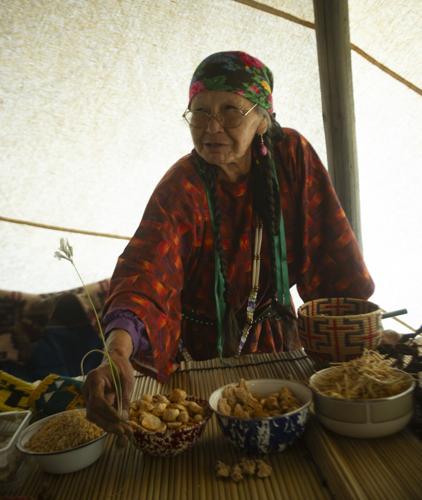
Elaine Harvey's mother arranges a display of first foods by season.
Martin Gibson photo
Martin Gibson photo
Martin Gibson photo
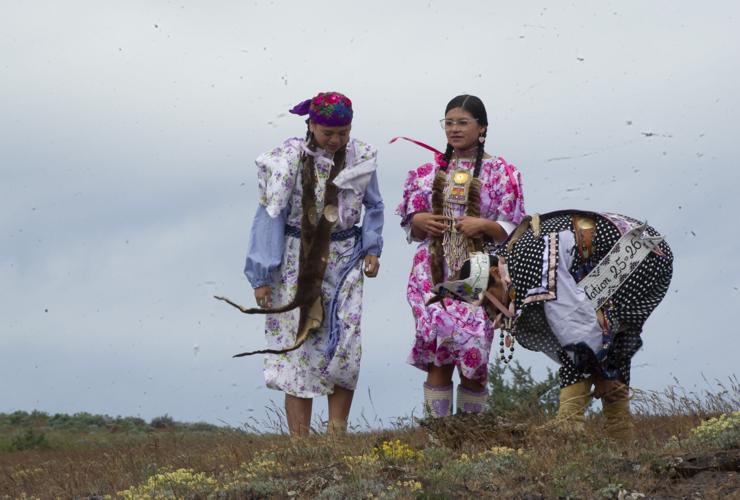
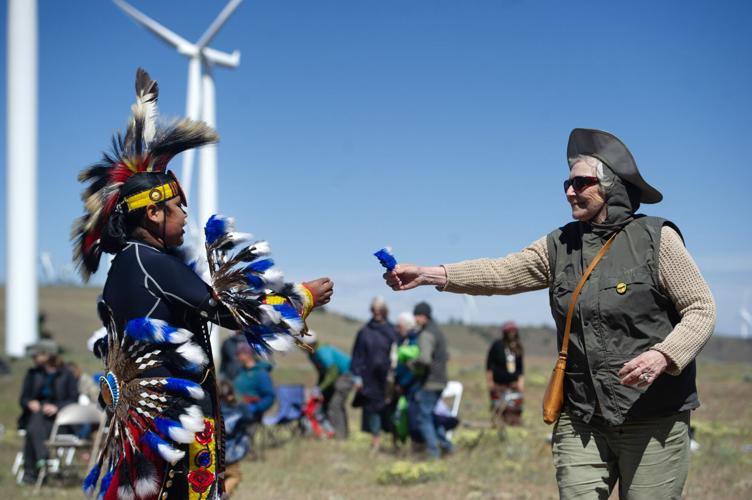
A guest hands a fallen feather back to a dancer after the wind snatched it.
Martin Gibson photo
GOLDENDALE, WA- Dancers walk to an overlook to view the Columbia River below during a "Protect Pushpum" event near Goldendale, Washington on May 7, 2026. The "Protect Pushpum" event was organized by the Yakama Nation and allies to oppose the proposed Goldendale Pumped Storage project, which threatens a sacred site known as Pushpum or “The Mother of All Roots”. The Pushpum site is a highly contested area for renewable energy, where the Yakama Nation’s treaty-protected root gathering grounds overlap with existing wind turbines (Juniper Point) and a proposed $2 billion, 1,200-megawatt pumped-storage hydro project. While federal regulators approved the storage project in early 2026, it faces intense opposition for destroying sacred tribal site. (Photo by Flora Martin Gibson/Columbia Gorge News)
THE GORGE — From the high points of Pushpum, you can see all the way from the Gorge to the Blue Mountains. This high ridge along the northern Columbia River (or Nch’i-Wàna, the Big River) near Goldendale has been sacred to the Confederated Tribes and Bands of the Yakama Nation since the beginning of their people.
Many important First Foods grow here, where native plants bloom in a complex mosaic — including unusual species that take decades to recover if disturbed. Pushpum translates to “Mother of all roots,” said Columbia River Inter-Tribal Fish Commission (CRTFC) Watershed Department Manager and Yakama tribal member Elaine Harvey. Yakama Nation has repeatedly told the federal government that this site, once destroyed, cannot be restored and no mitigation of that harm is possible.
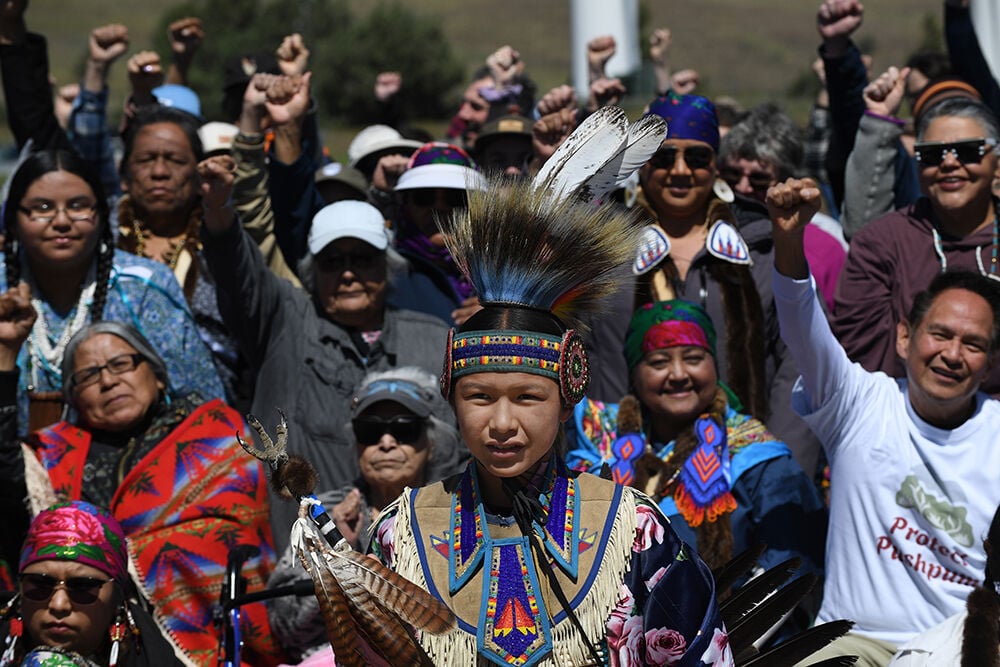
Tribal members and supporters hold up their fists in defiance.
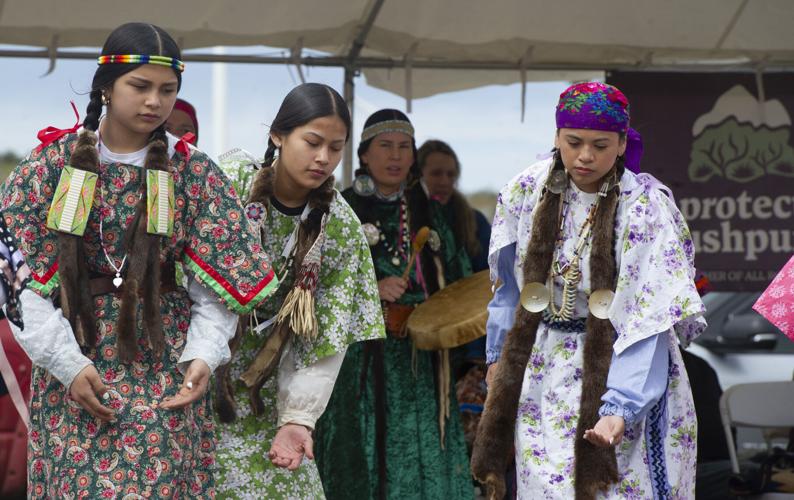
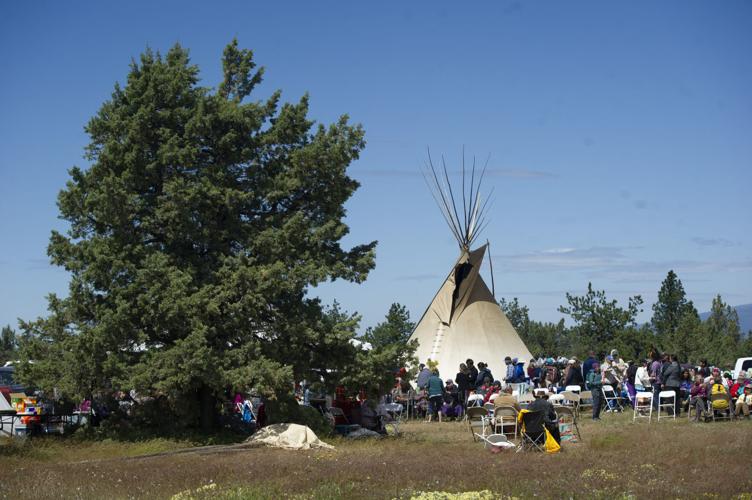
Yakama Nation and its supporters have been working to oppose the development of Pushpum for several years. They welcomed elders, activists, youth council, and the public to Pushpum Encampment on May 8, on a patch of Washington Department of Natural Resources land, for a day of dances and speeches under the windmills.
Rye Development, backed by Copenhagen Industries from Denmark, has federal approval to build a complex of two reservoirs, an underground tunnel, buried control stations, and other infrastructure on Pushpum, near the site of the encampment. The facility would pump water from the river when energy production is high, then pour it back past generators when energy production is low, functioning as a giant battery.
Activists say this would permanently destroy archaeological sites and traditional cultural properties, and re-seeding the area after disturbance won’t fully replace the native seed bank. They also recount problems with the required government-to-government consultation process. Rye Development has made some modifications to the plan, like putting more things underground.
“We’re here to bring awareness, education, and we’re here to have the voice for our lands, right here, a very important piece of property,” said Yakama Nation Council Member Jeremy Takala. “You guys can see all the way down, probably to the Blue Mountains, Mount Hood, the Simcoe, Mount Adams, Mount St. Helens, Gifford Pinchot, where all of our people go pick berries; so you can tell how beautiful this site is. And why would you want to desecrate this piece of property?”
Gathering starts at the end of winter, at the foot of Pushpum, and moves uphill with the spring, following the maturation of plants.
Martin Gibson photo
“We don’t share a lot out to the general public,” said Harvey. “We try to protect our foods, we try to protect our way, our beliefs, our traditions, and now they’re all under threat. I can tell you today, every one of our traditional foods are under threat — our salmon, our suckers, our sturgeon, our lamprey, our deer and elk, and all the different roots that we gather, and our berries — every one of them are under threat. And you know, it’s hard to see our root grounds getting plowed over and thousands of solar panels put on. It’s hard.” Yakama Nation has opposed multiple energy projects on its traditional lands, including the nearby Carriger Solar project.
“I know we’re in a time when we need renewable energy, but why on our root ground? Why on critical deer winter habitat or critical migratory corridors for hawks, for sage grouse, ... and I feel like it’s coming too fast, just like the dams came.”
Harvey recalls her family being “pushed out” from the Maryhill area, Wind River, and Rock Creek.
“It’s not just our community, there’s many communities up and down the river that rely upon Nch’i-Wàna,” Harvey said. “And now, today, we’re feeling the pressures of data centers and the push that they have, and that need that they have for water, and the need that they require for energy, and it’s putting more pressure on us to build more solar, build more green energy.”
“And I say, for who are we building? We’re going green now for data centers. We’re not going green for Washington and Oregon state mandates — we’re going green for data centers now. That’s what I really believe, and you know it’s putting pressure on our sacred areas, our food gathering.”
“I believe we can go green, but in a responsible manner, and not destroy our shrub steppe,” she continued. “We need to do more planning, and having the tribes involved at the earliest stages is really essential.”
Simone Anter, senior attorney at Columbia Riverkeeper, gave a legal update. “There’s no shovels in the ground, and so there’s a real possibility that there won’t be — and we can all use our collective power to stop the project,” she urged.
Sulfur buckwheat and cluster lily in bloom.
Martin Gibson photo
Two key permits are being challenged by Yakama Nation. One’s been in court since 2023. Another water qualitypermit was just appealed, and both groups asked for a re-hearing on the 40-year license from the Federal Energy Regulatory Commission, given last January. They’re also urging the state’s historic preservation officer and Gov. Bob Ferguson to hold up the project, Anter said.
Erik Steimle, Rye’s chief development officer, told Columbia Gorge News in 2024 that pumped storage would be built in this area because “of the appropriate geology, geography, and the transmission is right there, as well as all the renewables that surround the project and need a storage source in this location.”




Commented