WHITE SALMON — The heart of the Pacific Northwest lies in the waterways, which provide habitats for the native wild fish under the surface. On the White Salmon River, Native Fish Society is monitoring a hopeful spawning revival of two migratory fish under the Endangered Species Act, steelhead trout and coho salmon. These species have been on the list since 1998 and 2005, respectively.
Native Fish Society was founded in 1995 with a focus on recovery and protecting the wild native fish in the Pacific Northwest. Since 2020, Washington Coordinator J. Michelle Swope has run the spawning project on the White Salmon River, organizing and training volunteers to conduct surveys on its tributaries.
“Historically, the Columbia River was rife with fish, and those streams along its banks were densely populated by fish as well. However, changes occurred as we began to colonize and use the Columbia as a significant waterway,” Swope said.
Throughout the 1900s, hundreds of dams were built on the Columbia River and its tributaries to control flooding and generate hydropower. This includes the 1913-built Condit Dam on the White Salmon River, whose headwaters begin at Mount Adams and meet with the Columbia River.
“Fish population conditions reflect the stream’s overall health. If they start to vanish from an area, there’s something wrong,” Swope said, noting that Native Fish Society emphasizes the “Five Hs” are the most limiting factors for fish populations: hydroelectric dams, heat, habitat degradation, hatchery fish competing for the same resources and harvesting too much.
On the White Salmon River, Swope stated the Condit Dam’s lack of fish passage significantly diminished the population of native wild fish. Anadromous species, characterized by their migration patterns from the Pacific Ocean to spawn upstream, could not pass the dam.
The lack of fish passage led to the eventual decommission of the dam. On Oct. 26, 2011, the Condit Dam was breached by dynamite, allowing free-flowing water to reach the Columbia River again.
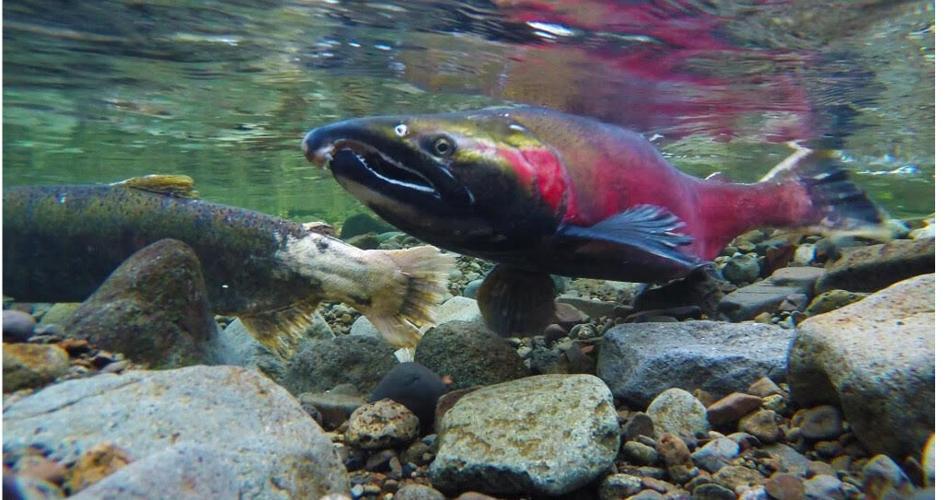
A coho salmon swims beneath the water.
Native Fish Society photo
This event prompted the need for yearly monitoring of the fish to see if their spawning numbers would replenish. Friends of the White Salmon River, a local nonprofit dedicated to conservation of the river’s ecosystem, approached Native Fish Society to request help for the project.
Along with Washington State Department of Fish and Wildlife (DFW) and National Marine Fisheries Service, Native Fish Society began spawning surveys of coho salmon and steelhead salmon on three tributaries of the White Salmon River in 2020. The Klickitat chapter of Trout Unlimited assisted in finding volunteers for the program and Lisa Brown, an Endangered Species Act coho specialist from DFW also provided helpful guidance for surveying the species.
“Overall, there has been an uptick in trends of both steelhead and coho,” Swope said. “So while we have this data, it’s not going to be statistically significant or viable for another handful of years. We need more data to show a true trend, which is why it’s so important to keep this project going.”
Volunteers perform spawning surveys on three tributaries of the White Salmon: Buck Creek, Mill Creek and Spring Creek. The monitoring begins with coho in November, winter steelhead in January and ends with summer steelhead in June.
“We count how many fish return to spawn. We monitor the fish as they dig their redds, which are nests, and find suitable conditions for spawning. We walk along the streams, observing the progressions as the females deposit their eggs, the males compete to fertilize the eggs, and we mark and monitor how long the redd and the fish are both visible,” Swope said.
This spawning activity is tracked over a 10-month monitoring period, with visits to the creeks occurring every 10 days throughout the coho season and every 14 days during the steelhead season.
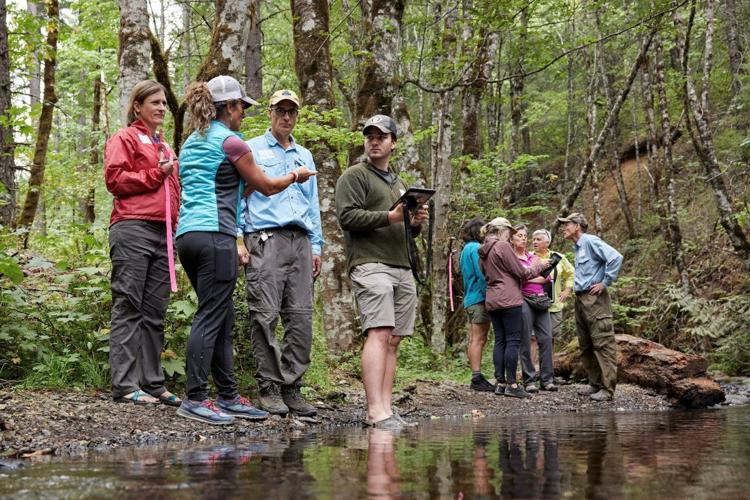
As the program enters its fourth season this fall, Swope is seeking local volunteers for spawning surveys. Training, waders and other necessary tools are provided to volunteers on the project. She noted the schedule is entirely flexible and based on individual preference.
“I strongly believe that when it comes to fish management and the involvement of various small nonprofits, our collective impact could be greatly amplified through collaborations,” Swope said. “I credit Friends of the White Salmon River for being so welcoming to Native Fish Society for this project. That’s an organization we can all learn from in terms of working together so we can continue to invest in local waterways and their fish.”
Swope encourages those interested in volunteering to reach out by email at jmichelle@nativefishsociety.org or phone 360-349-0743. To stay up-to-date on Native Fish Society news, sign up for the newsletter at nativefishsociety.org.



Commented