
(SWNS)
By Stephen Beech
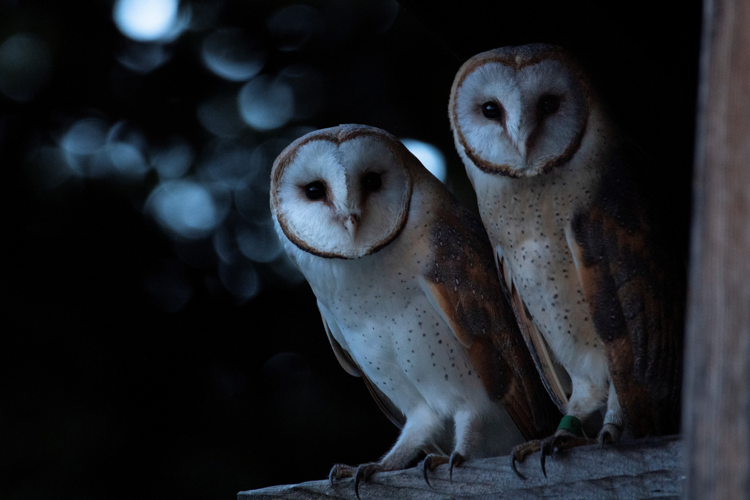
Barn owls are gradually changing color, reveals new research.

Photo by Widarto Suratman via Pexels

Photo by Jean van der Meulen via Pexels
Steady light rain this evening. Showers continuing overnight. Low 44F. Winds light and variable. Chance of rain 80%..
Steady light rain this evening. Showers continuing overnight. Low 44F. Winds light and variable. Chance of rain 80%.
Updated: October 26, 2026 @ 4:40 pm

(SWNS)
By TalkerBy Stephen Beech
Barn owls are gradually changing color, reveals new research.
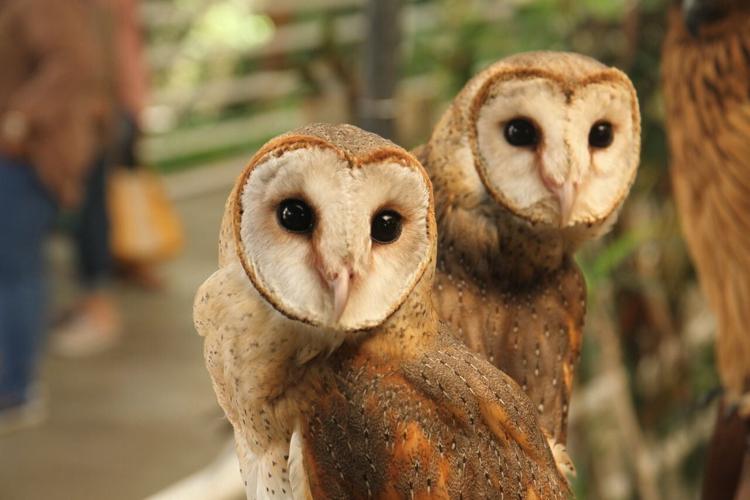
The birds of prey have become more reddish-brown with more heavily spotted plumage over the last 30 years, shows the Swiss study.
By analyzing the genomes of more than 3,000 birds, scientists at the University of Lausanne identified the genetic variants linked to the changes in plumage - and revealed natural selection at work.
Their findings, published in the journal Nature Communications, show that evolution can happen rapidly in the wild.
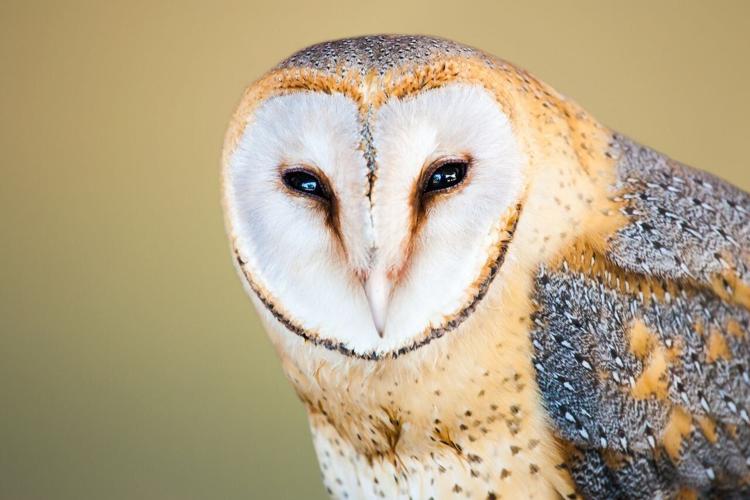
From pure white to deep reddish-brown through all variations of golden brown, barn owl plumage varies remarkably from one bird to another.
Some owls have only a few faint dark spots on their chest, while others display many more, much bolder markings.
Previous research by the Swiss team has shown that those features are more than cosmetic.
Plumage color is linked to fertility and hunting strategies, and so to diet.
For example, white barn owls use moonlight to their advantage when attacking prey, while spotting is associated with immunity and the ability to cope with stress.
Birds with large black spots appear to withstand certain stressful conditions, such as food shortages or parasites, more successfully.
But that diversity in plumage is not fixed, reveals the new study.
Photo by Widarto Suratman via Pexels
Study co-author Jérôme Goudet said: "This is one of the most in-depth genetic analyses ever conducted on a wild population.
"Drawing on the exceptional volume of data collected by Alexandre Roulin and his group, who have monitored these birds of prey in the field for decades, we were able to sequence the complete genomes of more than 3,000 owls and identify the DNA variants associated with color and spotting."
The research team pinpointed genetic regions that play a major role in the birds' appearance.
Those include MC1R - a gene already known to affect pigmentation - and a region on a sex chromosome whose contribution to color and spotting the researchers were able to clarify.
By examining how genetic variants associated with color and spotting became more or less common over time, the biologists detected the effects of natural selection.
Study leader Tristan Cumer said: "We compared the changes observed in the population with simulations in which evolution was entirely random.
"A genetic variant associated with reddish-brown plumage became far more common than chance alone could explain.
"Only simulations that included natural selection reproduced the changes we observed."
Although the study clarifies the genetic basis of changes in color, the factors driving it have yet to be identified.
Study co-author Alexandre Roulin said: "A change in prey availability may have favored reddish-brown barn owls, which eat more voles, whereas white owls tend to feed more on wood mice.
"The increase in spotting could be linked to greater environmental stress.
"Despite the striking differences in color between individuals, it remains extremely difficult to determine which ecological factors explain these variations."
Goudet said: "We also do not know whether plumage color is itself the trait directly favored by natural selection.
"MC1R plays a role in pigmentation, but it is part of the melanocortin system, which has also been linked to other traits, including stress responses and aggression.
"Selection may therefore be acting on one of these traits, with the change in the owls' appearance simply arising as a consequence."
Photo by Jean van der Meulen via Pexels
By TalkerThe findings are part of a research program led by Goudet and his colleagues for almost a decade.
Their goal is to decode the barn owl genome and establish the species as a model for studying evolution in the wild.
The research team has sequenced and assembled the species' reference genome, and reconstructed its evolutionary history across Europe and the Mediterranean.
The team has also studied how mutations arise and are passed on within populations.
Goudet said: "Research on this scale is possible because field teams, genomics specialists and members of the faculty of biology and medicine's core facilities work together."
The work is ongoing with computer analysis of photographs which will allow the team to measure color and spotting more precisely.
The researchers also plan to use genetic data to reconstruct the plumage color of birds that died very young and determine whether particular plumage features are associated with better chances of survival.
Cumer says the study is a reminder that evolution doesn't take place only over millions of years as major genetic changes can also occur within a few decades.
In the case of Swiss barn owls, he said 30 years, around 10 generations, were enough for the effects of natural selection to become detectable.
Cumer added: "The study carries an encouraging message: it shows that species living in the wild can evolve over a short period.
"This capacity for rapid adaptation could help them cope with environmental change, including climate change."
Originally published on talker.news, part of the BLOX Digital Content Exchange.
Information from the News and our advertisers (Want to add your business to this to this feed?)
Success! An email has been sent to with a link to confirm list signup.
Error! There was an error processing your request.
Sign up to receive notifications when a new Columbia Gorge News e-Edition is published.
Would you like to receive our news updates? Signup today!
Receive weekly updates on obituaries and death notices.
Oregon Capital Press presented by Columbia Gorge News
Receive updates on upcoming promotions and special sections.
Receive weekly updates on local sports news.


Sorry, an error occurred.
Already Subscribed!
Cancel anytime
Thank you .
Your account has been registered, and you are now logged in.
Check your email for details.
Submitting this form below will send a message to your email with a link to change your password.
An email message containing instructions on how to reset your password has been sent to the email address listed on your account.
No promotional rates found.
Secure & Encrypted
Thank you.
Your gift purchase was successful! Your purchase was successful, and you are now logged in.
| Rate: | |
| Begins: | |
| Transaction ID: |
A receipt was sent to your email.
Commented