
By Flora Martin Gibson
Columbia Gorge News
THE DALLES — Since 2025 began, mental health calls logged by The Dalles Police Department (TDPD) have dropped drastically. Some weeks, just one or two calls are reported that relate only to someone’s mental health issue.
Still, other call types reveal mental health is still an issue here.
In previous weeks of 2024, that number was sometimes as high as 50 or 60.
“The resources appear to be reaching those in need,” The Dalles Police Chief Tom Worthy said.
In 2023, 2,257 calls were logged as mental health; in 2024, it was 1,527.
So far in 2025, the department has logged just 56 mental health calls.
Much of the drop is due to the absence of a few people, less than 10, who accounted for “around 1,000” mental health calls in 2023 vs. 2024.
“We do get an inordinate number of mental health calls for service,” chief Tom Worthy said in an email on March 25.
A high percent came from those less than 10 individuals.
Some of those people, 911 Dispatch Operations Manager Krista Silver said, are receiving treatment from resources outside Wasco County, “and that is why we no longer get calls from them.” However, once they leave Wasco, local law enforcement involvement ends and Silver didn’t know exactly how many of them there are.
Mental health still looms large in other call types. “Also, some calls that are community nuisance calls are rooted in mental health too,” Worthy said. “Things like trespassing and disorderly conduct are often rooted in mental health and addiction issues.”
He added, “When mental health generates antisocial or criminal behavior, the call is classified as such and this may mask the true extent of the issue.”
Some 911 calls from mentally ill persons get logged under other headings: Welfare checks, disorderly conduct, unwanted people on the property, and/or trespass. So far in 2025, TDPD has logged 218 welfare checks and 356 unwanted/trespass calls.
“A focus on calls labeled solely as ‘mental health’ provides an incomplete picture,” Silver confirmed.
Dispatch also handles some mental health call that aren’t logged in the records.
“During major incidents, like highway accidents, dispatch may be flooded with 911 calls while simultaneously managing radio communications and emergency response,” Silver said. At such times, repeated calls from a mentally ill person — one who law enforcement has determined they cannot help, and who has been referred to other services — may not be logged.
But the absence of a few frequent callers accounts for a lot. “These individuals previously called us up to 30 times a day. While we couldn’t log every call due to feasibility constraints, we documented enough to establish a pattern,” Silver said. “This record helped connect them with local and state resources.”
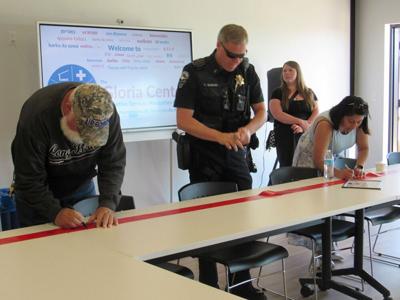
TDPD works with Mid-Columbia Center for Living, and prioritizes training officers on mental health issues, Worthy said. The Annex and the Gloria Center provided some new resources for mental health issues.
He hopes that their work is contributing to the decline in mental health calls. “Still, just one or two folks chronically calling can skew our numbers for calls for service and take up valuable time for the Dispatch Center, who are already overworked,” he said.
“It is very difficult to control individuals who call repeatedly, but we do our best to meet their needs. The entire trend could end tomorrow, but I’m thankful for any progress that has been made,” Worthy wrote.
The following week, March 28 to April 9, The Dalles police logged not one single mental health call.


Commented