HOOD RIVER — Hood River City Councilors heard a legislative recap from District 52 Rep. Jeff Helfrich and City Lobbyist Ellen Miller July 21.
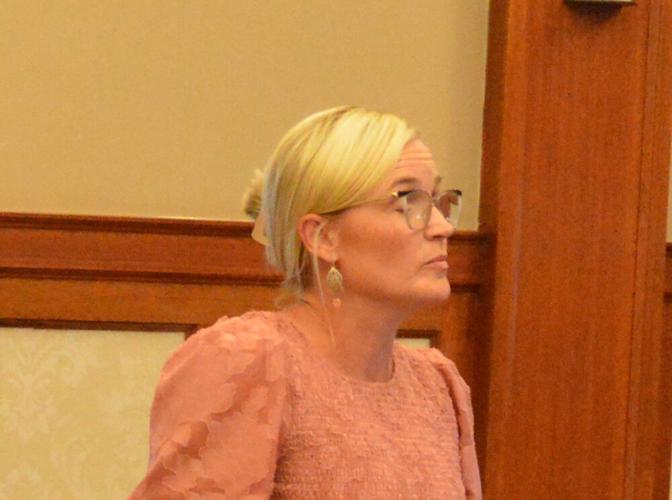
Ellen Miller
City lobbyist
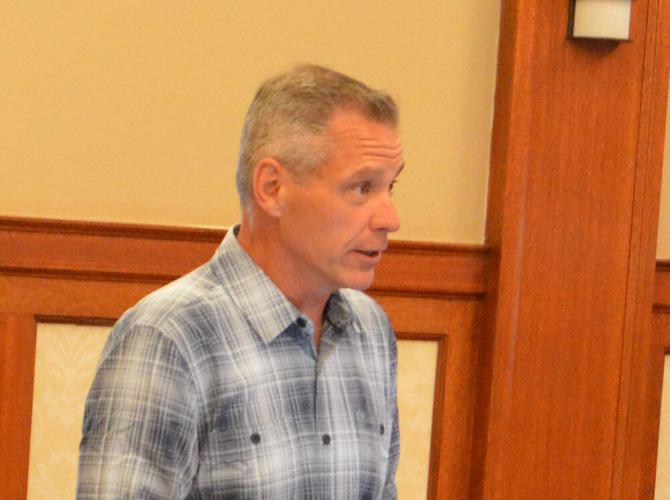
Rep. Jeff Helfrich District 52
Helfrich started with an update on bridge funding. As previously reported in Columbia Gorge News, Helfrich (R-Hood River) and Washington State Sen. Curtis King (R-Yakima) successfully secured $125 million in each state to fund their respective portions of the Hood River-White Salmon bridge project.
He also thanked fellow Republicans, Oregon Sen. Daniel Bonham (District 26) and Rep. Gregory Smith (District 57), and others who helped secure the funding.
“It was no small feat to get that done,” Helfrich said. “I’ve been working on that for a few years.”
“You deserve a victory lap,” said Mayor Paul Blackburn. “That’s a great, huge asset to our community.”
Among his updates was the $14.7 billion transportation package that ultimately failed. It would have increased several transportation taxes and fees, created a new vehicle transfer tax, imposed audit requirements on the Oregon Department of Transportation (ODOT) and expanded applicability of the OReGO road usage charge program, according to the measure summary at oregonlegislature.gov.
“One of the biggest no-goes for me was on indexing, which said that a body and rule maker could sit there [and raise fuel taxes],” he said. “That’s the state legislator’s job.”
He additionally voiced concerns about rebuilding homes lost to the Rowena Fire, given the building and land use restrictions in the National Scenic Area.
“My concern is that the Gorge Commission may come in and say, ‘We have to build them to new codes’ — that’s going to price people out,” Helfrich said. “That was affordable living over there; there’s a lot of single-wide homes, manufactured homes that were there that people lost … So my hope is that we allow them to build to the condition that they were in before.”
Some building requirements will add tens of thousands of dollars in costs.
“A lot of concern is you’re going to see people from California and other places that buy those lots, and we’ll lose those,” he said. “We’ll have these little mansions out there and lose the ability to have affordable housing, these middle houses.”
Miller, who has been the city’s lobbyist for the past 9 months, said it was a difficult session, and they were told early on that “it would be a struggle to fund stage agencies’ current service level, and that new taxes would be needed to pay for wildfire response and current transportation needs” (2025 Oregon Legislative Session End of Session Report).
“From my perspective, what was a little bit different about this session — and Rep. Helfrich touched on a couple of these — there was new leadership this session; there was a fear of recession; there were a number of placeholders [bills]; of course, the federal uncertainty; and then, as Rep. Helfrich said, our revenue forecast was down,” she said. “I have not been in a legislative session when the revenue forecast is actually down for the final forecast for session. So that was very difficult.”
Given its priority was the Oregon Department of Transportation (ODOT) jurisdictional transfer and associated funding for the Heights Streetscape project, prior to session, the city formed an advocacy partnership with Tigard, as both were recipients of the Jurisdictional Transfer Advisory Committee’s 2024 recommendation for funding to facilitate the transfer of ODOT property to cities, she said.
After meeting with Ways and Means and budget writers, “it became very clear that our best chance was getting into the transportation package … Unfortunately, the votes weren’t there,” she said.
The next chance to try will most likely be in 2027. Looking ahead, the Feb. 2 short session will be “very difficult” and “mainly reactive,” based on the federal HR-1 (Big Beautiful Bill) and state revenue forecasts.
But, on a positive note, the city worked with the Legislative Fiscal Office and Oregon Business Development Department (OBDD) to fix the language that was preventing OBDD from getting the city $2.44 million for Mariposa Village. The city was also successful in fixing the Middle-Income Housing Revolving Loan Fund (MIRL) criteria to increase affordable housing production.



Commented