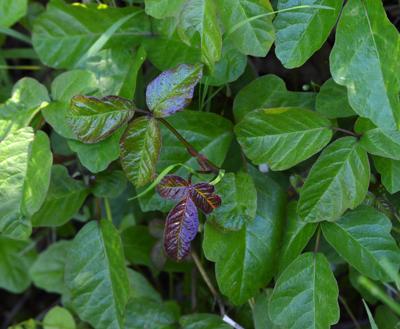
YOU CAN deal with most poison oak (pictured above) exposures at home. See your doctor if you get a severe reaction. Most of the information in this article came from “A Field Guide to Poison Ivy, Poison Oak, and Poison Sumac: Prevention and Remedies,“ by Susan Carol Hauser.
YOU CAN deal with most poison oak (pictured above) exposures at home. See your doctor if you get a severe reaction. Most of the information in this article came from “A Field Guide to Poison Ivy, Poison Oak, and Poison Sumac: Prevention and Remedies,“ by Susan Carol Hauser.
Over the last couple weeks, we have seen a few cases of poison oak pop up recently. The cases range from a few itchy spots to full on misery with a wide spread pesky rash. Along with poison ivy and poison sumac, poison oak has an oil called urushiol. This oil can cause an allergic reaction in certain people who are sensitive to it. You can be exposed to the urushiol by brushing against a plant or touching something that has the oil on it. Some examples are touching a pet, tools, a bike or even clothes or shoes which have a bit of oil on them. People most often get the rash about 24 to 72 hours after being exposed to the oil. But some people are very sensitive and can get a rash within hours. The rash can be very itchy and red. In most cases, little blisters develop on the skin and weep. Left alone, the rash will go away on its own without any scarring in two to three weeks. But scratching can make the itching worse. It can also cause the skin to get infected.
What to do if you get exposed:
• Within 10 minutes of being exposed, wash the area with a lot of water. This can help prevent the rash. But that is not often possible. Do not use soap unless you have a lot of water with which to rinse.
• Within four to six hours of being exposed, gently swab the skin with rubbing alcohol, hand sanitizer or another skin cleanser designed for this purpose, such as Tecnu. Rinse with water as soon as you can. Do not use baby wipes since they can spread the urushiol.
What to do once you have a rash:
• Use oatmeal baths, cool compresses, calamine lotion or hydrocortisone cream on the skin to help with the itching. Benadryl can also help calm the body’s allergic reaction.
When to go to or call the doctor:
If you have an inhaled smoke exposure from burning poison oak seek medical attention right away. Early treatment can prevent swelling in the lungs and trachea. Call your doctor’s office if:
• You get a rash over a lot of your skin.
• You have the rash on your private area.
Doctors often prescribe strong topical, oral or injected steroids.
How to prevent being exposed:
• Learn to spot the plant. Poison oak can be plants, shrubs or vines. Use the internet for pictures. Ask someone who knows to point out the plant to you.
• Dress to protect your skin. Wear loose clothes with long sleeves. Sweat can transport the oil through fabric, so do not wipe your brow with a sleeve.
• Use barrier creams made from bentoquatam, such as Ivy Block. You put them on before going to a place where there might be poison oak.
• Keep pets out of areas with poison oak.
• Never burn poison oak.
Healthy Active Hood River County (HAHRC) is a community healthy living coalition that promote wellness through increased physical activity, healthy eating, tobacco use prevention, behavioral health, prevention of addictions and policy and environmental change. The next meeting will be held May 23 from 11:30 a.m. to 1 p.m. at Providence Hood River Hospital Conference Room 5.



Commented