
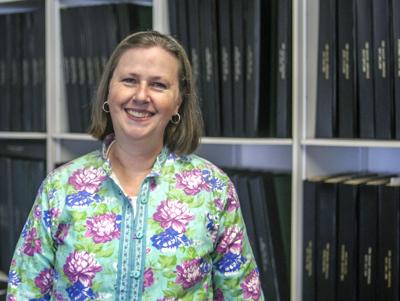
Editor’s note: Raz Mason is the Democrat and Independent candidate for Oregon Senate District 26, which now includes The Dalles, Hood River County, portions of Multnomah County (Columbia River Gorge) and rural areas of Clackamas County. The district was formerly held by Republican Sen. Chuck Thompson, who retired. Mason is running against Republican Daniel Bonham. Both candidates are from The Dalles, and both were invited to sit down with a Columbia Gorge News reporter to talk about their campaign. Interviews will be published as candidates respond.
Raz Mason of The Dalles feels more than ready to represent the people of Oregon Senate District 26.
“I have training in a lot of the issues that the district is facing, things we need to make important decisions about,” she said. “Decisions made in the next four years will be particularly crucial as the Oregon legislature considers ways to improve people’s lives and protect the environment.”
Background
Mason has lived in Oregon most of her life, spending time both east and west of the Cascade Mountains. She grew up in Hermiston and attended middle and high school in the Beaverton area. Family trips between the two introduced her to The Dalles at a young age. “I loved it here,” she said, citing the open terrain and the city’s location as a “gateway to the east side.”
She has a degree in math and two ministry-related master’s degrees, one from Harvard, and all of which took her to places that included Philadelphia, Seattle and Boston.
“My education, my life path has really been about service,” she said. “Plus, I’ve had some adventures thrown in there!” she added, noting her work as a long-haul truck driver.
Mason is a teacher at heart, she said, having taught science at the middle school in The Dalles and English at Hood River Valley High School. She has taught math, science, English language arts, social studies and career technical education, both in person and online.
Mason has also worked in a large investment company as the profit sharing administrator. “Some of the stuff I learned was very useful,” she said.
In 2018, Mason’s interest shifted to socio-political issues and she ran as one of seven candidates in a Democratic primary. “That was an awesome experience, because I got to contribute to a larger conversation,” she said. “Other parts of it concerned me, like the income inequality, and realizing how little people understand about the stock market.”
Early work in the domestic abuse field and hospital chaplaincy training in two Veterans Administration hospitals — she was a commissioned naval officer in the chaplaincy program — further prepared her for today’s challenges, she said. “That acquainted me with the dynamics of violence and how quickly things can become violent,” she said, “and taking that oath of commissioning still informs me, that commitment to defending the Constitution against all enemies, foreign and domestic.”
When the Senate District 26 seat opened up, Mason was set to run. “I had already simplified my life so that I could focus on socio-political research and writing,” she said.
Dangerous moment
It’s a dangerous moment for those who serve, Mason said.
Those who believe the 2020 election was stolen are talking about violence being justified as they contest election results they disagree with, she explained, even though the court system has proven over dozens of lawsuits that there was no significant fraud in the 2020 election.
“So who’s protecting the elected officials who are now being threatened, verbally and/or physically, who are in the center or on the left?” she asked. “I have an armed officers license in Oregon. I have extra training in executive protection. And then to realize, ‘Hey, I might be one of those people who needs protection at some point.’ It’s kind of ironic.”
Mason acknowledged her views on guns stems in part from her upbringing. “Living rural on the east side, I think we often have a different relationship with guns. They are woven into the culture. People go target shooting together, go hunting together. Also, if you live very rural, you may not have any kind of law enforcement response, at least not quickly. So there’s a sense of, ‘I need to be responsible for my own protection.'
“Most people who were raised rural, there is an ethic of responsible gun ownership,” she added. “When we learn how to shoot, we are taught how to treat every gun as if it is loaded, don’t point at anything you don’t want to destroy, all that. That is something that people in more metro areas that lack this culture of responsible gun ownership, they don’t necessarily understand. They don’t necessarily understand what it means to be raised from an early age with respect for what firearms can do.”
All that plays into Mason’s views on guns and gun violence, as does her experience as an educator. “As a teacher, I’ve had to wrestle with fear for my safety, and my children’s, knowing I might be in a position where I or my students are killed, which is something that is distressing to have to wrestle with as part of a job description,” she added. “So we’re kind of moving into a new realm here.”
Calming the violence
“Because of my background, I’m able to really think about how to address gun safety, how to address the escalation of violent rhetoric in a way that is constructive, and build bridges,” Mason said. “Let’s keep everybody in the conversation. Different people with different experiences have things to teach us, to challenge us. Then whatever responses we have, as a state, legislatively, it’s more likely to be realistic. It’s less likely to make some people feel like government is against them, and push them away from feeling committed to civic engagement.
“I think we need to make sure folks who are very Second Amendment-focused are feeling respected. And we need to be speaking to our younger people, and tell them we’re doing things to try and make society safer, so that you are less at risk of dying in a school shooting. This a complex issue: If it weren’t, if there were a simple, easy answer we would have already settled upon it.
“We can do better around safety and closing loopholes in background checks and encouraging better training,” she added.
Police support
Mason noted her opponent in the race, Daniel Bonham, has run television advertisements suggesting she wants to “defund the police,” but that is incorrect, she said.
“I hope it’s clear from what I’ve said, that I am absolutely against defunding the police. Because of my work in security, my connections to police, I do have a professional understanding of what can help (reduce gun violence). It’s things that have proven successful elsewhere, like adding the behavioral health teams to our law enforcement response. But it’s also things like training law enforcement officers in cutting edge deescalation techniques — it’s not just about deescalating the other person, it’s about them deescalating themselves. A program like that in San Francisco helped their crisis team to resolve 99.9% of callouts nonviolently. So I’m a huge fan of the police.”
Not only is the “defund the police” a dog whistle in regards to Mason as a candidate, it’s irrelevant to the district, she said.
“It’s quite irrelevant to the district, because we don’t have the issues that are being faced by metro areas like Portland."
Inflation
In regards to inflation, Mason acknowledged that Democrats have not argued forcefully enough about how successful and evidence-based their approaches are, in regards to inflation and the economy.
“The Republican talking points of cutting taxes, and trickle down, have been proven incorrect again and again,” she said. “I think if people knew how much price gouging there is - about 60% of inflation - especially on the part of large Wall Street companies, (they would see it’s) big business that’s driving inflation up.
“Unfortunately, the federal response has been to raise interest rates, which is only going to hurt working people. I think federally, that’s a real mistake. It’s cooling down our economy at a time when we don’t need it to be cooled down, we just need less price gouging.
“That’s the difference between Wall Street and Main Street. Over the last 40 years, loosened rules around mergers and antitrust have allowed near monopolies to develop. Wall Street companies have benefited 75 to one over Main Street.
“I’m a huge supporter of small businesses and this is another area where people think, ‘Well the Republicans, they’re about business, they must know better,’ but they — abetted by some of the corporate Democrats — have allowed these inequalities to flourish that harm Main Street. It’s not a free market anymore.”
She added that Oregon has a lot of programs already in place that support small businesses, including federal USDA and Department of Commerce funds, local economic development districts, and more.
“So there are opportunities out there for small businesses that want to start or grow. You just need to get engaged and connect with some of these offices that are more than happy to help.”
Critical years
In conclusion, Mason summed up the reasons people should support her run for the Oregon Senate:
“We’re facing challenges around climate change, and around the economy. Even for things like agriculture and food security. The changes are proving very difficult for our agriculture producers.
“Are we going to leverage each other’s strengths to respond in ways that make us stronger and more adaptable? Or are we going to fragment more and miss out on opportunities to lead?
“I think if we lean in, our district and our state, we will be more prosperous and stronger. I want to build on our strengths, everybody’s strengths, rather than tie into our fears and our anger."
Additional information on Raz Mason’s candidacy is available at masonfororegon.com.


Commented