
“Zero dechets.”
That is all the French you need to know for now.
It means zero waste, and for her writing efforts, in French, a Hood River Valley High School student recently won an essay contest for documenting her week without using single-used plactic products.
Sandra Piatt, a senior and third-year French student in Nicole Goode’s class, earned the prize in December from Scholastic/Mary Glasglow magazine for novice/intermediate French readers.
As a prize, Piatt received the book “Familie Zero Dechets,” or “Zero Waste Family,” about zero waste lifestyles, including a family that produces no more than a single container of trash annually.
“Think about how difficult it was for a week, think about how difficult it as for an entire year,” said a letter from the Scholastic editors. “This is a gift as you continue on this great ecological path you’re on.”
Last fall, Goode had seen an article in the magazine that “not only provided us with ideas on how best to reduce plastic pollution, but also presented us with a challenge contest.” She saw it as a positive exercise and a practical way for her students to employ their French skills.
“We began a week long challenge to see if we could refuse single use plastic and live without using or purchasing single use plastic,” Goode said.
Students were asked to keep track of their daily successes and challenges and then crafted an essay explaining how the challenge unfolded. Once the essay was completed, the students sent their work to the magazine to compete for a prize.
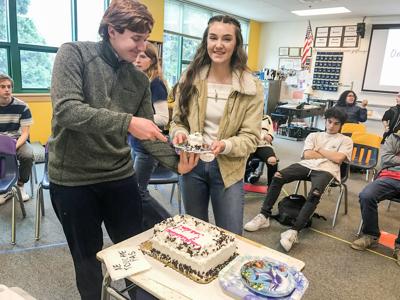
“I was very proud of all the students’ efforts,” Goode said. At a celebration involving chocoate cake, she added her own prize for Piatt: A reuseable glass straw from the Hood River company EcoGlass.
“I was really surprised,” said Piatt, a third-year student. “There are so many amazing students in this class. Everyone was guessing who it would be and I was the last person anyone thought.
“After doing the whole challenge is blew my mind how much plastic someone does use and I wanted to bring attention so people recognize they’re a big part of it, that they realize what they’re doing and how they impact it.”
Her biggest insight was her own use of lunch baggies, adding, “They’re not necessary at all, I use glass containers, and even plastic ones you can reuse instead of getting a new one all the time.”
Piatt said, “It was fun to catch myself — remembering, ‘I need to be doing this, this is what I’m supposed to be paying attention to.’”
A letter from Scholastic to the class stated, “We loved reading all your essays and eperience for this zero waste challenge. Thank you for your response to our request to participate. We read all of the texts with a lot of attention and selected a winner that was not easy.”
Piatt’s they described as “A rich, well-presented text, and dans en Francaise excellente” — “and in excellent French.”
“We were very happily surprised by the level and qulaity of essays,” the editors said.


Commented