
By Jim Black,
OSU Hood River County Extension Central Gorge Master Gardener Volunteer
Do you already enjoy gardening but dream of having a beautiful greenhouse to spend your winters in paradise? Or maybe your interests are a bit more modest like finding a way to have salad greens in March and October? Or even to propagate new plants from your ailing rose bushes? You can start your dreams with little more than pocket change and some attention to detail.
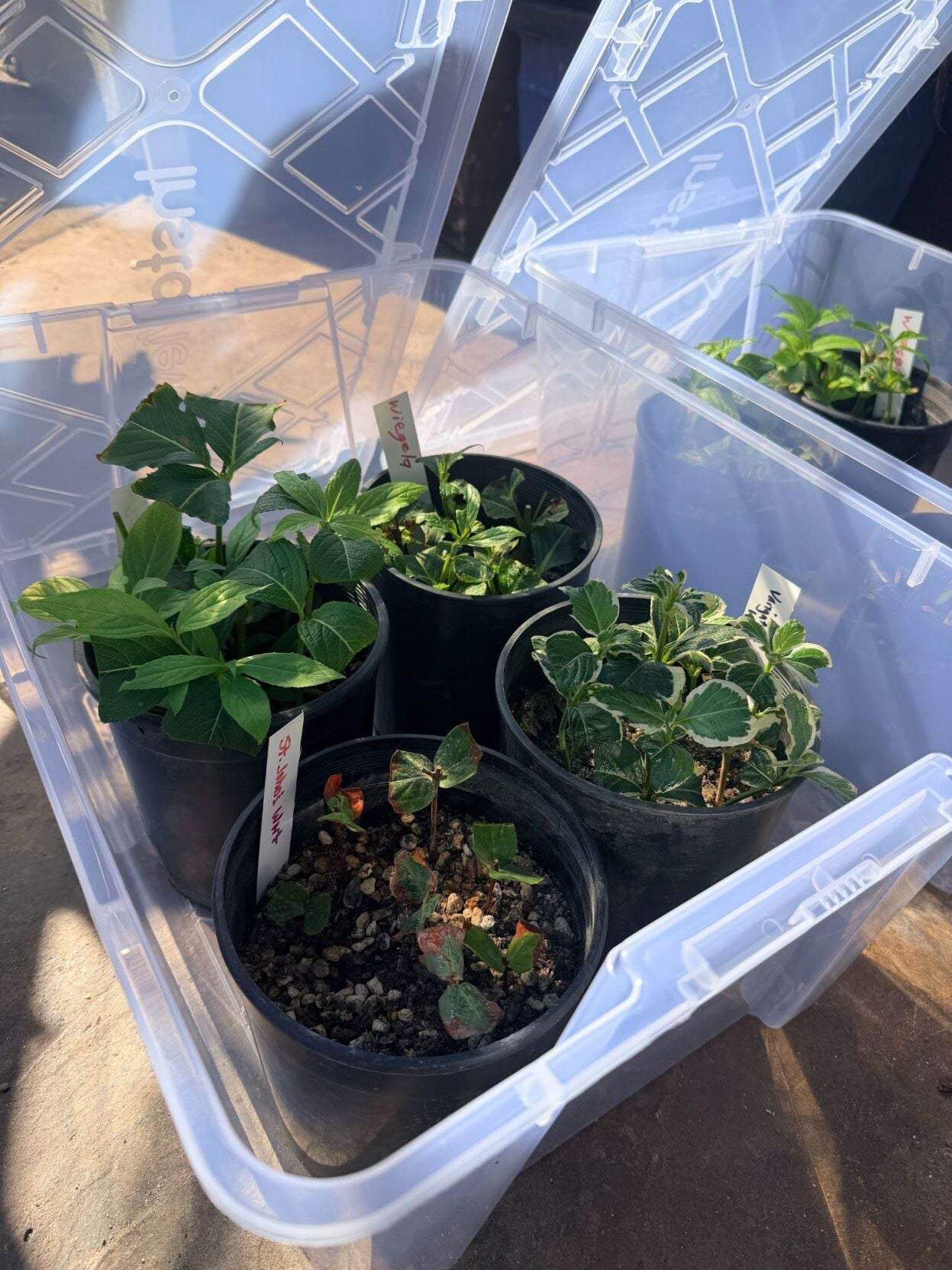
A clear plastic tub with (or without) a lid is an easy and cheap (and sometimes best) tool to propagate cuttings, extend the vegetable growing season or start cold-season greens before Mother Nature will allow it. When my wife and I had children, we were in graduate school and our tiny efficiency apartment was furnished with “early-alley” (anything we could rescue before the garbage was picked up). And our children had a much-loved cardboard box for a playhouse. It was, I believe, the most enjoyable years of our lives.
Today, the kids are grown and I’m the one playing with boxes, but now they’re plastic and stacked side by side on my east-facing entry porch. Only a narrow path separates them enough to squeeze through to water or mist the plants inside them when needed. I have a greenhouse, but I do all of my plant propagation in the bins before I up-pot the newly rooted plants and transfer them to the greenhouse or garage for next spring’s garden.
The trick with plastic bins is to place them in a bright area that is protected from direct sun during midday. For most plant propagation, the cuttings need lots of bright light and high humidity to keep them from wilting, but they will die if exposed to high temperatures.
To make it easy, I drill holes in the bottom of the tubs so that water drains away from the plants.
For fewer tubs, simply invert the tub and omit using a lid altogether.
The same principle can be used in April to start cold-season vegetable seeds in your garden beds by placing a bin upside down over the newly planted seeds that need protection from those last cold spring nights. There, too, you will need to prop up or remove the bins during midday to prevent overheating once seeds have begun to sprout, but if you are disciplined enough to monitor them closely, you can have fresh salad weeks earlier than usual. Bins can also be used to protect smaller plants from autumn frost, but only the die-hard gardener will mess with that. Really, is lettuce all that tasty when you can have root vegetables?
COST: Minimal, including recycled “early alley” donations.
Home-built or purchased Cold frames with automatic openers are better for plants that can’t fit under the largest plastic tubs. You can build or buy cold frames with manually opened lids but by adding a heat-activated window lift; these cold frames take little monitoring. The size and automation make these larger cold frames a better choice for growing and protecting plants that need the benefits of greenhouse growing, but they are affordable for even small budgets. Potted plants that can’t survive our coldest winters can often survive in a properly sited cold frame. The disadvantage is that when opening a window to let excess heat escape, moisture is greatly reduced, making them less reliable for growing conditions that require constant high humidity, such as rooting semi-hardwood cuttings. If you already have raised beds, building a cold frame cover is an exciting addition and should be considered.
Although recycled double pane glass windows work beautifully, consider their weight and any snow load before selecting this option. Also consider placement so that large animals or children won’t crash through them. Best for larger plants that don’t need high humidity.
COST: $50-$200 using reclaimed windows or polycarbonate sheets, wood, and a single heat-activated opener. Quality cold frames kits start around $300, and though a kit may be more costly, building an operable window isn’t an easy task for beginning carpenters.
The abundance of information on gardening practices, including cold frame gardening, is staggering. It’s best to use websites associated with a university or recognized gardening association, but even YouTube sites by backyard gardeners can prove insightful and fun — just don’t take everything as fact. Team up with other enthusiasts to share ideas. Or better yet, join the Central Gorge Master Gardeners Association where your neighbors work year round dreaming up new ways to play in the soil with their toys and boxes.


Commented