
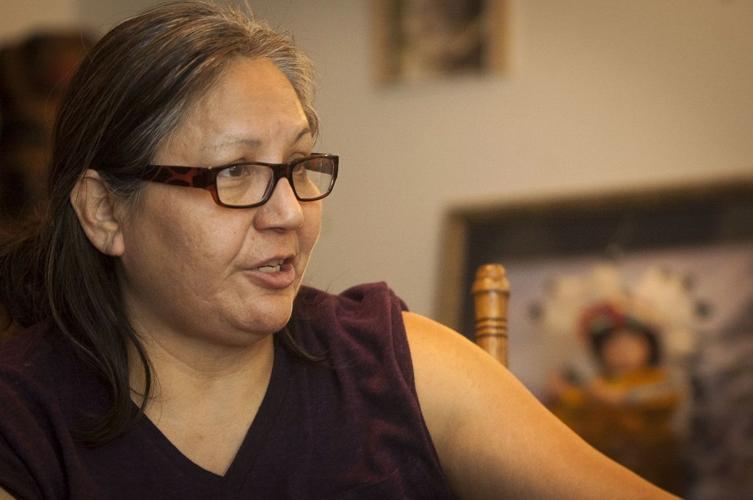
When Lana Jack’s brother, Lonnie, died at the age of 43 from alcoholism, she became convinced that the first step in breaking the vicious cycle of addiction in the Native American culture was to give people hope.
“It is time for healing,” said Jack, 50, who lives in Celilo Village, about nine miles east of The Dalles. “I tell people, ‘I know the pain and the loss — I’m here to love you, no matter what.’”
Lonnie spent his last days at Jack’s house in June and encouraged her to never give up the cause. When days look bleak, which is usually when there are more needs than she has resources to meet, she remembers his words.
“I just kept saying, ‘I’m sorry brother, I’m sorry,’” remembers Jack. “And he kept saying, ‘Nana (tribal word for older sister), thank you. I have hope now. I never had it. I support you — just keep doing what you’re doing.’”
Jack had lost track of her brother through the years because of their different lifestyles — she does not drink, do drugs or smoke — and his penchant to wander.
She brought Lonnie home after finding him cold, hungry and camping out on someone’s sofa at Lone Pine, an in-lieu site on the eastern edge of The Dalles.
Her family’s tragedy strengthened Jack’s determination to help tribes overcome what she sees as the aftermath of genocide.
“It stepped me up,” she said of her increased focus.
Jack is the great-grandniece of Chief Tommy Thompson, who led the Celilo-Wyam tribe from the late 19th Century until the 1950s.
Her lineage stretches back thousands of years and includes great-grandmother Minnie Schowaway, grandmother Irene Williams Bruno, and mother, Mary Cook Jack, all of whom held positions of leadership in the tribe.
Jack said layered assaults on the First People’s culture and generations of oppression has crushed hope and led many to self-medicate with drugs and alcohol.
Addictions have permeated families and led to generational patterns of abuse and neglect. Children have been routinely separated from parents in what, to Jack, seems like an endless cycle of despair.
“There’s no hope in all of this and, if you don’t have hope, you can’t find the will to change your life,” she said.
She said problems with unemployment and severe poverty feed the hopelessness and have ratcheted up the suicide rate among youth in the nation’s 566 federally-recognized tribes to an alarming level.
“You cannot marginalize people for generations and then just say ‘deal with it,’ because they can’t,” said Jack. “There are a lot of people talking about helping out, but not enough being done on the ground.”
According to a 2014 report by Theresa M. Pouley, chief judge of the Tualalip Tribal Court in Washington state, one-quarter of Indian children live in poverty, versus 13 percent in the U.S. They have two times the rate of abuse and neglect and graduate high school at a rate 17 percent lower than the national average. Their substance abuse rates are also much higher.
Native American youth are twice as likely as any other race to die before the age of 24.
“Their experience with post-traumatic stress disorder rivals the rates of returning veterans from Afghanistan,” stated Pouley, a member of the Indian Law and Order Commission, in a recent Washington Post interview.
Jack said it is overwhelming to work against such great odds, so she has chosen to keep it simple — taking care of basic needs — while professionals figure out a larger-picture strategy.
The agony facing American Indians, she believes, began with a string of broken promises that now spans decades.
She said treaties failed to deliver the guaranteed health care, education and housing promised to natives who were wrenched out of their homes and placed on reservations.
Gifts are being sought for all ages to pass out at a Christmas party for Native Americans at Lone Pine and other locations in the gorge.
The party is Friday, Dec. 18, from 5 to 8 p.m. at the Mid-Columbia Senior Center in The Dalles. The event has been organized by Lana Jack, a Celilo Village resident.
She is the founder of the Columbia River Indian Center, an organization in the process of gaining nonprofit status.
She has made it her mission to help displaced and impoverished Native families.
Jack is seeking wrapped gifts labelled “female child,” “male child, “adult female” and adult male” prior to the party.
She also invites community members to make the event more festive by contributing a favorite dish.
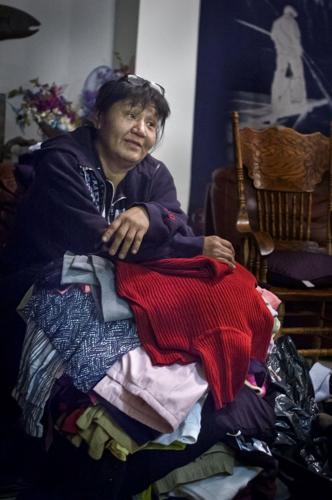
Another priority of Jack’s is to provide basic needs — clothing, food and shelter — for families spending the winter at one of the in-lieu sites.
High on her list are blankets, plastic tarps, rope, candles, sleeping bags, batteries, gas and propane vouchers, coats, towels, warm clothing for all ages and both sexes, hygiene items, and both boxed and canned food items.
She can be reached at 541-965-1679 to arrange for donations of food and clothing to be picked up or dropped off.
For many who stayed on their home turf, such as her family, there have been battles to get enrolled in a legally-recognized tribe to qualify for benefits, such as medical and dental services.
Although Jack has documentation to prove her status as a Celilo-Wyam (the word means “echo of falling water” in reference to the former falls), she has been turned down for registration with the Yakama Nation.
She believes the rejection by the Bureau of Indian Affairs is due to economics — the government doesn’t want to cover the retroactive cost of benefits that would come with a change in her status.
Because she is not from a federally-recognized tribe, Jack said she had to fight to stay in one of the 15 new houses at Celilo, finally managing to do so by blitzing BIA officials with paperwork to support her claim.
“I’m the keeper of the family records,” she said. “My tribal rights come from 10,000 years of occupation.”
Jack’s ancestors were fishermen and traders at the falls, a natural hub for commerce among Native American tribes from the Great Plains to Alaska, California and beyond.
Tribes on both side of the Columbia River relied upon runs of salmon, a fish considered sacred, for their livelihood and as a food source. They traded dried salmon for other things they needed.
In 1957, the old way of life for Celilo inhabitants came to an end when The Dalles Dam began operations and the falls were silenced.
Jack is incensed that, after eons of habitation on the banks of the Columbia, her older brother is now facing penalties for fishing at Lone Pine because of the family’s non-tribal status.
“He has been charged with trespassing on Indian land,” she said.
She has learned in a life that sometimes seems an uphill battle not to spend a lot of time thinking about things that distress her. Instead, Jack focuses on changing what is within her control.
Celilo Village was built because the Indians refused the government’s attempt to relocate them and Jack has also dug in deep.
Her Christian faith gives her a sense of purpose and sustains her through tough times.
“It’s a God thing, it’s about Jesus,” she said. “I would not be able to have peace here if not for Him.”
These days, Jack spends a lot of time behind the wheel gathering food and clothing that she delivers to Lone Pine and the other four in-lieu sites along the river.
The sites were set aside by Congress to replace traditional fishing grounds of the Yakama, Warm Springs, Umatilla and Nez Pierce that were flooded by construction of hydroelectric dams.
In addition to Lone Pine, there is an in-lieu site at Cascade Locks in Oregon and three in Washington that can be found on the Wind River, near Cook and in Underwood.
Amenities at these sites includes either outdoor restrooms or plumbed facilities, a limited number of shelters, boat ramp and dock access, fish cleaning tables, net racks and drying sheds.
In Lyle, one of the 26 treaty fishing access sites along the Columbia can be found.
Although these places are not open to camping, nearby Yakama land is used by tribal members for temporary and permanent living space.
Martha Cloud found herself living there after her house in Wishram was destroyed by fire in April.
She is a recipient of Jack’s outreach and is now fully engaged in the cause to help others.
“It was very uplifting to me when Lana came on the scene,” said Cloud.
Her family history, like Jack’s, included a lot of “Hopeless Wandering Drunks” and she was once addicted to alcohol.
“Dysfunctional families lead to dysfunctional communities — it trickles down the line,” said Cloud, who is 54.
She said Natives are comfortable living in big family groups that provide a strong support network, but can also be destructive when there are unhealthy patterns.
“We don’t function well alone, it’s common for three generations to live in the same house, but you can’t heal yourself if you don’t leave a bad situation,” she said.
In her own case, Cloud said one day she decided she “didn’t want to live like that anymore” and went into treatment to ensure that she could stay sober.
“For many years I partied and I had fun,” she said.
“Only one day it wasn’t fun anymore, it wasn’t a party, it had become a painful addiction. I was so far into my addiction that I had no hope, no dreams. I was down and out.”
She said Jack has played a huge role in her recovery, providing not only practical help but a listening ear.
“I was extremely grateful that she let me talk,” said Cloud. “A lot of people who use alcohol are so far down that they aren’t being listened to.”
Although there are many problems in the Native American culture, Cloud said there are many strengths as well.
“We are rich in tradition, we have an identity,” she said. “We have compassion for our brothers and sisters and will give freely without expecting anything in return.”
Cloud, who hails from the Wishram and Klickitat tribes, gives the following advice to anyone struggling to overcome an addiction.
“Don’t give up on the Creator, don’t give up praying,” she said.
“If you want to, you’ll learn something new every day. If you want to change your life, it’s possible — don’t give up.”


Commented