The ALS Association Oregon and S.W. Washington Chapter has funded two major research grants totaling $1,000,000 to support the work of scientists at Johns Hopkins University and Rapa Therapeutics who are seeking out new treatments for amyotrophic lateral sclerosis (ALS). The awards are made possible through the philanthropy of John Schaffers, who died from ALS in November 2020 at age 66.
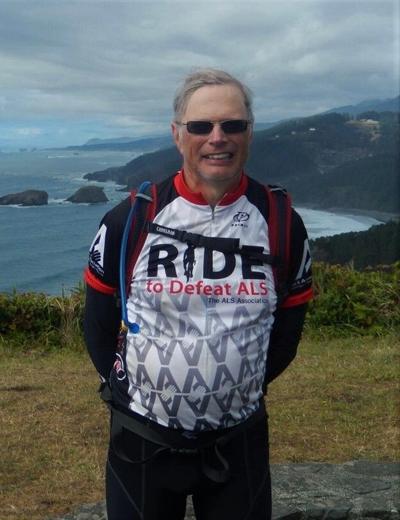
John Schaffers
The ALS Association Oregon and S.W. Washington Chapter funds ALS research every year, but never before at this magnitude. “We are so honored to steward John’s gift in this way,” said Board President Amy Frazey. “Our chapter is proudly committed to continue serving and caring for those with ALS in our community and funding research projects until a cure is found.”
A $500,000 gift will support the work of Jeffrey Rothstein, M.D., PhD, at Johns Hopkins University, who is testing anti-sense DNA technology in the animal model of ALS to understand protein transportation in motor neurons with the goal of developing a new ALS therapy. The second $500,000 gift will support the work of Daniel Fowler, M.D., at Rapa Therapeutics for an early clinical trial to test the safety and efficacy of a new T-cell treatment that may reduce inflammation in motor neurons.
“John was enthusiastically dedicated to ALS research, and he inspired so many in our community to keep fighting,” said Lance Christian, Executive Director of The ALS Association Oregon and SW Washington Chapter. “We are forever grateful for his mark on our organization.”
Approximately 10% of all ALS cases are inherited, and this is the case with the Schaffers family, which has lost multiple family members to the disease. The family has helped to raise tens of thousands of dollars in the search for a cure over the past 20 years. John’s family and friends call themselves Schaffers Striders and continue to participate in events like the Walk to Defeat ALS each year.
Amyotrophic lateral sclerosis (ALS) is a progressive neurodegenerative disease that affects nerve cells in the brain and spinal cord. ALS takes away the ability to walk, speak, swallow, and breathe and shortens the life span. The life expectancy of a person with ALS averages about two to five years from the time of symptom onset. There is currently no cure and no significant life-prolonging treatments for the disease.



Commented