
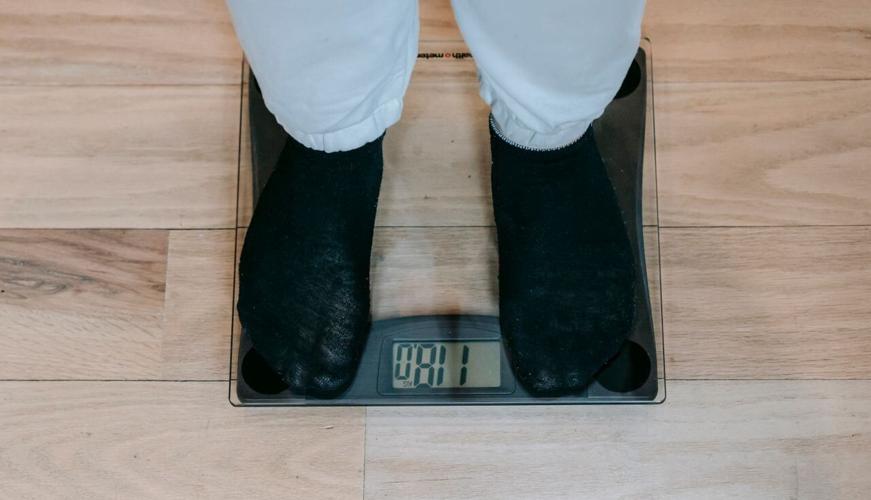


(Photo by beyzahzah via Pexels)
By Stephen Beech
Belly size is a better predictor of heart disease than body mass index, according to a new study.

(Photo by Andres Ayrton via Pexels)

(Photo by Andres Ayrton via Pexels)

(Photo by beyzahzah via Pexels)
By Stephen Beech
Belly size is a better predictor of heart disease than body mass index, according to a new study.
Researchers found that body mass index, or BMI, doesn't reflect overall body composition as abdominal fat is not measured.
The size of a person's belly is a better indicator of the risk of a future heart attack or stroke when compared to BMI alone, according to the "enormously important" study published in the Journal of the American College of Cardiology (JACC).
BMI — calculated by dividing a person's weight in kilos by the square of their height in meters — has been widely used in recent years to determine if someone is overweight or obese, common risk factors for heart disease.
But the new American study shows that not accounting for waist circumference (WC) or waist-to-hip ratio (WHR) can lead to "misclassification" of cardiovascular disease risk.
(Photo by Andres Ayrton via Pexels)
By TalkerStudy senior author Dr. Michael Blaha, of the Johns Hopkins Ciccarone Center for the Prevention of Cardiovascular Disease, Maryland, said: "Indeed, it appears that WC and WHR reclassify risk defined by traditional BMI thresholds.
"We saw individuals with clinically determined normal weight who had elevated central adiposity and high WHR, associating them with higher risk across most outcomes."
While calculating BMI is a common practice for diagnosing obesity, Dr. Blaha says it cannot account for distribution of body fat.
Studies have shown that visceral fat — that which surrounds the internal organs in the abdominal area — is associated with chronic diseases such as heart disease and diabetes.
Subcutaneous fat, located directly under the skin, is not as strongly associated.
Despite evidence linking "central adiposity" — the accumulation of both visceral and subcutaneous fat in the abdominal area — to adverse cardiovascular events such as a heart attack or stroke, BMI is still the most used metric to determine overweight and obesity and future cardiovascular risk.
The new study examines whether adding WC and WHR to BMI better predicts future cardiovascular risk.
(Photo by Andres Ayrton via Pexels)
By TalkerResearchers analyzed data from 260,000 people over an average of 20 years who had either WC or WHR figures and at least one of nine outcomes, including time to first fatal and nonfatal heart attack, fatal and nonfatal stroke, heart failure, total coronary heart disease (CHD), total cardiovascular disease, death from CHD and death from cardiovascular disease.
In people with normal weight as determined by BMI, 5% had high WC and 18% had high WHR.
Among those who were classified as overweight, 39% had high WC and 40% had high WHR.
Among those classified as obese, 9% had low WC and 45% had low WHR.
People with normal weight or overweight and clinically defined high WC or WHR were associated with a 15% to 50% greater risk for most of the outcomes.
Those with obesity and low WC were not found to be associated with a significantly different risk of outcomes compared with those who had normal weight and low WC, except for all-cause mortality, for which risk was significantly lower.
Study lead author Zeina Dardari said: "Our findings emphasize the critical role of identifying elevated central adiposity, even in individuals with a normal BMI or with a BMI in the overweight range.
"Relying solely on BMI may result in misclassification of cardiovascular risk across a wide range of cardiovascular outcomes.
"We encourage clinicians to consider central adiposity distribution across the entire BMI spectrum when evaluating cardiovascular risk in primary prevention settings."
Harlan Krumholz, of Yale School of Medicine who is editor-in-chief of JACC, called for an end to only looking at BMI when it comes to assessing the risk of a heart attack or stroke.
He said: "It is time to abandon a sole focus on body mass index.
"This enormously important study, based on data from hundreds of thousands of participants in large-scale cohort studies, authoritatively shows that waist circumference and waist-to-hip ratio provide critical information about cardiovascular risk, even among people with a BMI considered normal."
Krumholz added: "Where fat is distributed matters, and these simple measures should be part of routine cardiovascular risk assessment."
Originally published on talker.news, part of the BLOX Digital Content Exchange.
Information from the News and our advertisers (Want to add your business to this to this feed?)
Success! An email has been sent to with a link to confirm list signup.
Error! There was an error processing your request.
Sign up to receive notifications when a new Columbia Gorge News e-Edition is published.
Would you like to receive our news updates? Signup today!
Receive weekly updates on obituaries and death notices.
Oregon Capital Press presented by Columbia Gorge News
Receive updates on upcoming promotions and special sections.
Receive weekly updates on local sports news.


Sorry, an error occurred.
Already Subscribed!
Cancel anytime
Thank you .
Your account has been registered, and you are now logged in.
Check your email for details.
Submitting this form below will send a message to your email with a link to change your password.
An email message containing instructions on how to reset your password has been sent to the email address listed on your account.
No promotional rates found.
Secure & Encrypted
Thank you.
Your gift purchase was successful! Your purchase was successful, and you are now logged in.
| Rate: | |
| Begins: | |
| Transaction ID: |
A receipt was sent to your email.
Commented