

Photo by Towfiqu barbhuiya via Pexels
By Stephen Beech
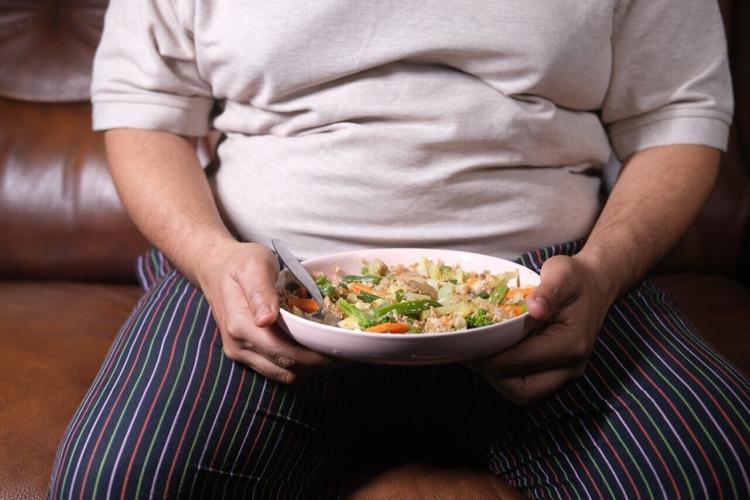
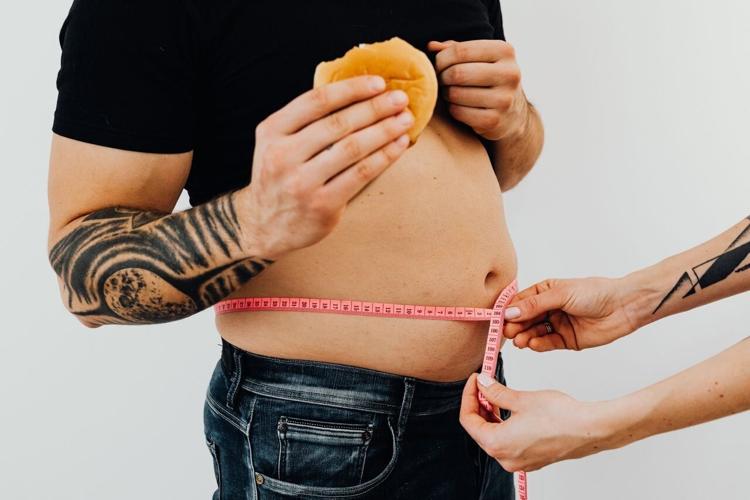
Being overweight may be largely down to our genes, according to new research.

Photo by Moe Magners via Pexels

Photo by www.kaboompics.com via Pexels

Photo by Towfiqu barbhuiya via Pexels
By Stephen Beech
Being overweight may be largely down to our genes, according to new research.
The link between parents’ and children’s weight is mostly genetic, suggest the findings.
An analysis of 86,000 Norwegian children found that the association between parents’ body mass index (BMI) and their children's childhood BMI may be primarily due to genetic inheritance rather than to any direct biological effect of parental weight during pregnancy.
The research team explained that higher parental BMI is consistently associated with higher childhood BMI.
But it has been difficult for scientists to disentangle how much of the association is due to genetics and how much is due to biological effects of maternal weight during pregnancy.
For the new study, researchers analyzed data from the Norwegian Mother, Father and Child Cohort Study, a group of children born between 1999 and 2009.
Data on 86,000 youngsters, including their birth weight and BMI from six months to eight years of age, as well as appetite-related eating behaviors at age 8, was available in the dataset.
Photo by Moe Magners via Pexels
By TalkerThe researchers looked at twin, sibling, and half-sibling relationships across multiple generations to directly quantify how much of the parent-child BMI association could be attributed to genetic confounding.
Maternal BMI was more strongly associated with offspring birth weight than paternal BMI, consistent with an effect of maternal body weight on birth weight through the environment inside the uterus.
But after birth the associations of maternal and paternal BMI with offspring BMI were broadly similar from age 2 to 8.
Models showed that genetic effects explained an estimated 79% of the statistical association between a mother’s BMI and her child’s BMI at age 8, and 94% of the association for fathers.
Higher parental BMI was also associated with obesity-related eating behaviors in children, including greater food responsiveness and emotional overeating.
But the study, published in the journal PLOS Medicine, was not able to conclusively determine how much of this was genetically driven.
The research team says that the findings do not support the idea that childhood obesity is inevitable for children of heavier parents.
Children who inherit a genetic predisposition to higher BMI may still express those genes differently depending on their environment.
Study co-author Tom Bond, from the University of Bristol, said: “Obesity runs in families, but it is difficult to work out why this is.
Photo by www.kaboompics.com via Pexels
By Talker"Our results suggest that the link between a mother's or father's body mass index and their children's BMI up to age 8 is mostly due to inherited genes.
"Expectant parents should be encouraged to maintain a healthy weight, but this may not be enough to ensure that their children also have a healthy weight.”
Co-author Professor David Evans, from the University of Queensland, Australia, said: “We were interested in examining whether obesity in mothers during pregnancy might also have adverse effects on the risk of obesity in their offspring when the children get older.
"We found that while maternal body mass index during pregnancy was likely to adversely affect offspring birth weight, it didn’t appear to have large effects on risk of offspring obesity in later life beyond that explained through the transmission of genes from mothers to their offspring.”
Co-author Professor Alexandra Havdahl, from the Norwegian Institute of Public Health, said: “Our findings suggest that the link between parents’ and children’s body mass index is driven largely by shared genes rather than by the intrauterine environment or parenting behavior.”
Bond added: “Our results may have important public health implications, when considered alongside prior evidence.
“Maternal BMI may be unlikely to have a large causal effect on child BMI beyond birth…and any causal effect of paternal BMI on offspring childhood BMI is likely to be similar to or smaller than that of maternal BMI.
"Consequently, reductions in the BMI of either parent before pregnancy may be unlikely to cause large reductions in childhood adiposity.”
Originally published on talker.news, part of the BLOX Digital Content Exchange.
Information from the News and our advertisers (Want to add your business to this to this feed?)
Success! An email has been sent to with a link to confirm list signup.
Error! There was an error processing your request.
Sign up to receive notifications when a new Columbia Gorge News e-Edition is published.
Would you like to receive our news updates? Signup today!
Receive weekly updates on obituaries and death notices.
Oregon Capital Press presented by Columbia Gorge News
Receive updates on upcoming promotions and special sections.
Receive weekly updates on local sports news.


Sorry, there are no recent results for popular videos.


Sorry, an error occurred.
Already Subscribed!
Cancel anytime
Thank you .
Your account has been registered, and you are now logged in.
Check your email for details.
Submitting this form below will send a message to your email with a link to change your password.
An email message containing instructions on how to reset your password has been sent to the email address listed on your account.
No promotional rates found.
Secure & Encrypted
Thank you.
Your gift purchase was successful! Your purchase was successful, and you are now logged in.
| Rate: | |
| Begins: | |
| Transaction ID: |
A receipt was sent to your email.
Commented
Sorry, there are no recent results for popular commented articles.