
Looking up at the sky on a clear winter’s night can be stunning.
The stars sparkle brighter than other times of the year, with the Milky Way and constellations glowing even to the naked eye.
I’ve read how the Universe and our solar system formed, about discoveries of exoplanets and other cosmological events, but almost nothing covering identification of specific stars and planets visible from Earth. So I sat down this month to read up on constellations.
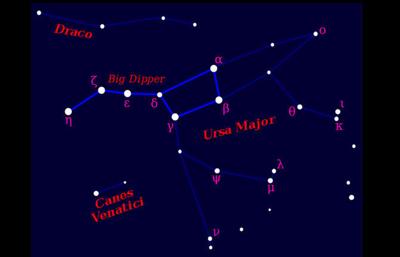
My skywatching knowledge barely extended beyond recognizing Orion, the Big Dipper and shooting stars. And it turns out that one of the two constellations I thought I knew, the Big Dipper, is in reality just an asterism (a commonly recognized pattern of stars, too small to make up an entire constellation).
Clearly I had a lot to learn, and decided stargazing was a longer term project. I needed to start with the basics, and get some tips on beginner stargazing before leaping into the details of star charts and lesser known constellations.
On a clear dark night the human eye can see over 4,000 stars, up to 5 planets, a few distant star clusters and a variety of other celestial objects.
A good set of binoculars can increase the number of stars to nearly 100,000. But these numbers require good viewing conditions, which means more than simply glancing up as you step outside for some other reason after sunset (my usual method of stargazing).
Obviously, the darker and clearer the night the better.
We’re lucky on the east side of the Cascades to have fewer cloudy days and less air pollution creating haze in the atmosphere.
Turn off any lights that might shine outdoors before viewing.
Even better, head to Sorosis Park or another location away from, or above, most lights in town.
Also, check the phase of the moon, as the light from a bright moon can obscure many dimmer stars.
Give your eyes some time to adjust to the dark. The human eye accommodates for low light fairly rapidly in the first few minutes, but night vision should continue to improve significantly for 20 to 30 minutes and can take up to several hours to reach completion.
Weather turns out to play a big role in stargazing, beyond simply being clear or cloudy.
Atmospheric turbulence, wind, temperature and humidity all play key roles in the transparency of the atmosphere, and how well light from distant objects can reach the Earth’s surface.
Winter skies are indeed clearer than those of summer, in part because of humidity.
Cold air holds less moisture than warm air, meaning less water vapor to block light passing through the atmosphere. The stars appear brighter, and greater numbers of dim stars can be seen.
The stars also twinkle more, or scintillate, as the light beam from each star gets deflected back and forth by particles and water as it passes through the atmosphere.
This is one of the trade offs of winter versus summer stargazing: Higher summer humidity and haze oddly result in sharper star images (less twinkling), because more of the deflected star light is absorbed in the sky before reaching your eye.
Unfortunately, the same effect blocks the light from dimmer stars from reaching the ground at all. Warm humid skies can absorb over half the starlight entering the atmosphere.
Wind, temperature gradients and turbulence in the atmosphere can also bend and deflect light. A clear calm winter night, with the center of a high pressure system overhead, can offer some of the best viewing conditions.
Knowing more about when and where to stargaze, I now need to figure out what I might actually see when looking up.
I read several articles at EarthSky.org and Space.com for this article, visited NASA’s site amongst others, and still want to look into the many Apps available for smartphones and tablets. There’s a wealth of information and resources on stargazing available, whether you prefer the printed page or online sources.
With this plan in mind, it’s time for me to go get started. ‘
If you’re an experienced sky watcher, I’d welcome any suggestions or favorite resources. And perhaps next year I can give an update on what I’ve learned.
Fred Schubert can be contacted via email at fcscience@skylf.net.


Commented