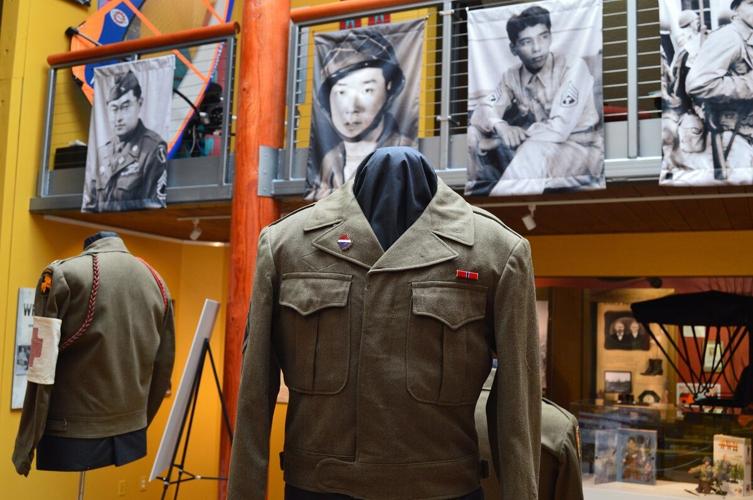
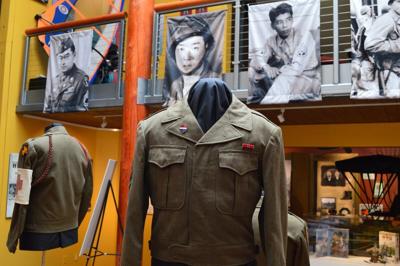
A U.S. Army jacket belonging to George Akiyama, Hood River, part of The History Museum of Hood River County collection, donated by his wife, Ruth, in 2016. Akiyama was drafted into the Army in November 1941 and assigned to the 100th/442nd — an all-Nisei fighting unit that suffered the highest casualty rate of any other unit during World War II. Fighting in Italy, France and Germany, he received Bronze and Silver stars; his medals are also on display. Behind Akiyama’s jacket are the military photos of Hideto Tomita, Kay Niguma, Frank Hachiya and George Hara.
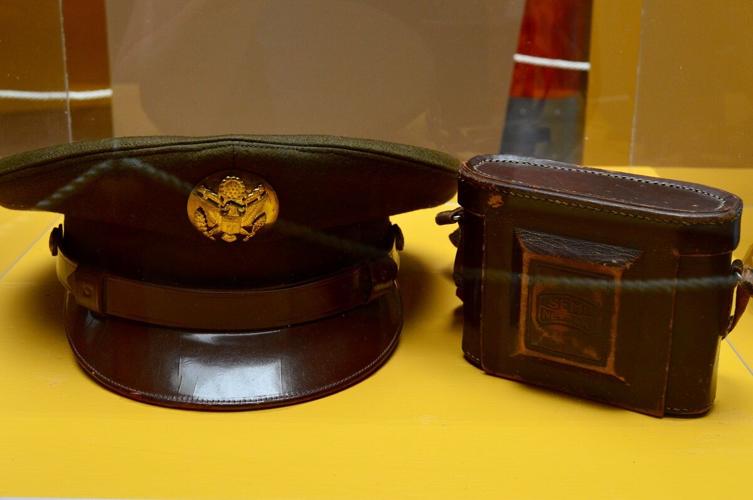
U.S. Army enlisted dress hat and pop-up camera, both belonging to Harry Takeshi Morioka of The Dalles. A placard notes Morioka “acquired this camera by trading two packs of cigarettes while stationed in Japan during the occupation.”
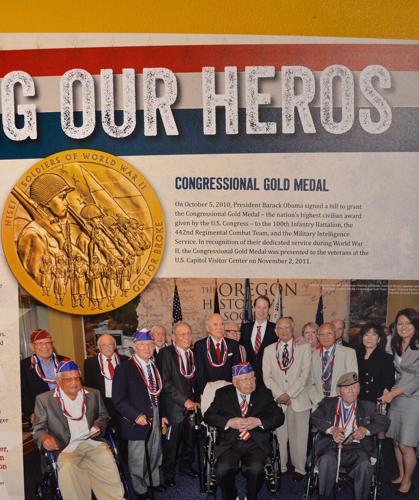
“On Oct. 5, 2010, President Barack Obama signed a bill to grant the Constitutional Gold Medal — the nation’s highest civilian award given by the U.S. Congress — to the 100th Infantry Battalion, the 442nd Regimental Combat Team, and the Military Intelligence Service,” reads one panel (image above). “In recognition of their dedicated service during World War II, the Congressional Gold Medal was presented to the veterans at the U.S. Capitol Visitor Center on Nov. 2, 2011.”
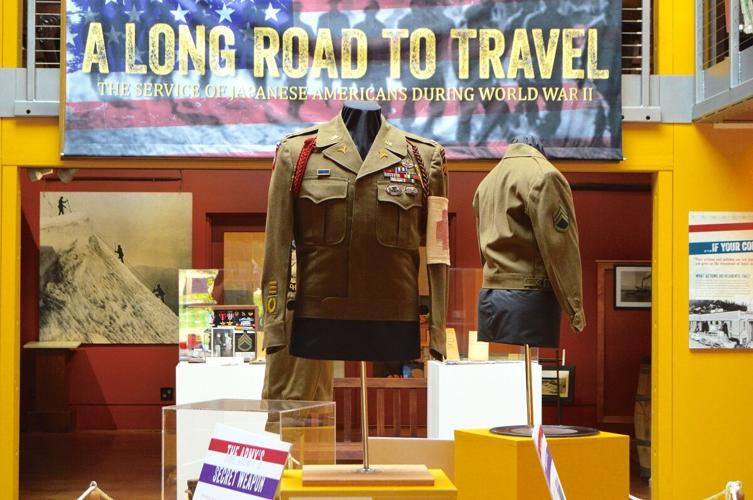
“A Long Road to Travel” is the newest temporary exhibit at The History Museum of Hood River County, running through December. The exhibit will move to the Japanese American Museum of Oregon in 2023, February through April.
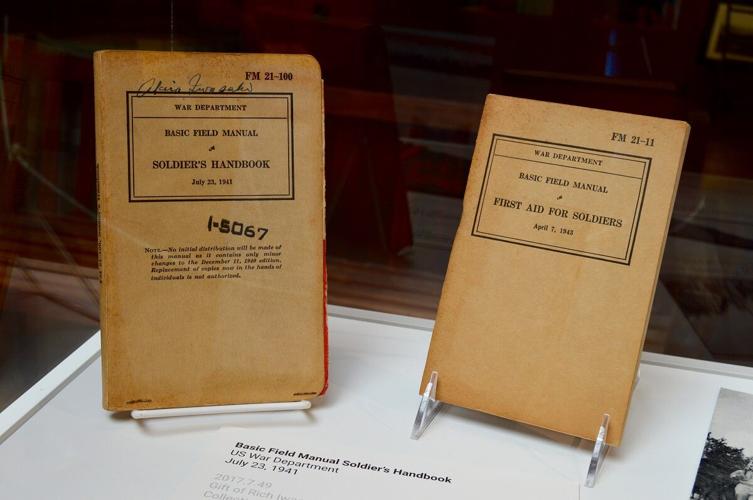
On display are these basic field manuals — Soldier’s Handbook and First Aid for Soldier, issued by the U.S. War Department July 23, 1941, and April 7, 1943, respectively. The books are part of the JAMO collection, donated by Rich Iwasaki in 2017.
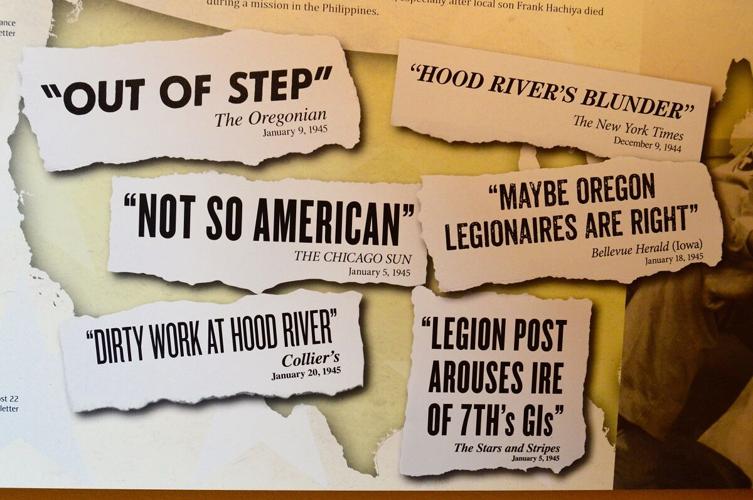
Pictured are comments taken from publications such as The Oregonian, The Chicago Sun, Collier’s, the New York Times, Bellevue Herald (Iowa) and the Stars and Stripes — almost all of them coming out against the removal of 16 names from the American Legion Post 22’s memorial board on the courthouse in November 1944.
A U.S. Army jacket belonging to George Akiyama, Hood River, part of The History Museum of Hood River County collection, donated by his wife, Ruth, in 2016. Akiyama was drafted into the Army in November 1941 and assigned to the 100th/442nd — an all-Nisei fighting unit that suffered the highest casualty rate of any other unit during World War II. Fighting in Italy, France and Germany, he received Bronze and Silver stars; his medals are also on display. Behind Akiyama’s jacket are the military photos of Hideto Tomita, Kay Niguma, Frank Hachiya and George Hara.
How would you feel and what would you think, if war heroes were not welcomed back home?
That’s the question posed by the new temporary exhibit at The History Museum of Hood River County, a collaboration with the Japanese American Museum of Oregon (JAMO), featuring the stories and memorabilia of Japanese American World War II soldiers. The exhibit will run through Dec. 31.
“More than 400 first generation Japanese American (Nisei) soldiers from Oregon served in the military during World War II,” writes The History Museum of Hood River County Executive Director Anna Goodwin in a press release. “They played a pivotal role in both Europe and the Pacific, despite their families being incarcerated in concentration camps in the U.S. at the same time. This exhibition focuses on the stories of those soldiers, and the long trek they made to serve their country, overcome prejudice at home, and achieve recognition for their contributions.”
U.S. Army enlisted dress hat and pop-up camera, both belonging to Harry Takeshi Morioka of The Dalles. A placard notes Morioka “acquired this camera by trading two packs of cigarettes while stationed in Japan during the occupation.”
Trisha Walker photo
Setting the stage for the exhibit, an opening panel asks visitors to consider how the events and experiences described are similar — and different — from life today: “Imagine what YOU might have said and done at the time. What might YOU do if you faced similar issues today?”
Hood River’s campaign to discourage Nisei soldiers and their incarcerated families from returning to the valley — and the open hostility towards those who did — is part of that story. “In 1943, the American Legion Post 22 in Hood River proposed a Constitutional amendment to deprive all Nisei of their citizenship,” reads one panel. “It vowed not only to prevent the return of Japanese Americans from wartime camps but also to deport them to Japan. Members of the post also protested against Nisei serving in our military. In November 1944, they removed 16 names from the county’s memorial board on the courthouse. All were names of Nisei servicemen.”
“On Oct. 5, 2010, President Barack Obama signed a bill to grant the Constitutional Gold Medal — the nation’s highest civilian award given by the U.S. Congress — to the 100th Infantry Battalion, the 442nd Regimental Combat Team, and the Military Intelligence Service,” reads one panel (image above). “In recognition of their dedicated service during World War II, the Congressional Gold Medal was presented to the veterans at the U.S. Capitol Visitor Center on Nov. 2, 2011.”
Trisha Walker photo
On another panel, visitors learn, “Hood River quickly became famous for more than its apples. From across the country, newspapers editorialized and citizens wrote letters. A torrent of protest also came from GIs, military officers and citizens, especially after local son Frank Hachiya died during a mission in the Philippines.”
It’s the story, too, of the bravery and sacrifice made by Japanese American soldiers, both during the war and after. The exhibit features memorabilia and photos from the collections of the families of George Akiyama, Sho Endow, Frank Hachiya, Shig Imai, Sagie Nishioka, Mamoru Noji, Harry Tamura, Keith Doroski, Kenijro Hayakawa, Hood River News, Japanese American National Museum, Oregon Historical Society, Oregon Nikkei Endowment, Fred Sumoge, The History Museum of Hood River County and Homer Yasui.
It’s a thought-provoking exhibit that drops visitors into a very dark period of local history.
“Resurrecting the past can be like ‘opening a can of worms,’” acknowledges one panel. “We may be vulnerable and we might feel hurt, but it is a beginning. As one Nisei confided: ‘Now that … everything is out in the open, all of us feel less uncomfortable talking about it.’
“And ever so gradually, Hood River is breaking its silence. By publicly recognizing mistakes of the past and by honoring those who withstood racism and served our country, the community is taking steps toward healing.”
Pictured are comments taken from publications such as The Oregonian, The Chicago Sun, Collier’s, the New York Times, Bellevue Herald (Iowa) and the Stars and Stripes — almost all of them coming out against the removal of 16 names from the American Legion Post 22’s memorial board on the courthouse in November 1944.
Trisha Walker photo
“A Long Road to Travel” is the newest temporary exhibit at The History Museum of Hood River County, running through December. The exhibit will move to the Japanese American Museum of Oregon in 2023, February through April.
Trisha Walker photo
As Goodwin explained, the exhibit “encourages us to question ourselves and others: What would you do, if you found yourself in similar circumstances? And perhaps it will help us all commit to moving closer to that welcoming home these heroes risked everything to protect and make a reality.”
As reported in Columbia Gorge News, during this year’s Memorial Day presentation at Idlewilde Cemetery, American Legion Hood River Post 22 Commander Carl Casey described some of the overt racism experienced by the Nisei during this time; he apologized, saying the Legion would work “to ensure they will not be treated like that in Hood River ever again.”
On display are these basic field manuals — Soldier’s Handbook and First Aid for Soldier, issued by the U.S. War Department July 23, 1941, and April 7, 1943, respectively. The books are part of the JAMO collection, donated by Rich Iwasaki in 2017.
Trisha Walker photo
The History Museum of Hood River County, 300 E. Port Marina Drive, Hood River, is open Monday through Saturday from 11 a.m. to 4 p.m. through December. Admission is $5 (and free for children 10 and younger as well as currently serving military personnel and families). For more information, call 541-386-6772, email info@hoodriverhistorymuseum.org or visit www.hoodriverhistorymuseum.org.



Commented