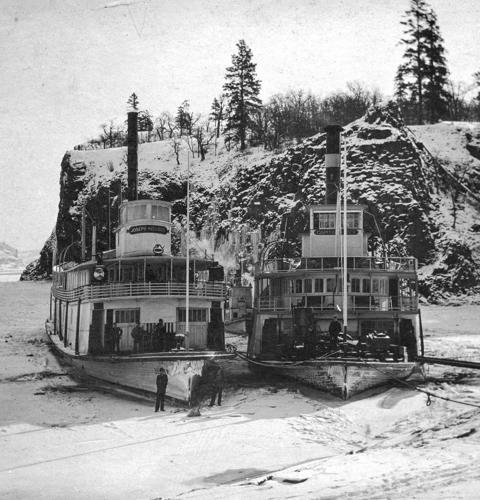
Two sternwheelers caught in Columbia River ice in the 1890s show one of the many perils of boat journeys during that time period, when riders were at the mercy of weather conditions.
Photo courtesy of The History Museum of Hood River County
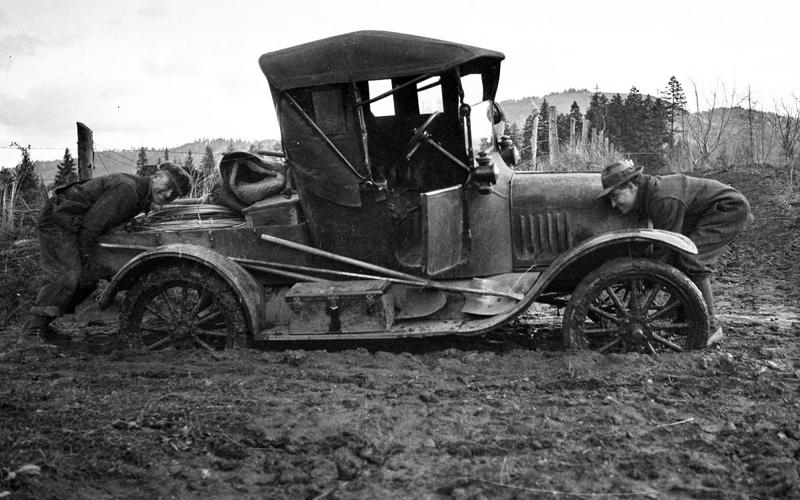
Two two unidentified men attempt to get their car out of the mud in this 1920s photograph. Even when roads in town were paved, those in the county were not.
Photo courtesy of The History Museum of Hood River County
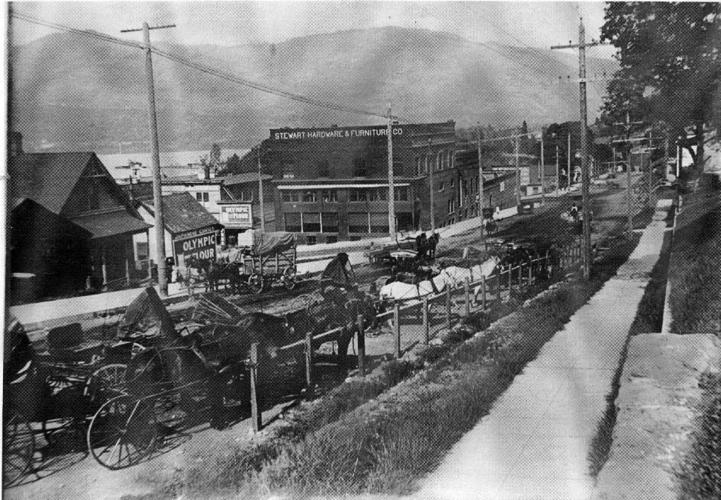
An interesting comment on downtown, Hood River: Oak Street in the 1920s wasn’t paved — but the sidewalks were.
Photo courtesy of The History Museum of Hood River County
Two sternwheelers caught in Columbia River ice in the 1890s show one of the many perils of boat journeys during that time period, when riders were at the mercy of weather conditions.
Photo courtesy of The History Museum of Hood River County
Two two unidentified men attempt to get their car out of the mud in this 1920s photograph. Even when roads in town were paved, those in the county were not.
Photo courtesy of The History Museum of Hood River County
The population growth of Hood River is probably a lot like you’d expect it would be: As transportation got faster from the 1850s onward, more people came.
Maureen Lauran, education and volunteer coordinator with The History Museum of Hood River County, presented such facts to the residents of Hawk’s Ridge Assisted Living Center last week as part of the center’s “Life Long Learning” series. On select Thursdays, a talk or activity takes place from 2-3 p.m. on a variety of topics, and all are welcome to attend these free events. (Watch Happenings for more information, or visit hawksridgeassistedliving.com.)
On Aug. 18, it was Lauran and her presentation “Access: Historic Modes of Transportation in Hood River.” Judging from the reactions of those gathered, the museum’s old photos were the fan favorite, as longtime residents reminisced about the Hood River they grew up in.
The History Museum of Hood River County is open every day from 11 a.m. to 4 p.m. — but Mondays are designated as research days. Forms are available at the front desk so you can alert the research team to your subject of inquiry. Donations are appreciated.
Transportation through the Gorge began in 1851 with the first run of the Sternwheeler Mary between Cascade Locks and The Dalles. But, as waters were so rough and the Columbia was so difficult to navigate, it had to be completely rebuilt … in 1852.
“That was damage and increased (river) traffic,” Lauran explained, adding that it wasn’t uncommon for sternwheelers to get frozen in ice and be unable to move in the wintertime, making what should have been a three hour journey into something that could take all day.
But sternwheelers were important to the growth of Hood River, bringing visitors to town, where they would stay in area hotels, rent horses and carts, and travel to buy fruit in valley orchards or supplies in town — and then load their purchases for the return trip by river.
The livery in downtown — “Fashion Stable” — would rent those horses and carts. A stage coach, owned and operated by the same family, took visitors from Hood River to Parkdale for a trip that ranged between one and three hours, depending on road and weather conditions.
Because remember — at that time, paved roads weren’t really thing.
By the late 1800s, the railroads came, bringing not only more visitors, but jobs for those who weren’t employed in the orchards. The population grew to a whopping 700, with hotels centered near the train station. Train accidents were not uncommon, however, as oversight on the building of track didn’t exist.
The building of the Columbia River Highway — celebrating its 100th year in 2016 — brought more vehicle traffic to town, but that doesn’t mean visitors enjoyed the same paved roads we have now. As Lauran pulled up one photo of 1920s downtown Hood River, she pointed out an important detail: Oak Street wasn’t paved … but the sidewalks were.
That meant that, as cars became commonplace (“People in Hood River really embraced the car,” she said), it could still be a problem to get around. Even when streets were paved in town, that came much later for the county, and vehicle owners were at the mercy of road conditions and the weather (like getting stuck in the mud during a rainstorm).
Still, “transportation enhanced the lives in Hood River,” Lauran said, with new businesses opening because of the increased traffic. One business that did not benefit, however, were hotels, built along the railroad — the days of coming in on a train and staying a while were over. You could drive to town and back in a day, Lauran said.
Today, Hood River not only has paved sidewalks and roads — in town and county — but taxis and CAT busses to help move people from one place to another.
“It’s changed a lot since 1805, when Lewis and Clark came that October,” Lauran finished, noting that the explorers didn’t bother to stop in what would eventually become Hood River as there was “nothing here” (they went across the river, where Native Americans lived).
“Lewis and Clark didn’t stop — they moved on,” she laughed. “Now people come from all over the world.”



Commented