
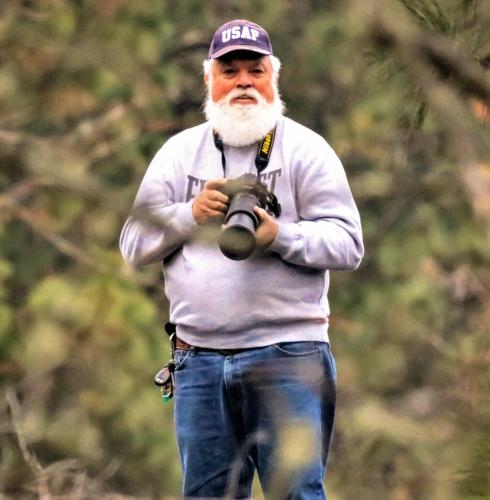
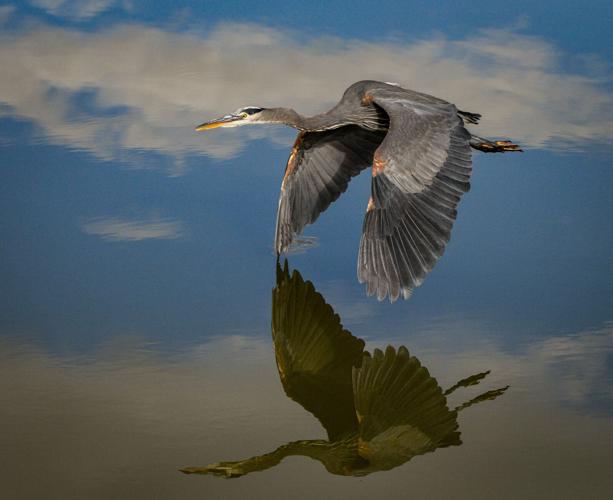
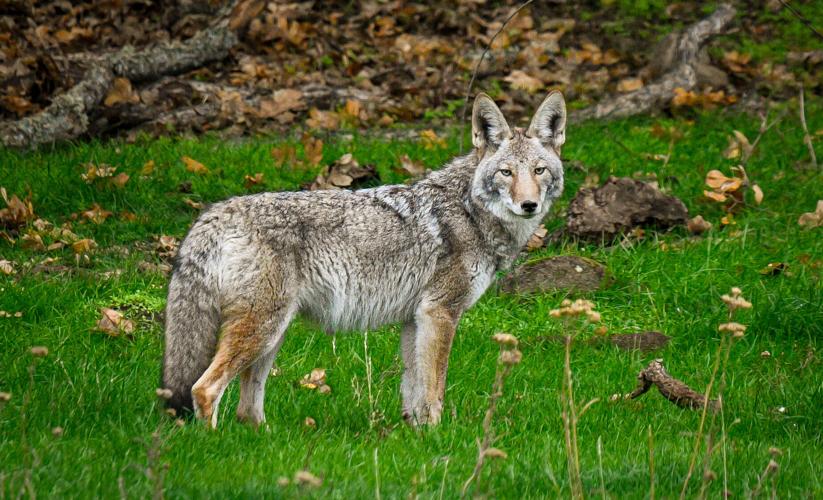
THE DALLES — After about seven years of wildlife photograph around the Eastern Gorge, photographer Gary Elkinton has caught on camera everything from a bobcat with its kill to deer and warblers and he’s still not tired of it.
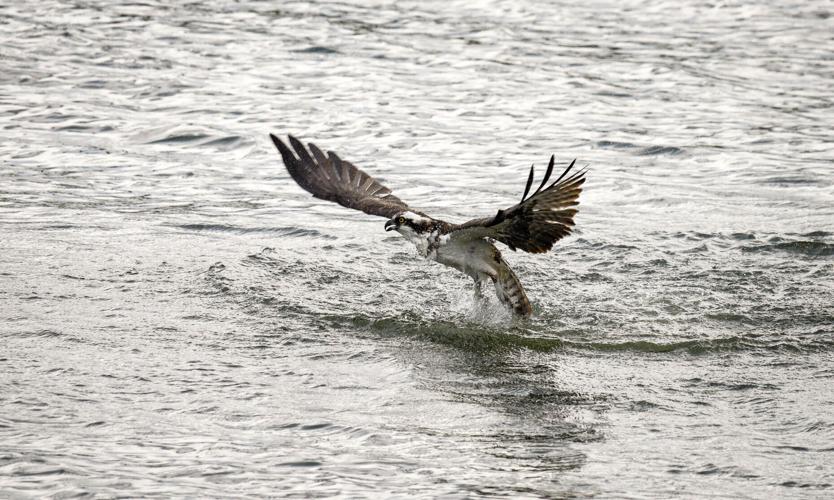
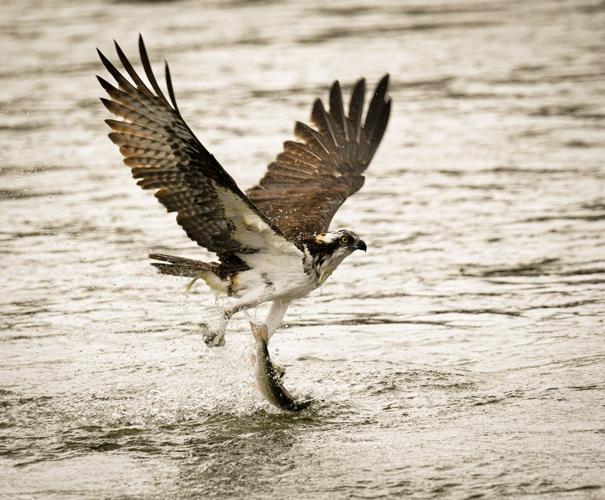
“My goal this year was an osprey, just before it hits the water,” said Elkinton.
Following in the footsteps of his mother, grandmother and great-grandmother — all photographers — he started with a Kodak Brownie Hawkeye which he bought for a buck from the Salvation Army in 1969.
Born and raised in The Dalles, Elkinton graduated in 1974 and entered the military, retiring from the U.S. Air Force in 1994. He and his wife returned to The Dalles in 2016, for its proximity to family. And Elkinton needed an occupation.
So every morning, he headed outside with a camera.
With a tugboat captain for a great-grandfather, Elkinton started out shooting the passing boats, tugs and barges.
“But you can only do so many of them,” he said.
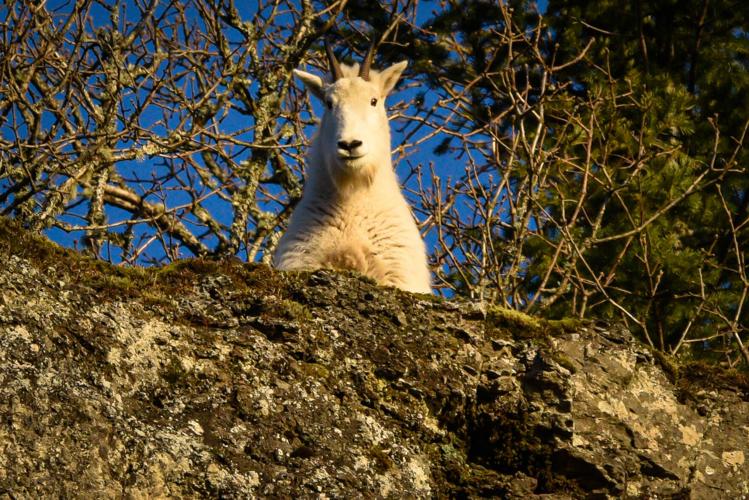
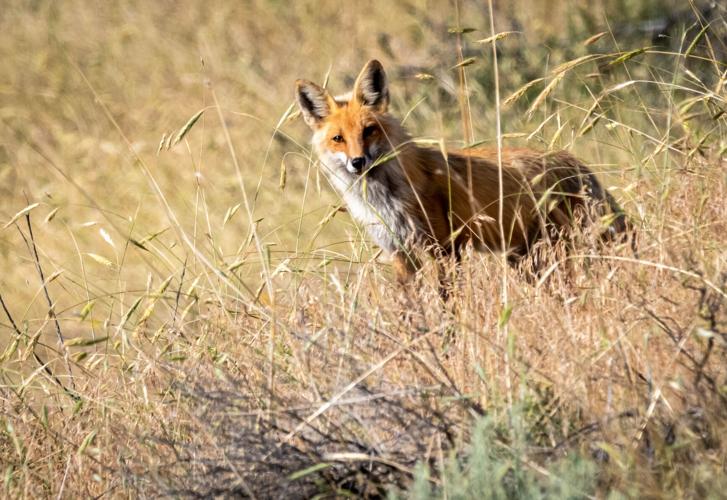
So he branched out into the wild creatures of Wasco, Klickitat and Sherman counties.
That was a challenge. “They’re just so quick,” Elkinton said. To freeze the motion of wings, his shutter speed is 250th of a second at least — and hummingbirds require astronomical shutter speeds of perhaps 4,000th of a second, making getting a good image tricky.
He doesn’t bother using his iPhone. Hauling equipment out to nests and herds, Elkinton carries a Nikon and a long zoom lens, estimated weight about seven and a half pounds.
Capturing a “National Geographic Moment,” as Elkinton says, means finding the right animal at the right time.
“They know you’re there,” he insisted.
Elkinton’s trick is to catch them when they don’t mind his presence — like a buck deer too enthralled with mating season to worry about pesky photographers.
“Rutting season is the easiest time to get photographs,” Elkinton noted. “I’ve had them snort at me, lettin’ me know I’m a little too close. ... You just really wanna get those action shots.” The biggest challenge is getting the light and camera settings perfect, he said.
He keeps an eye on about five local eagle nests, as well. But “a lot of times it’s just driving and keeping observant,” he said.
Always look behind you, he added. While Elkinton is focused on the animal ahead, sometimes interesting creatures follow him.
“I like the digital photography world better than the days of a roll of film,” he said. “I am able to take hundreds of photos in a morning and select the two dozen I want to process. ... You can actually make it look like what you saw,” he added. “You couldn’t do that with film.
“My mother would take two pictures of everything in case one didn’t turn out,” he recalled. “Back in the film days, if it was dark, it was dark.” Now he can fix underexposed photos, check his work instantly, and process and share photos easily with software.
And if Elkinton needs more information on a technique or setting, he recommends YouTube.
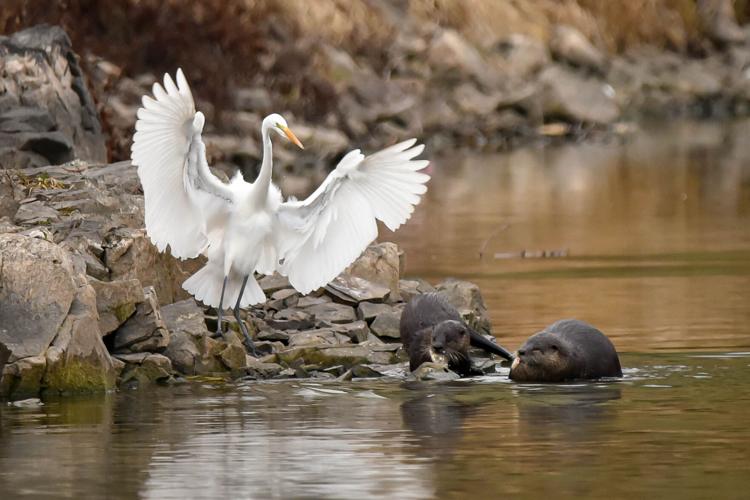
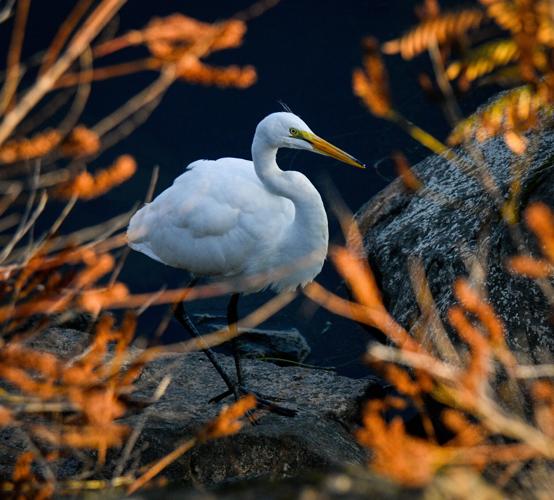
Egrets are a favored subject. Great egrets winter on the Columbia, quarreling over fishing spots.
“Ninety seconds of fight, 138 images,” Elkinton remarked. He deletes most, he said, and saves a few perfect ones.
Sometimes birds take exception to being watched. “... When they see the eye of that big lens lookin’ at ‘em, it must freak ‘em out, because off they go,” he said.
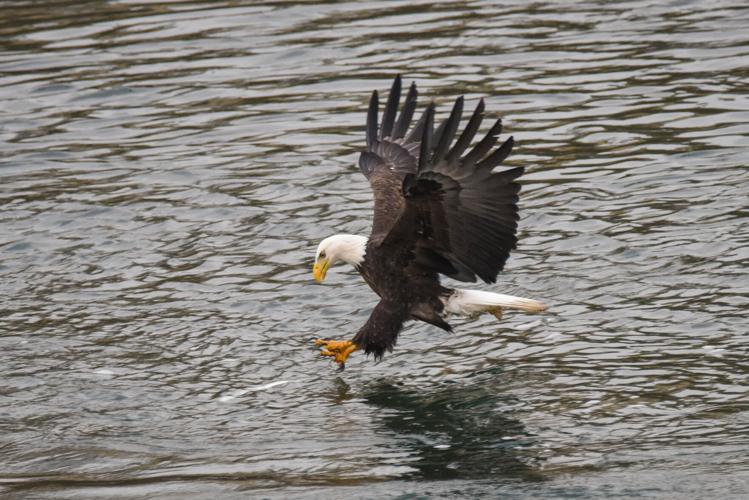
Elkinton likes bald eagles, who spend the winter lazily picking stunned shad and other fish from below dams, making for great action portraits. He’s seen interesting behavior, even finding an estimated 25 eagles foraging at the landfill.
Capturing the “National Geographic moment” is only the beginning. Then Elkinton edits the photo and identifies the creature. “That’s one good thing about the internet,” he said. “There’s so many birder groups out there. I like to learn all the time.” He favors Fish and Wildlife sites, and The Sibley Guide to Birds. “That book is my bible,” he noted.
Elkinton submitted a photograph to The Dalles Chronicle in June of 2017, encouraged by editors RaeLynn Ricarte and Mark Gibson. Gibson, who shared his interest in wildlife photography, started helping with bird identification. Since then, Elkinton’s images of wildlife (and occasional boats and barges, still) have become a regular feature, each carefully cut out and saved by his wife.
“In the past six years there must be over 400 of them,” noted Elkinton, who’s published in half a dozen publications that he knows of.
You don’t need this level of expertise and sophisticated equipment to get into wildlife photography, Elkinton said. “Just get a camera and go out and take a drive ... You don’t know what you’re going to see.”
He shares the “National Geographic moments” he experiences with others, often those who cannot spend every morning hiking over hill and dale with seven pounds of 600 millimeter zoom lens. Each month, Elkinton gathers photos for a presentation for seniors at Life in Christ Church. He also sends a regular email newsletter, sharing photos and stories with a couple dozen people.
At Christmas, he makes small photo magazines, and donates the profits to local organizations.
For Elkinton himself, he said, the four or five hours he spends outside while his understanding wife sleeps in are a great gift.
“Just being outside, lookin’ at God’s wonders,” he said.
He doesn’t try to capture all the vistas he enjoys. “I’m not a landscaper,” he explained. “Every now and then I’ll do Mount Hood. It’s just a pleasure to be out there ... even on a rainy day.”
For more information on Elkinton’s email newsletter, or on how to acquire a print or magazine, connect with Elkinton on Facebook.


Commented
Sorry, there are no recent results for popular commented articles.