This is the second in a series of informational press releases from Mid-Columbia Community Action Council (MCCAC). This piece highlights MCCAC’s response to the Rowena Fire. Since June 2025, MCCAC has served as a hub for recovery services following the Rowena Fire, which destroyed at least 58 homes in the region. Many of those displaced were over the age of 60 and/or living below the local poverty threshold. Of the 45 Rowena households MCCAC is currently supporting, 28 have transitioned into stable, long-term housing — a major milestone given the region’s limited housing supply and competitive rental market.
MCCAC’s ability to mobilize quickly in the wake of the Rowena Fire reflects a tradition that stretches back more than six decades. Community Action Agencies were established nationwide by the Economic Opportunity Act of 1964 as part of the War on Poverty, created specifically to meet communities where they are and respond to evolving local needs. MCCAC has served Hood River, Wasco, and Sherman counties since 1965, and that founding mandate — to be flexible, community rooted, and equity-centered — allows the agency to pivot and provide disaster case management and housing supports in the aftermath of the Rowena Fire.
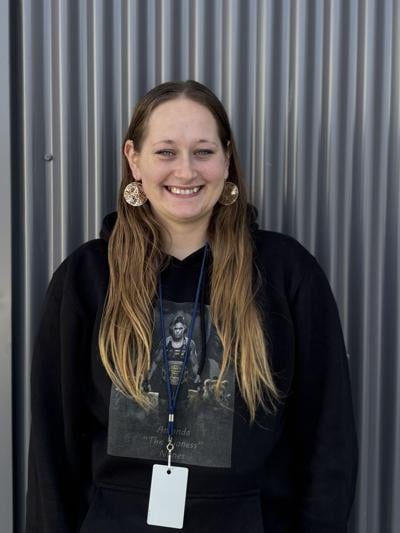
Natasha Olson, MCCAC recovery coordinator
MCCAC’s Rapid Re-Housing program has been central to the effort, providing wraparound case management and covering rental application fees, move-in costs, and temporary rent payment assistance. A dedicated recovery coordinator now guides fire survivors through every stage of the process.
“Recovery from a disaster like the Rowena Fire is rarely a straight line,” said Natasha Olson, MCCAC recovery coordinator. “Every household has different needs and faces different barriers. My role is to walk alongside each person — connecting them to the right resources at the right time, whether that’s navigating housing options, replacing vital documents, or just knowing someone is in their corner. We are in this for the long haul.”
The response from the broader community has matched the scale of need. Financial support has been provided by Google, Safeway, The Ford Family Foundation, Simplicity Homes, and the Oregon Department of Human Services. In-kind donations include 80 brand-new mattresses from Tempur Sealy — facilitated by Downey Sleep Center and available for pickup by appointment.
Individuals and faith groups throughout the region have also donated furniture, appliances, kitchen and cleaning kits, and specialized mobility equipment, carefully matched to each family’s specific needs.
Rowena Fire survivors who have not yet connected with MCCAC are encouraged to reach out to rowenarecovery@mccac.com or 541-965-2169.
Additional resources outside of MCCAC are available through the Long-Term Recovery Group, a cooperative body of representatives from faith-based, nonprofit, government, business, and other organizations working to assist fire-affected community members. The Long-Term Recovery Group convenes the Unmet Needs Roundtable where recovery coordinators bring unmet needs from impacted individuals. Cases are reviewed anonymously by members of the Roundtable to ensure impartiality and confidentiality. Funds raised through the United Way of the Columbia Gorge, along with other resources, can be accessed through the Unmet Needs Roundtable.



Commented