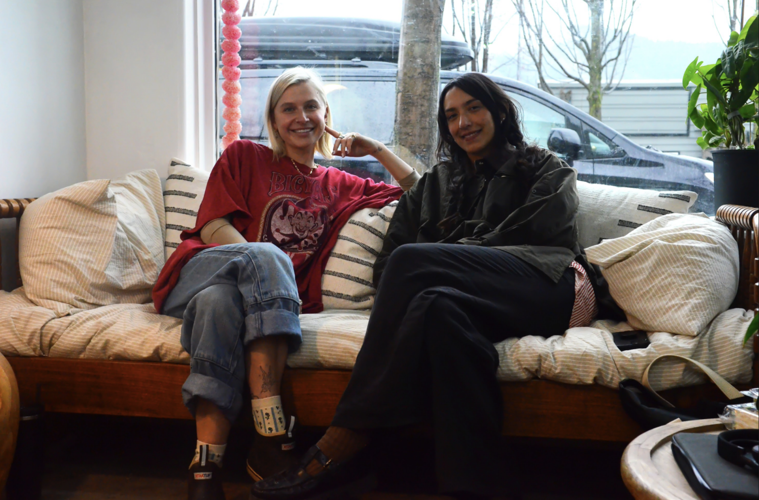
Madeline Luecht and Jenn Pelletier, creator and studio manager of local jewelry design business For Good & Mad. The storefront opened in Bingen last March in 2025.
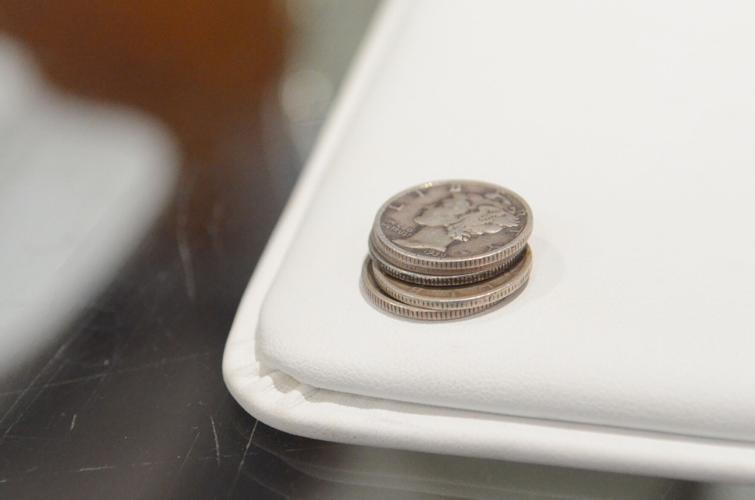
A set of old dimes from the late 1930s to early 1940s, traded in to Apland Jewelers, that have a 90% silver content. Current dimes are made of copper and nickel — despite the shiny coat, there is 0% silver content
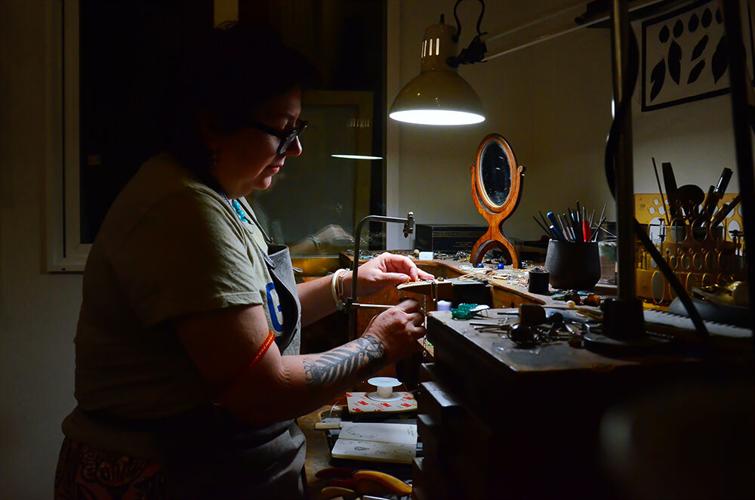
Sarah Morton-Erasmus at her bench in Arrowleaf Workshop. She created her first jewelry line at 12, following in her dad’s footsteps, who was a coppersmith.
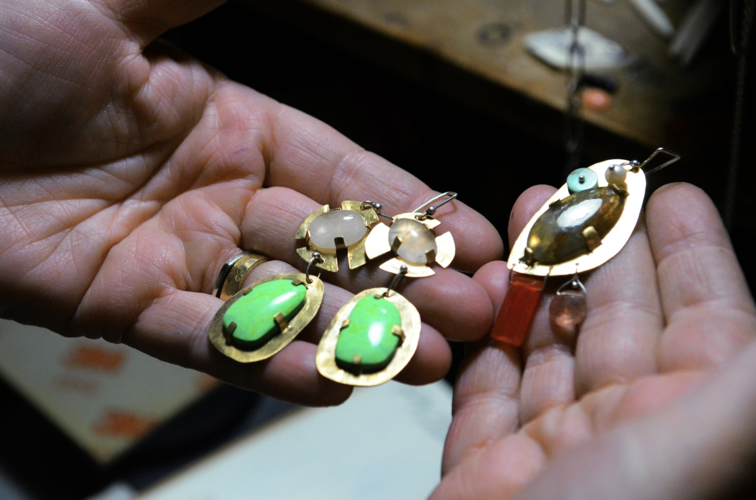
Alternative material earrings by Morton-Erasmus, crafted with sterling silver and jeweler’s brass, a specific type of alloy that doesn’t turn skin green.
THE GORGE — Coming down from a January peak, the market for gold and silver has been incredibly volatile as of late, impacting what customers choose and how businesses operate in the Gorge.
Ken Apland, of Apland Jewelers in downtown Hood River, said the sudden price swings have influenced clients during their metal selection. The business specializes in custom wedding rings, earrings, bracelets and necklaces, all made in-house.
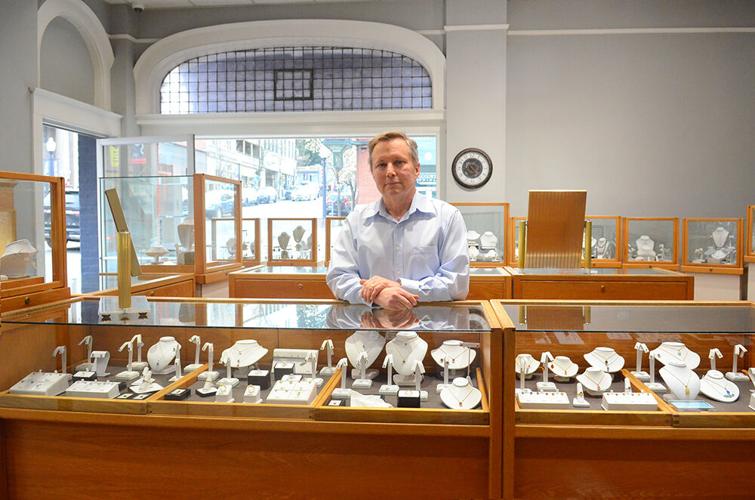
Ken Apland bought Tyack Jewelers in 1986 and renamed it Apland Jewelers. He started his jewelry career at age 13 in his father’s Tacoma store.
Emma Renly photo
Apland explained that with precious metal prices rising, customers might select 14 karat instead of 18 karat, or silver instead of gold. “Or, they may redesign an old ring or repair their jewelry rather than have a new item made,” he added.
Apland Jewelers also evaluates and purchases silver, gold and platinum pieces people bring in, sending them to refineries, where the metal is chemically re-alloyed into its pure form. The reclaimed metal is then used to make customs.
“People come in with silverware, wedding bands, earrings, broken chains, silver trays, tea sets,” Apland said. More metal than usual has been brought in due to the higher prices.
He emphasized that the business is still purchasing silver pieces, but as of February, a majority of refineries have chosen not to take silver due to the market volatility and heightened transactional risks associated with fluctuating prices.
There is a delay between refineries buying the scrap and reselling the pure metal, and during that time the price could, and has proven it can, swing significantly lower than when initially bought.
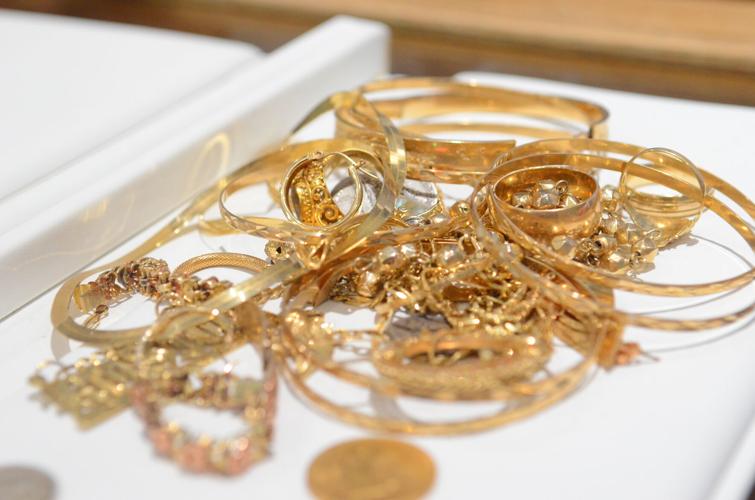
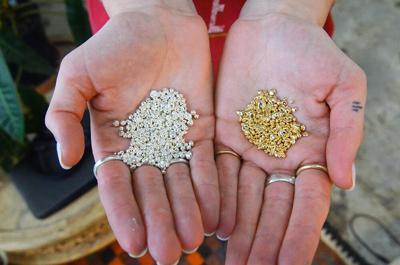
Old pieces of jewelry and coins, including 14k, 18k to 22k gold, that were traded in at Apland Jewelers.
Emma Renly photo
“If metal prices drop too much below what they purchased them at, the refineries can face losses or face bank demands that could result in bankruptcy,” Apland said.
In late January 2026, prices of silver reached an all-time high of over $100 per troy ounce (equal to 31.1 grams). It settled between $80 to $90 in February and started shifting again in March, according to online retailer JM Bullion.
Comparatively, silver traded at just over $30 per troy ounce in March of last year. Ten years ago, in 2016, the cost was around $14 to $16.
Precious metals like silver and gold are traded commodities — the pricing can change by the second and is partly influenced by market speculation.
“The inflation feels drastic,” said Sarah Morton-Erasmus, owner and operator of Arrowleaf Workshop in White Salmon, which opened in 2020. “As soon as you have instability, people want those hard commodities.”
Sarah Morton-Erasmus at her bench in Arrowleaf Workshop. She created her first jewelry line at 12, following in her dad’s footsteps, who was a coppersmith.
Emma Renly photo
Morton-Erasmus crafts her collection of jewelry under the name M.E. Jewelry Co., with many of her pieces found behind the store’s display cases. She’s had to reprice inventory with the rise in costs, as many pieces are made from gold or silver.
“If I sell something for $200, that’s actually worth $600, and I want to make another pair of [similar] earrings, now that $200 won’t even cover the materials,” Morton-Erasmus explained. “People will notice that things are going to be getting expensive.”
Morton-Erasmus plans to become more creative with jewelry crafting by using alternative materials such as jewels, brass, recycled metals and bones.
“There are found materials all around us ... This might give me a chance to experiment and make something precious out of something non-precious,” she said.
A set of old dimes from the late 1930s to early 1940s, traded in to Apland Jewelers, that have a 90% silver content. Current dimes are made of copper and nickel — despite the shiny coat, there is 0% silver content
Emma Renly photo
Morton-Erasmus expects that gold, silver and other precious metals will remain at a higher price as a new normal, since she’s seen them continuously rise in her lifetime.
Like silver, gold prices peaked in February 2026 at over $5,200 a troy ounce, nearly doubling the cost a year prior at about $2,800. Ten years ago, it was priced around $1,200.
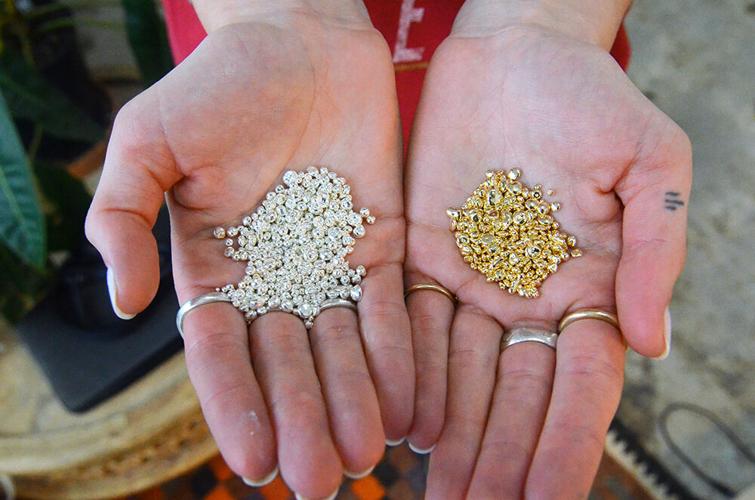
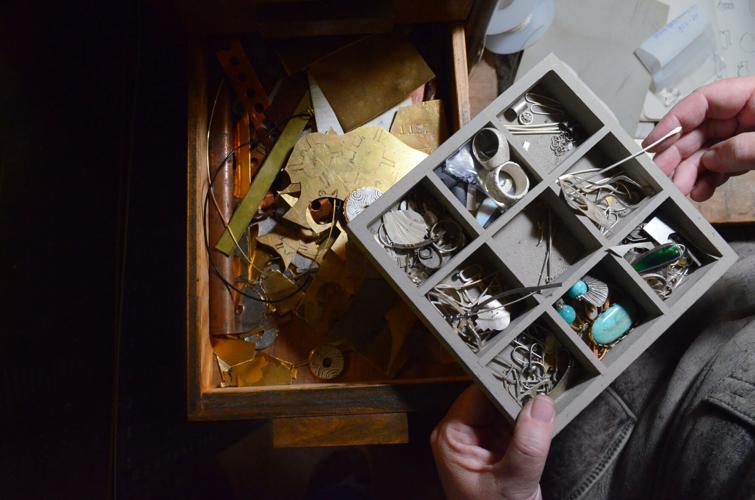
Scrap metals from Morton-Erasmus’s drawers include silver, brass, and copper. She’ll either cut out pieces, melt it down, or send them to a refinery.
Emma Renly photo
Madeline Luecht, who owns For Good & Mad studio in Bingen, called the price fluctuations unsettling. Since 2020, she’s crafted 14k gold and sterling silver jewelry as a self-taught artist.
“If prices of precious metals continue to climb, then my business will have to radically change,” Luecht said. “I will be buying in the next dip, stocking up.”
Madeline Luecht and Jenn Pelletier, creator and studio manager of local jewelry design business For Good & Mad. The storefront opened in Bingen last March in 2025.
Emma Renly photo
So far, Luecht hasn’t felt a huge impact on her sales, but has made adjustments to her pricing. She pointed to the baseline of her engagement rings, which she raised 40% from six months ago, from $5,000 to $7,000.
Prices for her recent online collections have also increased, but to a lesser extent. Luecht said she was shocked that her last release, which took place around Valentine’s Day, sold out.
Alternative material earrings by Morton-Erasmus, crafted with sterling silver and jeweler’s brass, a specific type of alloy that doesn’t turn skin green.
Emma Renly photo
“I really do feel fortunate that my business is shifting more towards those special items that people are willing to pay for,” Luecht said. “I feel that engagement rings are recession proof and people are still going to be getting engaged. I have a niche enough market where we’ll push through the hard times.”



Commented