
By MICHELLE SCOTT
The Enterprise
April’s “Wild About Nature” series continued at the White Salmon Valley Community Library last Friday and featured speakers Jim Hulbert, talking about Nesting Habits of Western Bluebirds, Tree Swallows, and Wood Ducks; and Tom Snellgrove, who spoke about the efforts he and his wife have taken to preserve the wildlife and habitat on their 10-acre home.
The night’s lecture was opened by Hulbert and his talk about bird nesting habits. Hulbert is a member of the Friends of the White Salmon River organization and chooses to spend his time installing bird boxes to increase nesting opportunities for Tree Swallows, Bluebirds, and Wood Ducks.
Hulbert became interested in bird nesting boxes when his brother gave him one as a gift. He enjoyed watching and learning about the birds flying around his yard and began to install more housing for them. “Each year I kept adding more boxes,” said Hulbert.
The Bluebird and Tree Swallow boxes are about the size of a shoe box, and are crafted from cedar boards by Hulbert. Wood Duck boxes are about twice the size and have a larger entry point for the birds. None of the bird boxes have external perches; this is to discourage predators from camping out in front of the entry hole, Hulbert said.
Depending on the bird species the box is for, Hulbert will adjust the entry hole and install wire on the inside for Wood Duck fledglings to use when they climb their way out as they leave the nest.
Building bird boxes is something Hulbert does because he loves seeing the birds, and he has yet to be denied permission when installing the boxes in wilderness or park areas.
Hulbert has installed, and continues to install, bird boxes in such National Wildlife Refuge areas as Conboy Lake, Klickitat Wildlife Area, Trout Lake, and Syncline. His favorite area to work in? Syncline.
The process Hulbert goes through when installing a box first begins with the construction of a bird box, then he works on locating a site to install it. Once finding a suitable location, Hulbert enlists friends to help install the new bird box. Hulbert will sometimes wrap metal around a tree to discourage predators from invading the installed boxes.
There’s been a few instances when installing Tree Swallow boxes, where the birds get impatient and swoop in to check out the new nesting site before Hulbert and his crew can finish securing the box.
The Bluebirds and Wood Ducks aren’t as social toward Hulbert as the Tree Swallows, but Hulbert said he’s seen Western bluebirds in the Syncline area.
After the boxes are installed Hulbert then monitors the sites throughout the year, opening the boxes once when the nesting season is over to clear out the used nests. This helps clear out any parasites from infecting the birds that may have been in the previous nesting.
Every now and then Hulbert said he finds unsuccessful nests, where there are unhatched, abandoned eggs.
“A lot of the time, when you go out to check a box, you have to be careful about what’s in there.” Hulbert said that he’s opened bird boxes before and been met with wasp nests instead of bird nests and is now cautious when opening boxes for the first time in a season.
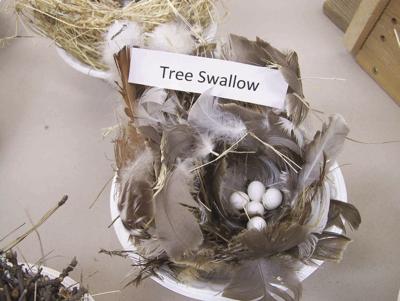
Hulbert ended his talk with questions from the audience and encouraged attendees to look through the various nests and boxes he brought.
The evening then transitioned to Snellgrove’s talk that began with him saying “good planets are hard to find,” and centered on the idea of limiting impact on the surrounding environment.
Snellgrove’s background is in forestry and wood production utilization, which is where he got his conservative mentality, since “conservation was his homework” during his career. Snellgrove doesn’t claim to be a professional conservationist, but enjoys taking steps to act with the environment in mind.
When building their home and installing the road through their property, Snellgrove spoke about working with the natural landscape trying not to disturb foliage that previously existed.
Snellgrove’s success story was creating enough ground cover and habitat for quail to inhabit their property. He and his wife achieved this by building a pond, and constructing brush piles that the quails could shelter in.
Overall, Snellgrove presented his goals behind taking the steps that he did: first was to landscape for wildlife, then minimize their impact, and lastly provide fire protection for their property.
Snellgrove closed by saying, “We hold the title for [the] property, but we’re far from owning it.”


Commented