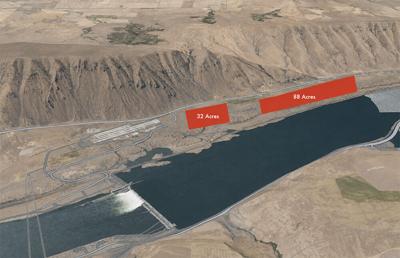
A site rendering of the proposed battery energy storage system, adjacent to John Day Dam in Klickitat County, that might tie into the Goldendale energy Storage Project, which the Yakama Nation and Columbia Riverkeeper are still challenging in federal court.
Emma Renly rendering / made with help from onX Maps
A site rendering of the proposed battery energy storage system, adjacent to John Day Dam in Klickitat County, that might tie into the Goldendale energy Storage Project, which the Yakama Nation and Columbia Riverkeeper are still challenging in federal court.
Emma Renly rendering / made with help from onX Maps
KLICKITAT CO. — Copenhagen Infrastructure Partners (CIP) and Rye Development are proposing a 1,200-megawatt (MW) battery energy storage system (BESS) at the former aluminum smelter site adjacent to John Day Dam owned by NSC Smelter, LLC.
A BESS is commonly seen as a companion to other variable energy sources such as solar or wind. In this case, it might work in tandem with the proposed hydropump storage facility, known as the Goldendale Energy Storage Project, which the same companies are developing. The project has seen immense pushback from the Yakama Nation, as previously reported by Columbia Gorge News.
The hydropump is expected to generate 1,200 MW of energy per cycle, and both projects plan to share the same 500-kilovolt transmission interconnection.
A media representative from CIP was unable to confirm additional information on the correlation, or if there was a power purchase agreement.
However, former Project Director Onur Usmen wrote in a 2025 public comment, “CIP selected this site due to its proximity to transmission, the compatibility of the technology with the future pumped storage project and the availability of land.”
Estimates are around $1 billion to build the BESS, which will come with temporary construction jobs and potentially permanent positions as well.
The 120 acres of land that would host the BESS is zoned agricultural, just upstream of the proposed hydropump’s lower reservoir and data center, which both lie within an industrial park zone.
The project is currently in the queue along with a multitude of other energy facilities as an ordinance for industrial-sized solar and BESS in Klickitat County awaits legal review and an additional public hearing with the planning commission, possibly this September.
CIP argued that previous drafts of the ordinance were overly restrictive and would push developers to seek approval through Washington’s Energy Facility Site Evaluation Council, which can override local land-use regulations.
In addition, a recently proposed change to the current Energy Overlay Zone in Klickitat County would no longer include the land owned by NSC Smelter, LLC. Klickitat County’s Planning Commission is currently deliberating on the updated map.



Commented