
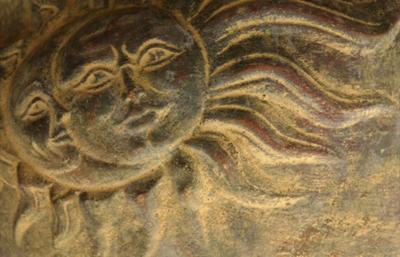
Solar eclipses, such as the upcoming Aug. 21 event, and other astronomical phenomena have long sparked superstitions, customs, traditions and even magical spells as people through the centuries have attempted to explain what was happening.
The word “eclipse” derives from the Greek term for “abandonment,” because the event was viewed by ancient cultures as the sun forsaking the Earth and its inhabitants.
For example, people from Rome once screamed during an eclipse to scare away sun-eating demons.
The Chinese believed an evil dragon lived among the stars and periodically devoured the sun. Again, people would make a large amount of noise during an eclipse to scare the dragon away.
In Vietnam, the demon attempting to devour the sun was either a giant frog or a toad.
The Mayans thought there was a giant serpent slithering through the skies and the Hungarians a giant bear.
Indian mythology holds that the Hindu demon Rahu stole a magic potion while disguised as a god, a crime witnessed by the sun and the moon.
Witnesses told the god Vishnu what Rahu had done and he had the thief decapitated so that his head would live forever but his body would wither away and die.
In retaliation, Rahu is said to chase the moon and sun “every now and then” and swallow them when he catches them. But, because he does not have a throat, the planets fall right through his head.
During the eclipse, some people in India claim the air is injurious. To avoid poisoning the atmosphere, they fast for 12 hours and refrain from engaging in dangerous activities while praying to be saved.
To purify the evil effects of the eclipse, Hindus bathe in the Ganges and other holy rivers.
In Japan, wells were once covered for protection from the poison that could fall from the dark sky during an eclipse.
Inuit, the indigenous people of northern Canada and parts of Greenland and Alaska, have a myth that the moon god Anningan catches up with his sister Malina, the sun goddess, after she has walked away from a fight, which is shown in an eclipse. A wolf named “Skoll” was believed by the Vikings to temporarily steal the sun, causing a period of darkness. Once again, the people tried to scare the beast away with noise.
Making sure the humans of Earth solved all their conflicts was necessary to stop the sun and moon from fighting (eclipse), according to the Batammaliba people of Benin and Togo.
Cultures in Mexico and other parts of Latin America once thought an eclipse could cause birth problems for pregnant women.
So, mothers-to-be dared go outside only if they had a belt tied around the waist that was fastened with a red arrowhead to protect their fetus.
In other regions, pregnant women were forbidden to sew and cut vegetables and herbs to prevent the birth of children with malformations.
Even in modern times, the Griffith Observatory reports that people call to ask if pregnant women and their unborn babies are in danger.
In some parts of India, pregnant women are still forbidden to go outside during an eclipse.
Muslims turn to Allah during eclipses of both the sun and moon out of the belief these events are signs of the apocalypse. They get that belief from the Qur’an (75:6-9): “He asks, ‘When judgement day comes.’ This day will come when the vision will be blurry and the moon will go into eclipse, the sun and moon will merge, depriving us of their light.”
Romanian tradition holds that eclipses occur because of human sins. These events are interpreted as bad omens, warning of trouble, pestilence or drought.
However, not all cultures see eclipses as harbingers of disaster or evil.
In Tahiti, for example, all astronomical events are interpreted as periods when the sun (Padi) makes love with the moon (Amarok).
An eclipse is a time of magic that can bring new opportunities.
Italians view an eclipse as a good time to plant flowers because they will grow to be more vibrant — although there is no scientific evidence to back this theory.
Even though science has won the day when explaining an eclipse in most of the world, there is still a mystique about the rare event that captures the interest of millions.
Monday’s eclipse is likely to be the most watched in history and draw people to the United States from around the globe.
If you are planning to travel, drive safely and be watchful of what is happening around you.
When looking at the sun, be sure to wear the protective eye glasses to protect your sight.
Maybe someday, in some far-off time, historians will record that Americans and visitors in 2017 worshipped celestial beings by traveling great distances to pay homage to the sun and moon.
— R.R.


Commented