Kudos to Oregon Department of Transportation for quick response this week to calls to remove hazardous material from Highway 30 east of Hood River.
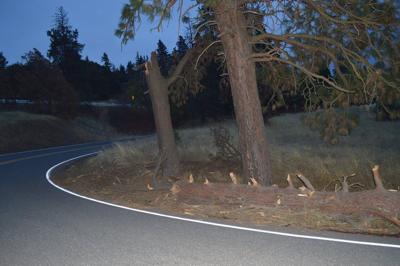
One day after this newspaper contacted ODOT’s Don Hamilton about the problem, a seven-person crew ascended the serpentine section of the historic highway just up from the China Gorge Highway 35 intersection, and went to work clearing downed and damaged trees.
The problem had gotten bad — and needs continued monitoring — as pine trees damaged by bark beetle infestation had begun to fall onto the highway right-of-way.
It points to the ongoing problem on this winding, tree-covered section of highway so popular with motorists and bicyclists, in its role as access to the State Parks’ Hatfield Trailhead and the iconic Mosier tunnels route. Hamilton noted that budget restrictions and the resulting prioritization of projects had kept ODOT from responding to earlier reports of a downed tree a quarter-mile east.
Someone also put down the orange cone before ODOT arrived. It shows that people are taking steps on their own to provide some measures of safety, but overall that is the legal bailiwick of agencies such as ODOT. We can put out reflective cones but we can’t dress hazard trees in bright orange or yellow vests. People just have to be on guard for these things, and let officials know or, if it’s on their own property, go to the trouble and expense of removal.
If your pine or other conifer shows extensive brown, or predominately damaged at the top of the tree, it’s may be infested and thus a hazard. After a bone-dry summer, many weakened trees are likely to split and send tons of trunk and branches falling. While expensive, it is a process of nature and one that cannot be ignored.



Commented