
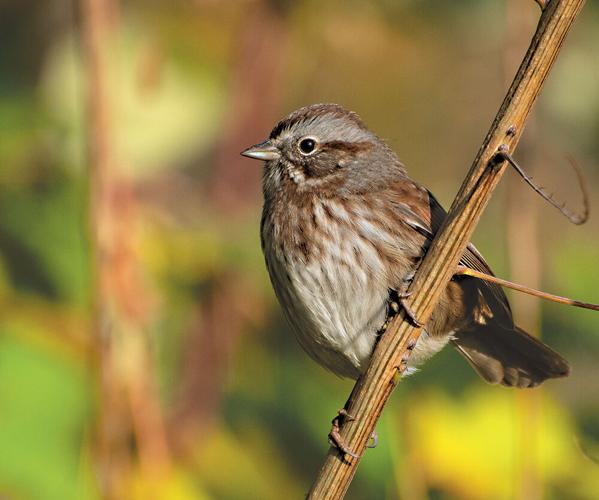
Song Sparrows used to sing, even in the depth of winter, around my house.
We’d just moved from a desert hill to a small place near a creek, which younger me thought magical because it flowed all year round and had tiny actual fish in it.
Our house was shaded by tall Black Cottonwoods, seven or eight feet around at the base, dangling annual crops of Bullock’s Oriole nests — pot-shaped things woven out of webs, fibers, and red-and-blue fragments of twine.
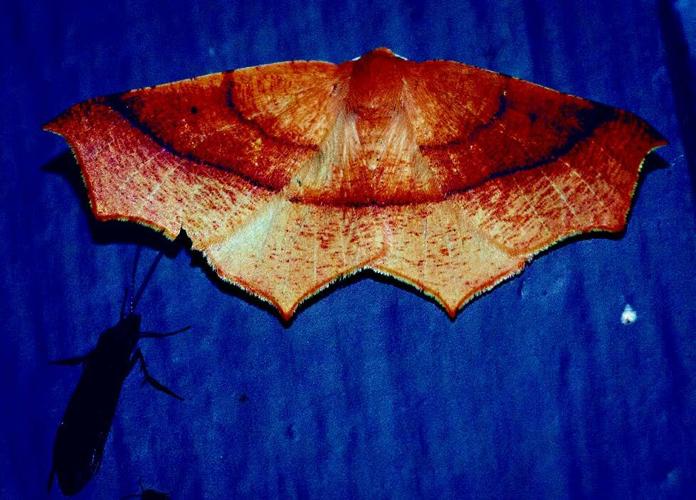
To find the stream, I followed a thin dirt trail, poking between Himalayan Blackberry, bracken and marshy grass where the sparrows sang. Clear-winged, hummingbird-shaped moths flew near me every summer, fat from feasting on the leaves of Common Snowberry as larvae, no pesticides in sight.
Walking there today, strolling a wide dirt road under a hot empty sky, I must remind myself where each animal and plant used to be. Here’s the building where a Macgillivray’s Warbler used to nest, circling and singing through a big patch of snowberry. Here’s the former trail to the creekside pool with the Dutchman’s Breeches’ pale spring blooms and the flickery trout, now a broad thoroughfare for straying dogs and motorcycles.
Over the years, the biggest trees were cut down, one by one. Roads expanded as each neighbor expanded gardens, work areas and ATV trails to their liking. With the native plants went the insects and shelter. With the insects, went the birds.
“Normal,” for the young children here now, is a blackberry patch, a well-run junkyard, and a flattened, bare-dirt camping area. Mine was an abandoned violet garden, nesting sparrows, a miniature wilderness of bracken.
This is the pain of what ecologists call the “sliding baseline:” Each generation remembers a slightly emptier woods, a bit fewer flowers, and a more degraded stream. But we aren’t born knowing we lost something.
My “baseline,” my vision of a healthy forest stream, holds many fewer birds, fish and trees than what someone born in 1800 — before logging, before farming — would think normal. But I assumed, as any child does, that my wilderness was pristine.
And we can’t restore a stream to full glory when we don’t remember what’s missing.
No, it wasn’t a real wilderness I loved, it was a patch of second-growth oak and maple scrub. But suburban habitat can be wild, too. And isn’t the most important wildness, for us humans, the plants and animals right outside our door, the ones we can watch and learn from every day?
Most of the changes weren’t on my property. I don’t blame the neighbor who cut down the oriole’s huge cottonwoods for leaning over his little, fragile-looking house or the people who expanded a camping area with outbuildings and bare roads. No more than I blame the tiny blue-and-yellow warbler who never returned to his fractured snowberry patch.
But there’s so much less to learn and explore, for a child in my neck of the woods, without a Western Screech-owl outside the window, or Snowberry Clearwing moths in the yards.
Maybe this is a birdwatcher’s responsibility: To look at our house, or farm, or channelized stream, and think what could have grown or flown there when “our” land was just a little wilder. To find an old photograph. To look into the wildest remaining spots, and see what native plants could enjoy growing near us.
And then plant some, if we can afford them, in whatever space we can spare. Among them, native insects can shelter. With insects, perhaps the birds, the Song Sparrows, can return.


Commented