
When I was small, we went to the beach. Sand-blinded by wind, we staggered around beside the vast gray ocean, picking up bits of shell embedded in the sand.
The biggest disappointment of first meeting with the sea was a sad lack of sandpipers.
To be precise, we didn’t see the large bright shorebirds who stared back with gleaming eyes from the pages of National Geographic. I do recall some wee dull-brown dots that skittered off and vanished down the distant beach, tapping the sand.
Yeah, that was probably them.
Now it’s shorebird migration season, and I can watch these tiny voyagers up close at any secluded, insect-y beach along the Columbia.
In August and September, sandpipers arrive on thousand-mile flights from nesting grounds above the Article Circle. On the unlovely muddy shores of The Dalles, they fatten up on algae and insects, then fly on — thousands more miles blurring away beneath those tiny 13-inch wingspans — to South American winter homes.
I like to stand near the water when I see them bobbing and trilling down the beach, and often they come within yards — close enough to see their twinkling feet and reddish epaulettes, hear quiet liquid communications, and look back at the alert sparkly eyes of birds born in the Arctic just months ago, who haven’t learned how much to fear giant bipedal primates.
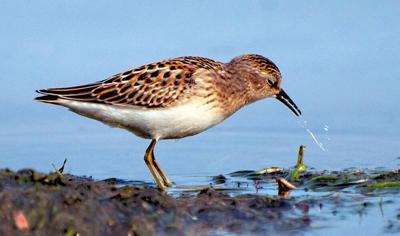
Our main visitors are Western and Least Sandpipers. They fly in formation like starlings, with charming ripply chirps, like crickets but more liquid.
Least is smaller and browner, Western haloed with rusty-red. Western’s legs are black. Least’s legs are light yellow, but look dark with the sun behind them.
If you want to identify any other sandpipers, I wish you luck. It’s hard. Check out The Sibley Guide to Birds, and know the best way to find a rare species is to learn the common ones well.
And while you’re birding, please don’t bring your dog. Even if a dog is calm and polite to birds, they might still react as they would to a wild predator. Studies have found they flee from a dog sooner and farther than from a human walking alone, staying away longer and foregoing more energy and food.
That’s a problem because they’re living precariously right now. They must fatten up in shrunken and degraded habitats, and rely on those reserves for thousands of miles’ flight before winter. They cope with climate change in the Arctic, where tundra is disappearing and peak insect hatches ending before they arrive to breed. If its fat runs out, or a little more habitat disappears, a young sandpiper might just fall down and die on migration.
Very few beaches here are private. Most are popular dog-walking spots, meaning it’s up to us to give sandpipers some space.
Maybe August and early September is a good season to explore those dog parks and accessible trails that don’t lie alongside the beach itself? And if that’s absolutely not an option, maybe walk in late morning, giving birds at least a few undisturbed morning hours to feed.


Commented