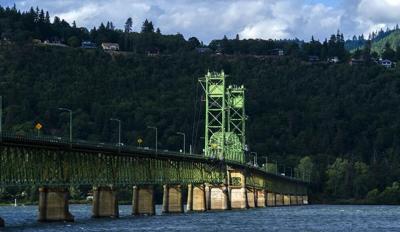
Washington state lawmakers reached a final agreement on the Move Ahead Washington bill (ESSB 5974) on March 9, which will give $75 million to the Hood River-White Salmon Interstate Bridge replacement project. According to Project Manager Kevin Greenwood, the project will put the additional funding towards completion of the engineering and down payment on the new bridge construction. Greenwood added perspective to how important engineering is to any big construction project.
“To reach 100% of the engineering planning, it will cost roughly $20 million,” said Greenwood.
The remaining funds will be put aside to help pay for materials, labor and construction on the new bridge.
In separate bills from legislatures in Oregon (HB 4089-1) and Washington (SSB 5558) is wording that will allow bi-state local governments the ability to form a new bridge authority. The Bi-State Working Group (BSWG) was formed in October 2020 of commissioners and city leaders from Hood River and Klickitat counties. Since 1950, the Port of Hood River has owned and operated the Hood River-White Salmon Interstate Bridge. The new BSWG will now write up a commission formation agreement that will transfer ownership of the new bridge from the port to a new bi-state local government entity.
Once a charter is drafted, the proposal will go to port, city and county boards in Hood River and Klickitat. The Port of Hood River, cities of Hood River, Bingen and White Salmon along with county commissioners from Hood River and Klickitat must all agree to give the new entity authority to operate the new bridge and collect 100% of the tolls collected for new bridge construction or operations. The Port of Hood River has long relied on toll revenue to operate and upgrade facilities, and once the bridge is constructed, they will be forced to find other sources of revenue.
Part of Move Ahead Washington and a previous bill, ESSB 5689, will give $1.5 million towards traffic and revenue studies. Greenwood said this will give the project a better idea to how much revenue could be made from a new bridge toll and how vehicle traffic could be impacted. Studies like this also give project managers and legislative advocates a better outlook into work needed to search for funding.
As the short legislative sessions wrapped up in Oregon (March 4) and Washington (March 10), Greenwood and project partners are happy with legislative efforts.
“It was truly a team effort,” said Marla Keethler, mayor of White Salmon and member of the BSWG.
The project is now looking forward to 2023 for other opportunities to secure government funding. Next year’s legislative session will be a “long session” where the BSWG will ask for larger sums of money. Federal grants such as the Rebuilding American Infrastructure with Sustainability and Equity (RAISE) fund offer prime chances for funding. The RAISE discretionary fund gives a up to $25 million for any “road, rail, transit and port projects that promise to achieve national objectives,” according to the U.S. Department of Transportation.
As part of the ESSB 5974, the Oregon Transportation Committee will have $100 million for local bridge programs around the state. It is not yet determined how funds will be distributed, but Greenwood anticipates an application system.



Commented