To the north and west of our home is forested land that drops precipitously to the White Salmon River. To the east lies acres of vacant grassland. The location is, like all of the Columbia Gorge, about as close to perfection as any homesite can be. But, it’s just as desirable to voles as it is to us. And that is the rub.
The perfect habitat for the voles in our area (multiple species) is dry acreage adjacent to a deciduous forest or orchard. That puts most of us here in the middle of vole paradise, with hundreds, if not thousands, of voracious voles per acre eager to eat our plants, roots, bulbs, and about everything organic — other than daffodils. Like deer, they draw the line at dining Dutch.
When the snow melted last midwinter, a garden I had started in Trout Lake looked like a miniature battlefield, with trenches burrowed in an interconnected network and whole plants simply gone. At home in White Salmon, the destruction was less evident, but the runways across the lawn were just as disappointing.
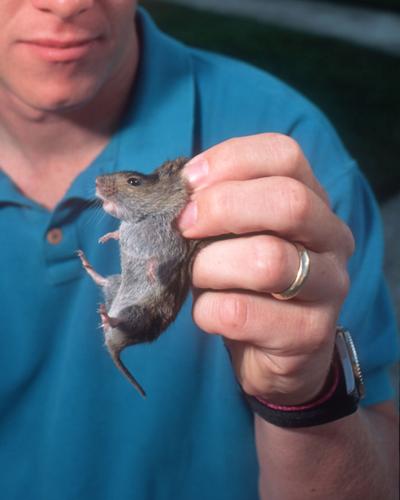
This spring, I trapped a few rodents that were feeding on my early peas to make sure what pest was causing the problem. Similar to a mouse, but with a fuller body, larger eyes, and shorter tail, the vole is a handsome creature: and my catch over three nights was four voles. Periodically, the vole population can explode if there is enough food, ground cover to protect them, and fewer threats from snakes, coyotes, and birds of prey. Approximately every 10-12 years the population of voles devastates some commercial crops as well as home gardens.
However, most years, both farmers and homeowners can coexist with the pests, filling in the entry holes and tamping in the burrows that show up in spring. We may lose a Hosta or two and be annoyed by the visual damage to lawns and beds, but by June, the visible damage is usually gone. The voles are still there, but we have more pressing problems.
Be nice
“If you can’t say something nice, say nothing,” I can hear my mother say, so before I list the methods we can use to control the species, Professor James Cassidy, a dynamic soil scientist from Oregon State University, has some “vole love” to share.
He and his students studied the creatures and discovered that their burrows are more than a means for them to reach your plants, they function to improve soil composition, with larger burrows providing drainage, and smaller holes wicking water through improved capillary action, as well as oxygen for the very plants you fear their makers will destroy.
Cassidy says that smaller holes provide accessible water that plants seek out, and that soils enriched by the vole activity will produce better plants.
Read a full (and hilarious) transcript from Oregon Public Broadcasting at tinyurl.com/22jh9msh.
The abandoned burrows also provide habitat for desirable ground nesters like bumblebees.
Not in the mood to be nice?
However, if your garden hosts more voles than plants, you many not find much humor in Professor Cassidy’s affection for the voles’ soil improvement program. There are some control methods that can work, though only one is likely to make a substantial difference with heavy population impacts.
Traps: Trapping mice, voles, and rats is legal in both Washington and Oregon. Snap traps baited with apples and/or peanut butter can be laid perpendicular in a run and may effectively remove pests if the initial population is small and you attend to the traps daily. Bated live traps may catch more with less effort, but then you have these surprisingly sweet-looking voles to eliminate.
Birds of Prey and other hunters: Almost every day, I spend some time watching the hawks and owls hunting over the neighbor’s grass field, catching what I assume are voles. They help, but do not eliminate the pest from my garden or yours. Snakes are another desirable hunter if you can tolerate them peeking at you through the peonies. You can help these predators by keeping the margins around your beds tidy by removing brush piles and mowing weeds and grasses that provide cover for the voles.
Poisons: Voles are voracious vegans, but kind of fussy about the quality, it seems. One major pest control business in the Gorge refuses to tackle the vole problem. Their representative said that the company couldn’t find any bait that would attract voles to their rodenticide. Poisons can be effective if you happen to find the right attractant, but they pose an unacceptable danger to children (who often aren’t as fussy about what they put in their mouths), to desirable animals, and even the preying animals that are perhaps more effective at killing voles than are the poisons. If you must use rodenticides, choose products approved for home use and follow all label instructions carefully. Be careful to place poisons where other living creatures can’t access them.
Preventing access to your garden may be the single- best solution, though it takes a bit of work and money: The general recommendation is to bury fencing of 3/8-inch galvanized screen six inches below ground as well as extending it six inches above ground. However, by burying it two feet underground and extending it two feet above, you can virtually eliminate not only voles, but gophers and moles. This may not be practical in most flower beds, but surrounding a vegetable and fruit garden could be worth the investment. And trenching a 24-inch ditch isn’t much more difficult or costly than trenching a six-inch ditch. If you have raised beds, 3/8 inch screens can be placed at the bottom of each bed, and even individual screens around the roots of plants have been found effective.
In deciding how to control your vole population, keep your tolerance level in mind. Even though voles can be a pest, they are also beneficial to your soil, and food for raptors and wildlife. Your actions to rid them from your property can either be detrimental to wildlife, or help to keep nature in balance. Choose wisely.
For a thorough discussion of controls, options were compiled by area scientists and published as a PDF at tinyurl.com/mr25efr5.



Commented
Sorry, there are no recent results for popular commented articles.