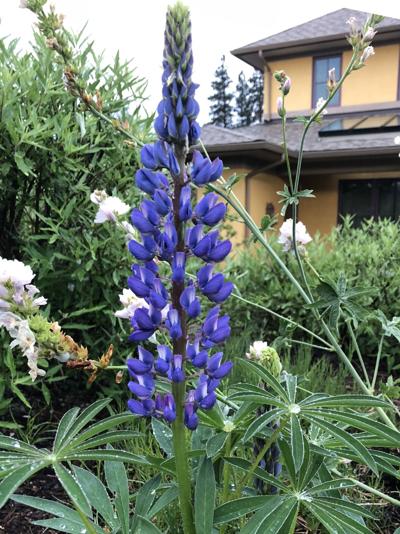
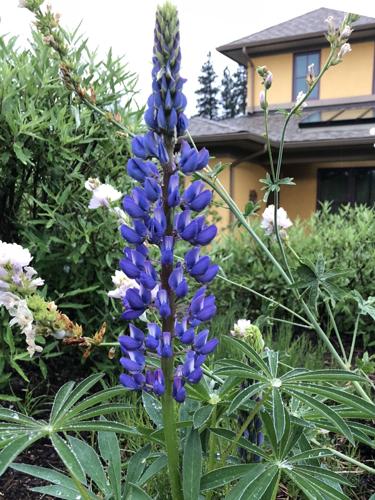
When the wild lupine goes to seed in the native garden, it creates new plants to keep invasive knapweed away. This lupine grows tall in Sheila’s home garden.
When the wild lupine goes to seed in the native garden, it creates new plants to keep invasive knapweed away. This lupine grows tall in Sheila’s home garden.
Sheila Ford Richmond was one of 36 gardeners profiled in the beautiful 2021 book “Under Western Skies: Visionary Gardens from the Rockies to the Pacific Coast” by author Jennifer Jewell (whose “Cultivating Place” podcast has wide listenership) and photographer Caitlin Atkinson. They recognized Sheila’s home garden and the shared native plant garden she established in her neighborhood as extraordinary examples of “illuminating the value of ecology and art, in gardens both private and public.”
The following are excerpts from Sheila’s interview.
I have loved nature all my life. My goal is to live my life in harmony with nature. I constantly observe and learn, so that I can support rather than dominate the natural world.
My art has always been connected to nature, my greatest teacher. In working with children and creating art to wear, the beauty and colors of nature are my inspiration. Children love nature — and are closer to the ground for close observations! They love to learn to draw specific insects, birds and flowers to use in prints and paintings.
I was so honored to be included in the book “Under Western Skies.” Both the writer and the photographer really know native plants. Jennifer Jewell’s podcasts always share stories of gardeners and farmers from all over the country who work with land, plants and seeds using best practices. One book review said that her text and Caitlin Atkinson’s photos “invite each of us to reimagine one’s connection to the land while cultivating nature close to home.”
As a guest speaker with the Native Plant Society in Portland, Jennifer explained how gardeners were selected for the book. She called us “agents of change” in our creation of organic and habitat gardens that include both beauty medicine and interesting food. We hope to be part of the solution, part of a culture of care, offering invitations to think differently.
Each of us (those profiled in the book) gardens organically, with very low water use. We all compost, use mulch, don’t till. A big priority is to support birds and other wildlife, to add to biodiversity, even to “firescape” in ways specific to our watersheds.
Author Jennifer Jewell speaks of indigenous wisdom here in the West, and of giving reverence to connecting with nature. All of this makes my heart sing! Everyone in the book is very dedicated. The gardens and gardeners are so diverse. In my case, my home garden is planted more than half in wildflowers, shrubs and trees. It was certified by the National Wildlife Federation as providing habitat with food, water, cover and places to raise young.
I continue to study and learn about best plants for butterflies, bees and birds. Every spring I create “Ponds in a Pot” with complete ecosystems to attract frogs — who come immediately and start singing, mating and laying eggs to create hundreds of polliwogs that populate the garden! My grandson loves watching all these stages.
For the shared neighborhood native garden, I worked with biologists who specialize in birds, wetlands, and native plants. Together we designed a plan for native plants that bloom for pollinators nine months out of each year. It attracts native bees, honeybees, birds and butterflies. I have created the native garden especially for children so they can see the beauty of true native plants right in their own neighborhood and observe changes throughout the seasons.
My grandson and I love to spread the seeds. When we plant natives and watch them grow, they have so much to teach us. As they reseed and spread, they plant themselves in curvilinear sweeps of color. One of the benefits of native plants is very low water use, very low maintenance with minimal deadheading and pruning.
My dream is for every garden, private and public, to have a minimum of 25% native plants, so we would have wild habitat everywhere!
Planting these gardens as an elder is a culmination of study and practice. I have learned so much from each garden. I want to be an elder who is working hard for future generations to know that each of us can help save our beautiful planet. We are all in this together!



Commented