THE DALLES — At their regular meeting on Nov. 27, The Dalles City Council had to vote to extend their meeting past the three-hour limit. The meeting was nearly four hours long, with a significant portion dedicated to a quasi-judicial hearing. To read the details of the hearing, see page 10.
The meeting also included a presentation from Neon Sign Museum owners David and Kirsten Benko, where they updated the city on the Jantzen Beach Carousel. It was announced in September that the Neon Sign Museum had been chosen by Restore Oregon and would receive the carousel.
According to Kirsten Benko, the carousel came to Oregon in 1928, making 2028 its 100th anniversary in the state. Because of this, Benko said their goal is to have the carousel restored and operational within the next five years, in time for the anniversary.
“Our goal is to continue to preserve and restore this history,” Benko said. “That really includes the dying arts that go along with the carousel, the craftsmanship that went into this time period.”
She also spoke on fundraising for the restoration and maintenance of the carousel. According to Benko, for 2023, they need to raise $250,000 for architects, planning and development, as well as the hiring of an administrator and a grant writer.
Benko noted several potential sponsors and also introduced the “Name A Horse Campaign,” in which a business or individual can pay $25,000 to name one of the horses on the carousel. There are also names needed for several of the wings in the museum, which she said are still up for purchase.
Following the Benkos’ presentation, there was an interruption by unidentified Zoom attendees. The meeting had to be put on a brief hold to address the issue, with that portion of the meeting later being cut out of the online recording due to graphic hate speech. In the description of the video, it was noted that a copy of the original recording would be kept by the city clerk’s office for record-keeping purposes.
After the meeting resumed, the city moved on to public comment, of which they received none, and reports from councilors and the city manager. They then opened a quasi-judicial hearing for a denied sign permit appeal (see related story).
The council also voted to acquire two parcels downtown to develop a parking lot. According to City Manager Matthew Klebes, the downtown core is expected to need more parking due to the recent acquisition and development of several properties, including turning the former The Dalles Chronicle building into a grocery store and the former GOBHI building into offices for Wasco County. He also cited the development of a multi-story, mixed-use residential development with 108 housing units, plus redevelopment of the old Tony’s Town and Country site.
“The current data that we have shows an adequate supply of on-street free parking, and most of these developments will have some degree of off-street parking,” Klebes said. “Nevertheless, we want to make sure that we are looking long term.”
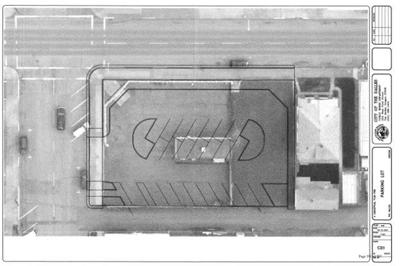
Because of an expected increase in demand from the new businesses and housing development, Klebes said the city wanted to purchase two properties on Third Street, directly to the east of Sawyer’s ACE Hardware and Rental. The two lots are offset, Klebes said, but they plan to level them to create one cohesive parking lot.
This lot will have approximately 23 public parking spaces and one Americans with Disabilities Act (ADA) space, Klebes said.
These parcels of land were purchased by the property owner in May for around $455,000. The city was able to negotiate a price of $484,163.79. Development is expected to be a similar cost of $485,151.02.
A historical sign in that location was also discussed. Councilors expressed a desire to preserve as the lot was developed. Klebes proposed several possibilities, such as integrating the sign into the lot, or donating it to the Neon Sign Museum.
Following the discussion, councilors voted unanimously to authorize Klebes to purchase the property and enter a development agreement with the Columbia Gateway Urban Renewal Agency, who Klebes said will be 50/50 partners on this venture.
The last thing on the agenda was the adoption of a moratorium on short-term rentals, which the city has been discussing for several months following community members voicing concerns in previous meetings. Short-term rentals, often done through companies like Airbnb or Vrbo, are rentals out of residential homes or units for usually less than a month. Complaints from those living next to short-term rentals included noise, parking and traffic.
According to Community Development Director Joshua Chandler, 35 permitted short-term rentals (which include bed and breakfasts) in 2020 grew to 56 in 2021, before dropping to 51 in 2022.
The moratorium, which passed unanimously, stated that city staff would no longer issue any short-term rental licenses for any non-owner occupied short-term rentals in residential zones. It went into effect immediately following the vote. This does not affect licenses that have already been issued.



Commented