THE DALLES — After more than four years since its implementation, The Dalles City Council voted Jan. 22 to terminate an intergovernmental agreement with the Wasco County District Attorney’s Office.
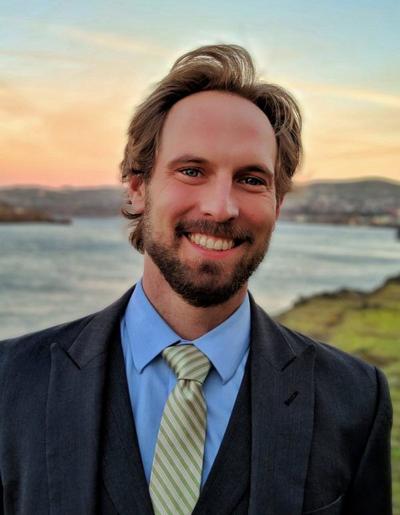
Wasco County District Attorney Matthew Ellis
This intergovernmental agreement was adopted when certain criminal misdemeanor cases from the city’s municipal court were transferred to the Wasco County Circuit Court. In this agreement, the City of The Dalles provides an annual payment to the Wasco County District Attorney’s Office of approximately $80,000 annually, an amount which increases by 3% each year.
City Manager Matthew Klebes gave a report on the IGA, pointing out that they were unable to find any other city in Oregon providing funds of this nature to their county’s DA office. He also noted that the city has, at this point, provided the DA’s office with more than $400,000.
District Attorney Matthew Ellis gave a report as well, noting that the money from the city is helpful, but the office is still understaffed. The funds originally went to hiring a paralegal, but after the paralegal left, they lowered that position to a legal secretary position. Now the money goes into the general fund, though it still primarily goes to paying staff members.
“If this money does not come into my budget, we will have to make the tough decision, without finding any other resources, to cut one of those: Attorney, deputy district attorney or legal secretary,” Ellis said. “It’s not a big office so losing anyone would be a blow to our daily productivity.”
Ellis also showed the increase in cases and noted that 60% of the cases they see come from The Dalles.
Following discussion by the councilors, it was determined that the agreement was never meant to be indefinite. The council voted to terminate the agreement with the DA’s office, with the understanding that they would begin discussions on creating a new IGA instead, rather than ceasing their monetary of support the office entirely.
•••
In other business, Klebes reflected on the previous week’s extreme weather in his report, specifically focusing on efforts with St. Vincent de Paul Day Center. While the city currently has ongoing litigation with St. Vincent’s that has led to the day center closing its doors, Klebes explained that, during the winter storm, they allowed them to open and offer warming services to the houseless population. However, he noted that, as of Jan. 23, that agreement would end and St. Vincent’s return to being closed.
In regards to the storm’s effect on the houseless population, Klebes highlighted Mid-Columbia Community Action Council's activation of their surge capacity at their shelter in The Dalles, The Annex. This surge capacity enabled The Annex to house 12 extra people through the end of last week.
City Councilor Tim McGlothlin said he helped find those who were houseless during the storm, bringing them either to St. Vincent’s, The Annex or the Budget Inn. According to McGlothlin, they were able to get everyone to shelter.
“All people in The Dalles for this major event were sheltered,” McGlothlin said, “and that’s because everyone pulled together. Thank you to The Dalles Police Department for doing wellness search and wellness checks on people, also our local ambulance through our fire department. Everybody pulled together when the chips were down, and that’s why we live in our City of The Dalles.”
Following councilor reports, the city voted to approve the supplemental budget for fiscal year 23-24, which focused on reallocating funds that had gone unused or were found to be unneeded for the projects they were originally intended for. The council voted to enter into a $2.1 million contract with Ajax Northwest LLC for phase two of utility improvements on W. Second Street.
The council also adopted the 2024 city council goal setting document, which was presented by SSW Consulting owner and Principal Strategist Sara Singer Wilson. The document came from a goal-setting workshop that the council attended with Singer Wilson in November.
This workshop included setting a vision for the city. Part of that vision was a community involving citizens of all ages with strong local collaboration, green spaces, a revitalized downtown and an efficient government. The other was a commercial hub that honors cultural diversity, has a proactive education system, compatible neighborhoods, a far-ranging transportation system and a comprehensive medical system.
This vision was taken into account when creating the goals, of which there were five. These were increasing livability, increasing housing supply, mitigating the impacts of houselessness, improving fiscal sustainability and improving infrastructure. Each goal had actions under it, which included things like recruiting and retaining police officers for livability or working in alignment with Mid-Columbia Community Action Council to mitigate the impacts of houselessness.
The city also adopted a city evacuation plan and authorized mandatory evacuations in case of emergency.



Commented