HOOD RIVER — Though the three-hour Jan. 11 meeting of the Hood River County School District school board was long by general standards — Board President Corinda Hankins Elliott gaveled the meeting in at 6:29 p.m., and out again at 9:31 p.m. — the board expressed both appreciation and admiration for the many programs offered at its schools as presented by multiple staff.
Superintendent Rich Polkinghorn.
“I’m proud of the district, of all these programs we’ve started and maintained,” said Board Member Tom Scully. “It’s just another testament to what a great school district this is, and the strong work that everybody here does.”
Superintendent Rich Polkinghorn began the meeting, held at Wy’east Middle School, by recognizing January as School Board Appreciation Month.
“Your efforts do not stop at the board meeting,” he said. “You volunteer to be on committees, you volunteer to be on bargaining teams, and you volunteer to be on curriculum adoption teams. We have early morning agenda setting meetings, there is ongoing school board education. There are frantic phone calls, cranky emails coming at you from many different angles. It is quite a lot of work to be a volunteer school board member, but to be an engaged, informed, and active school board member, like each of you are, takes an incredible amount of time, energy and emotion.”
Polkinghorn then gave an overview of what the upcoming Oregon legislative session and new governor could mean for the district’s budging process. He expects reduced state funding next year, though at this point, “there is no need for alarm; I just want you all to be informed about how things are shaping up as we begin to prepare for our budget season,” he said.
The Coalition of Oregon School Administrators and the Oregon School Boards Association estimate the funding level necessary to maintain current service levels across the state — districts large and small — is $10.3 billion, but the likely starting point is $9.5 billion, leaving an $800 million gap.
“There continues to be ongoing concern that the competing interests of Gov. (Tina) Kotek’s priorities, along with the varying priorities of the new legislature, may drive funding away from education,” Polkinghorn said.
Enrollment could also play a role. As previously reported, overall district enrollment is down. “There are a number of theories about why this is, but what we are seeing is that people are struggling to find affordable housing,” he said. “We track our enrollment very closely and with this enrollment trend, it is very likely we will see reduced levels next year from the state.”
The district’s local option levy is additionally set to expire in June, which accounts for about $3.2 million the district uses to maintain low class sizes and provide academic and extracurricular enrichment activities.
“At our upcoming meetings, the board will have time to deliberate and ultimately vote on if we should ask voters to renew — or not — the local option,” he said.
HROA update
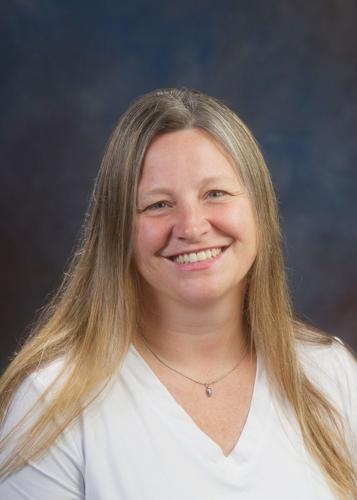
What began six years ago as an alternative learning environment for high school students, located in a remodeled space next to the Coe Administration Building, has evolved into a K-12 blended alternative program with strong multi-tiered systems of support (MTSS), said Hood River Options Academy Principal Kelly Running.
Kelly Running
Two and a half years after opening its doors, COVID hit, and with it came virtual learning. At that time, the program had roughly 880 students, compared to approximately 370 in 2021-22 and 230 this year.
“It’s been a different program every year,” she said, “and we are excited to get back to regular programming, meaning we’re going to start refocusing on why HROA started …
“We do a lot more than just have kids online,” she said. “And (having) our building, COVID showed us, is huge. We are not an online program; we are a blended alternative program.”
HROA serves two purposes: To educate 9-12 graders who benefit from a campus advisory program specializing in supporting students challenged by a traditional school structure, and K-12 students who desire an independent virtual learning environment with some support.
“We’re a little over our cap because there’s just some situations that we didn’t want kids to have to go back to, and we took in some kids, but we are at capacity in everything but elementary, and we have two slots left for our cap.”
She also shared that, while reading scores are improving, progress in math has been slower. “My theory on what’s going on with math for us is, math always has been, historically, one of the hardest subjects for students, and add on COVID — which, knowing trauma-informed care, one of the most difficult subjects to learn when you’re under trauma is math, because it’s so sequential.”
The program will most likely see additional changes next year, as the Oregon Department of Education is releasing new guidelines for remote learning programs: Any program or school that spends more than 50% of the time online with more than 50% of the student body will be considered remote learning. It’s a change stemming from the pandemic and overall poor student performance during that period of virtual learning, she said.
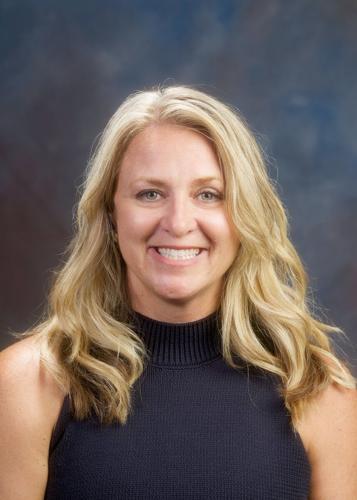
Hood River County School District School Board President Corinda Hankins Elliott.
Donations
In what is usually an inspiring — but short — end to board meetings, Hankins Elliott listed recent community donations. In total, 19 separate donations were received, including 105 $100 gift cards (worth $10,500) for Mid Valley Elementary families by an anonymous donor.
Other donations went to Wy’east Middle School (12 in total) that included sports equipment, books and items for the school’s Tuffy store; Parkdale Elementary (two) for its Día De Los Muertos event; snacks, books and supplies to Westside Elementary (three); and the district’s nutrition department to pay student meal accounts (one).
“What an amazing donation list,” said Hankins Elliott. “Our community is so generous, and we continue to thank them for all they do.”




Commented