
In Oregon, anyone over the age of 17 can donate blood or platelets independently, but 16-year-olds can donate with parental consent. In Washington, 16 and 17-year-olds require parental consent.
Donors must weigh at least 110 pounds and be in “good health,” which the Red Cross defines as “you feel well and can perform normal activities.”
Those with chronic conditions such as diabetes can donate if they are being treated and the condition is under control.
Blood can be donated about every 56 days and platelets can be donated every seven days, up to 24 times per year.
Most medications don’t disqualify you from being able to donate blood, but some require a waiting period after your final dose.
Those who are currently on prescription blood thinners, have used bovine insulin from cattle in the U.K. since 1980, have recently visited an area where malaria is found or have ever had Ebola will not be permitted to donate.
Those with low iron on the day of their appointment won’t be allowed to donate, but they can donate again as soon as their iron level increases.
If you’re unsure whether you’re eligible to donate or not, call a Red Cross eligibility specialist at 866-236-3276 to ask about your individual situation.
The American Red Cross is facing a severe blood shortage and urgently needs blood and platelet donors to give now to avoid delays in lifesaving medical care for patients, said a press release. Volunteer blood drive hosts are also critically needed to prevent the shortage from worsening this winter.
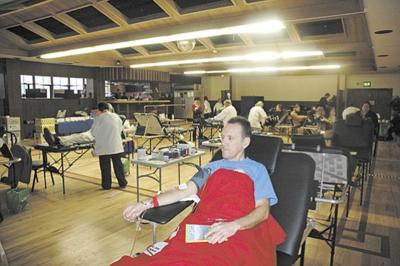
Blood drives will be held on Nov. 23 in Hood River and The Dalles from 10:30 a.m. to 3:30 p.m. at the Elks Lodge and St. Peter’s Parish Center, respectively.
The Elks Lodge’s annual blood drive yielded up to 100 donors back when it started in the ‘80s, said organizer John Buckley, but nowadays, they are lucky to get 70 or 80 people to show up. All blood types are needed this year, he said, especially due to the wildfires in California.
Fewer blood drives in September and October, coupled with hurricanes Michael and Florence, which caused thousands of blood and platelet donations to go uncollected, were key contributing factors to the current blood shortage, said an American Red Cross press release.
During September and October, the Red Cross collected more than 21,000 fewer blood and platelet donations than what hospitals needed.
“This time of year, as many give thanks for family, friends and good health, it’s important to remember that patients across the country cannot survive without your generosity,” said Cliff Numark, senior vice president of Red Cross Biomedical Services, in a press release. “From traumas to ongoing cancer treatments, the need for blood doesn’t stop for the holidays. People can give back — and help those in need — by making a lifesaving blood or platelet donation now and hosting a blood drive in the weeks to come.”
An additional 4,300 blood drives nationally — and approximately 275 blood drives in the greater Portland area — are needed in December, January and February to help stop the shortage from continuing throughout winter, said a press release.
Donations often decline during the winter holidays, when many groups postpone blood drives while regular donors are busy with holiday activities and travel. Severe winter weather may also cause blood drive cancellations, contributing to fewer donations than needed.
Blood donors of all blood types, especially type O, and platelet donors are urged to make an appointment to donate at RedCrossBlood.org or by calling 1-800-RED CROSS (1-800-733-2767).
Donors will need to bring a form of photo ID and a list of current and recently-taken medications to their appointments.
The Red Cross recommends drinking plenty of fluids and eating healthy, iron-rich foods such as red meat, fish, poultry, beans or spinach before your donation, and wearing something with sleeves that can be rolled up above your elbows.
To encourage donations around the Thanksgiving holiday, those who come to donate blood or platelets Nov. 21-24 will receive a long-sleeved Red Cross T-shirt, while supplies last.


Commented