
Hood River became the second city in Oregon to adopt a resolution calling on the Oregon Legislature to enact laws creating a price on carbon as a means to stem global warming.
“It’s a good statement, and it’s important, but we have been ignoring it,” said councilor Kate McBride, prior to Monday night’s vote during the regular Council meeting.
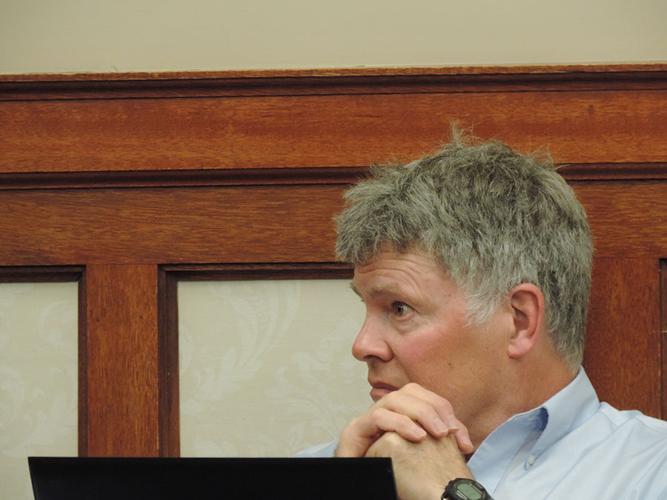
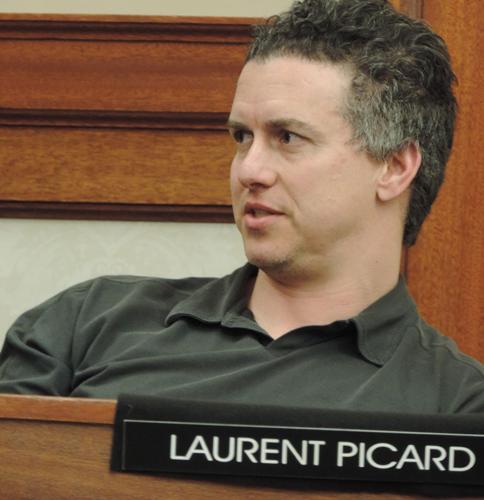
The resolution passed 5-1, with councilor Laurent Picard dissenting. Mayor Paul Blackburn joined councilors Peter Cornelison, Becky Brun, Mark Zanmiller, and McBride in supporting the resolution, a non-binding one that urged the State Legislature to adopt laws putting a price on emissions by business and industry, while creating funds to offset the impact to consumers.
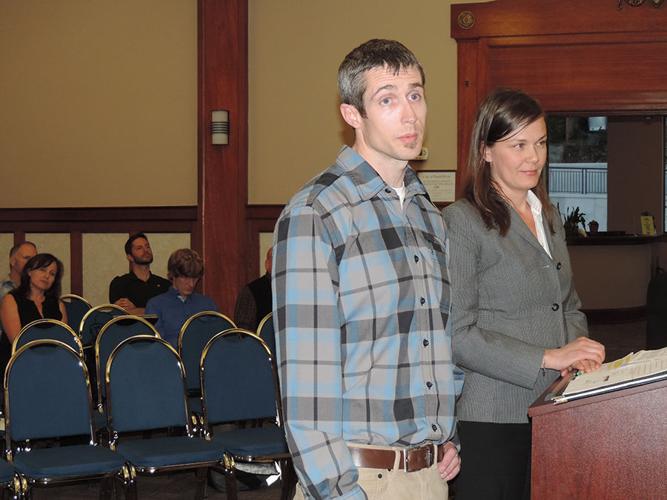
The council had put out a call for public comment and heard from five people, including two representatives of Mt. Hood Meadows, the county’s largest employer, who said the firm stands behind the resolution.
“We support responsible climate action, including advocacy toward curbing carbon emissions,” said Jake Bolland, chief operating officer, and Heidi Logosz, Meadows Sustainability Manage, who highlighted the company’s composting and vehicle exhaust “idling awareness” campaigns, as well as overall carbon reductions of 11 percent and 6 percent in 2012 and 2013.
Hood River builder Mike Kitts urged the council to adopt the resolution, as did spokeswoman Page Atcheson of the non-profit climate advocacy group Oregon Climate.
“Climate change is an urgent threat. Any small gesture will lead to other small gestures,” Kitts said.
“Resolutions from cities and counties lend a strong voice to our state’s desire to proactively address climate change,” said Atcheson, noting that resolutions have either been passed or are being considered in Benton County, Eugene, and Corvallis. “We hope you will vote in support of this resolution tonight and continue to be part of the important statewide discussion around carbon pricing,” she said.
Hood River resident Scott Haanstad asked if the resolution was permanent and questioned the city adopting something without a sunset.
“There is nothing temporary about it,” Cornelison said. “This initiative is to change behavior.”
Picard, while acknowledging that global warming is a real problem, claimed the resolution would be “ineffectual,” that unlike past resolutions does not deal with a direct threat to health and safety, and a carbon pricing statement now will “dilute the city’s voice” on what he regards are more important, and divisive, political issues.
“We have to make our voice count where it really matters. Oil trains need to be the priority.”
He added, “I feel uncomfortable speaking for all citizens on this issue, as there are differing positions.
“Resolutions need to be used sparingly and judiciously, regardless of our good intentions,” Picard said.
Zanmiller countered that, “societally, we haven’t gotten off the ball. More measures are needed to signify where we stand and where we want the state federal governments to stand.”
“This is timely and it will matter,” Brun said. “We are being a national leader here,” she said, with few other states looking at similar carbon legislation.
“Climate change is going to have a huge impact on the poor and elderly,” Brun said. “I see it as being like coal and oil transport and other health and safety issues. If other people brought resolutions to us, I’d love to listen to how it affects them. I’m hearing from people that they mostly support this.”
Cornelison called it “the seminal issue of our time. Leadership is lacking. It may not have any effect, but we have to try. We have a bully pulpit and I think we should use it.
“I ran as a sustainability candidate and made no bones about it,” said Cornelison, who, like Brun, was elected in November. “I feel l do have the backing of people who elected me to move forward on this.”
Blackburn said he has heard from those who believe the resolution is “too much” and “too little.”
“So the beauty of it is it’s both,” said Blackburn.“I challenge anyone to tell me that in market terms a zero tax on carbon emission is the best thing.”
The resolution, modeled on one passed by the City of Eugene, states that “the City Council and Mayor under the Hood River City Charter have the authority to protect the health, safety and general welfare of its citizens and is compelled by the scientific consensus that carbon dioxide emissions are the primary cause of global climate change, and agrees that climate change is a crisis demanding immediate measures to reduce its negative effects, and the City finds that climate change is a threat to public health, national security, food security, and business supply chains.
“These societal costs of inaction are significant and outweigh the temporary economic impacts associated with the energy transition,” and “the City believes that assigning a cost to carbon dioxide emissions is one of the most efficient ways to discourage consumption of fossil fuels...”
and encourage development of alternatives, and the City finds that the Legislative Revenue Office ‘Economic and Emissions Impacts of a Clean Air Tax or Fee in Oregon (SB306)’, report #4-14, December 2014 as well as previous similar analyses concludes that imposing a price on carbon within the State of Oregon could have relatively small impacts on the economy and would significantly reduce greenhouse gas emissions.”
The resolution states that “the City believes that it is important for communities large and small to voice both their recognition of the global problems of carbon dioxide emissions and their support for local actions by the State of Oregon,” and resolves that the City of Hood River calls on the Oregon State Legislature to craft legislation carefully to impose a carbon price, in the form of a fee, tax, or cap.
Atcheson said, “Economists agree: carbon pricing is an effective, efficient and transparent way to reduce carbon emissions.” Oregon Climate is supporting two pieces of legislation now in process in Salem. Here are summaries:
HB 3176 (Carbon fee and dividend) — Beginning in 2016 all vendors of fossil fuels and vendors of electiercity generated by fossil fuels will pay a fee of $30 per ton of carbon dioxide equivalent.The fee will automatically rise by $10 per ton, adjusted for inflation, every year throghout the century. Funds generated would be distributed to Oregonians to offset increased energy costs they experience as a result of the fee.
HB 3250 (Carbon cap and dividend) — Requires vendors of fossil fuels to surrender permits for pollution to the state for each equivalent ton of carbon dioxide in the fuel or energy that they sell. Permits will be auctioned by the state, and the revenue from their sale will be held in a public trust and will not be available for general appropriations. Every September the balance of the fund will be distributed evenly among Oregon taxpayers and taxpayer dependents by mail. According to Oregon Climate, these dividends will exceed any increase in energy prices they face as a consequence of the permitting requirements.


Commented