HOOD RIVER — The Columbia River Gorge draws people from all over the world seeking the freedom to explore the outdoors. For some it is the world-class windsurfing, others the plethora of scenic hikes, lush greenery and spectacular waterfalls. However, these recreational treasures can be dangerous; a pleasant stroll on a familiar trail could lead to injury or an emergency without warning.
In a county such as Hood River, emergency teams and first responders are critical when things go awry. Among these vital teams is Search and Rescue, a volunteer-based service in the United States. With the outdoors so full of inherent risk in this region of the country, from mountain biking to whitewater rafting, to wind sports, backpacking, climbing, and much more, Search and Rescue services are essential to keeping everyone safe.
Pacific Northwest Search and Rescue (PNWSAR) is a land team first and foremost, made up of volunteer “ground pounders” who look for lost or injured hikers and backpackers. The organization is a nonprofit, relying on funds from donations and grants to operate and purchase equipment. They recruit a new SAR member every year with applications opening around December, and they take a year to train each new volunteer.
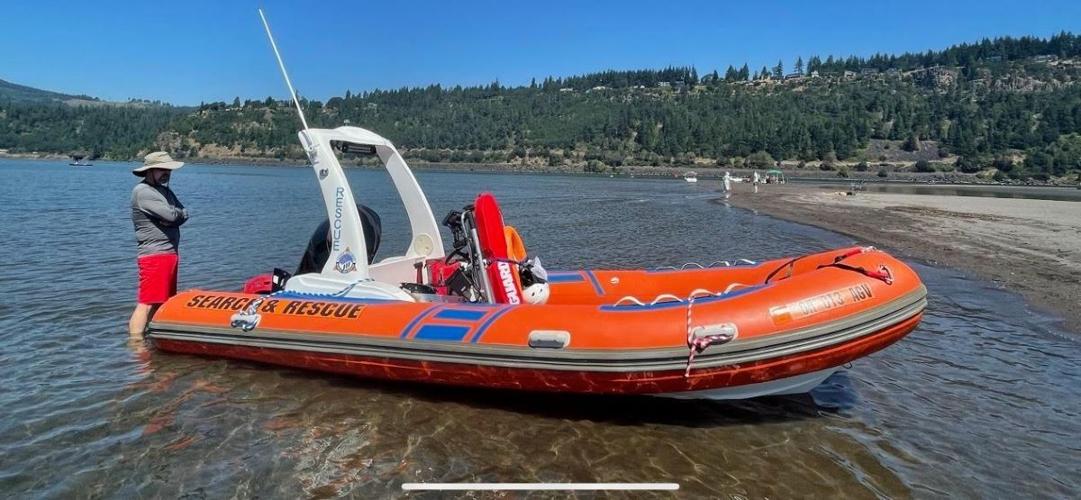
The Pacific Northwest Search and Rescue Marine Patrol boat, acquired by the department in 2022.
Rachael Penchoen-Lind photo
PNWSAR services Hood River County and recently added a new unit to their team in 2022, Marine Patrol. Volunteers are generally dispatched via calls from the Hood River County Sheriff’s Office once a 911 call has been deemed SAR-appropriate. The Marine Patrol boat also goes out most days in the summer, namely weekends.
“It’s the sheriff’s responsibility to decide when we will get deployed or if an incident should be handled another way,” said Rachael Penchoen-Lind, a member of PNWSAR.
She said her experience in Hood River has proven solid as far as communication and dispatch operations. “Outside of boating, summer tends to be a busier season with more people out recreating, but there’s no rhyme or reason to what we do,” she said.
Volunteers still have their day jobs, so the Search and Rescue process starts with a dispatch call to all team members. Any available volunteers can respond and deploy to the specified location, but availability varies based on the day of the week and time of the call. Penchoen-Lind said they generally have pretty good numbers and staffing for a majority of their missions.
The Search and Rescue team members have varying levels of medical training: Emergency management response, emergency medical technicians, nurses, paramedics and physicians' assistants, she said.
“Generally, what we’re able to do in the field is limited. Most of the time we’re stabilizing somebody until we can get them to higher medical care,” Penchoen-Lind said.
Most recently, the Marine Patrol unit participated in two successful rescue missions over the July 7 weekend during Kiteboard 4 Cancer, a fundraising event on the Columbia River.
“The wind was really heavy and made conditions harsh for rescues, but our team is very well trained to work in that environment and operate safely,” Penchoen-Lind said.
On July 8, a participant at the kiteboarding event dislocated their shoulder on the river. The Marine Patrol PNWSAR boat made their rescue with some weather-caused complications, recovered the injured athlete, and got them to the dock where paramedics were waiting to bring them to the hospital. The following day, Sunday July 9, one of the fireboss planes dealing with the Tunnel 5 Fire had to make an emergency landing on the Columbia River. Waves threatened to capsize the plane; the Marine Patrol boat steadied it until the pilot and aircraft made it to safety.
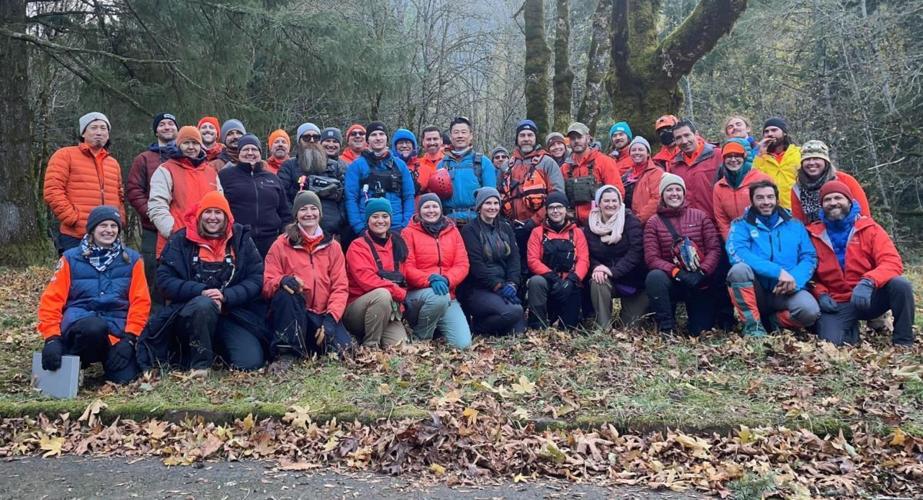
The Pacific Northwest Search and Rescue team.
Rachael Penchoen-Lind photo
Penchoen-Lind estimates the Marine Patrol boat helps at least one person every weekend day, whether to recover gear or get them to shore when tired. “Most incidents aren’t as critical as either of the Kiteboard 4 Cancer rescues,” she said.
Prior to PNWSAR acquiring the Marine Patrol boat, anyone on the river who noticed an emergency would, hopefully, help from their own watercraft.
“Us being there has been more of an official group that can help, though lots of citizens are really helpful too,” Penchoen-Lind said. The Marine Patrol team is pushing for a new boat next year, as their current one needs to be retired due to heavy use.
She said on a common misconception is that SAR costs money, but it is a free service. “Sometimes people can delay the call out because they’re worried about the price. If you need Search and Rescue, don’t delay the call,” she said.
“We’re all volunteers; there’s no need to be embarrassed or feel judged. We want everyone to be able to enjoy the outdoors and sometimes things just happen. If you need us, call!”
Calling 911 with information for Search and Rescue, like last known location or color of attire, is best to help the rescue team get started.
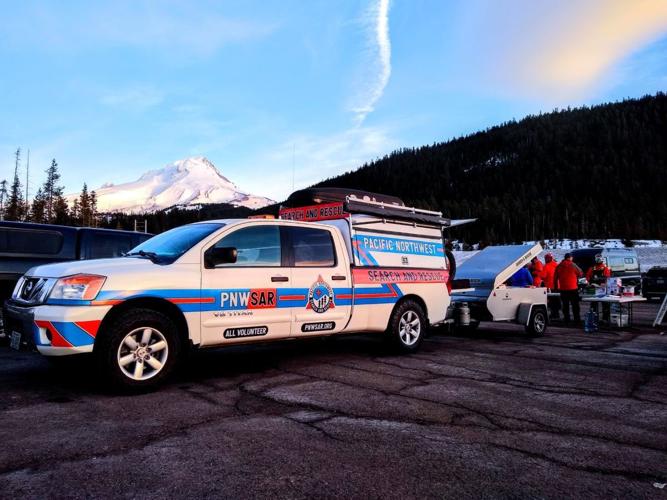
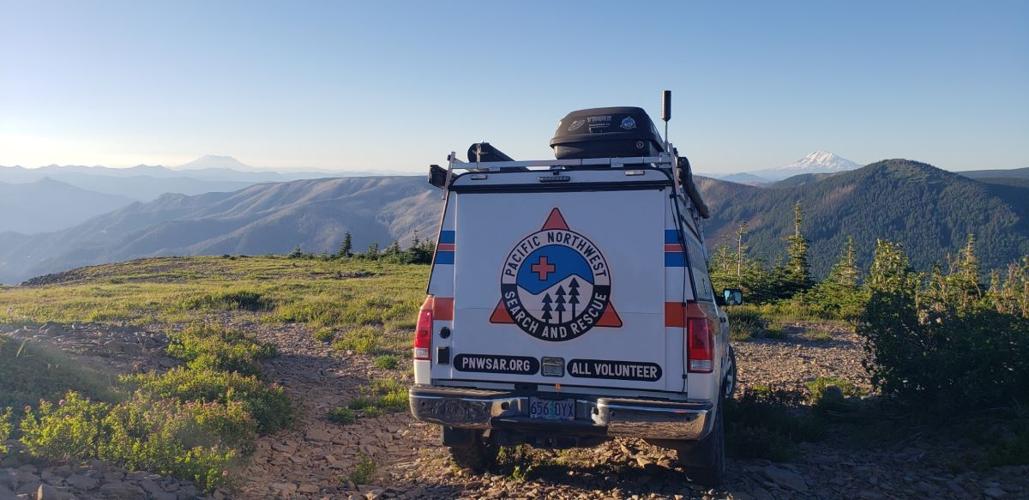
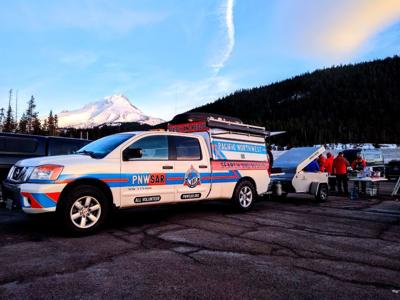
A Pacific Northwest Search and Rescue vehicle.
Rachael Penchoen-Lind photo
Though many believe you must have been reckless to require a rescue unit, inherent risks of the outdoors can factor into anyone’s day no matter experience or luck. Injuries often occur and people easily get lost or separated. Preparedness is key, like telling someone where you are going and what time to expect you back, or packing the “10 Essentials” (found on PNWSAR’s website, www.pnwsar.org) whenever leaving for a long hike.
Be aware of the temperature and elevation of your adventure, whether you will need warm layers or water-proof gear, and never leave home without extra water and a compass. Rescue missions do take time, so it is best to be prepared to wait for Search and Rescue, sometimes overnight. Remember not to split from your group, and research your trail before going in case of map updates, rockslides, or other new dangers. Signs about trail closures are best respected; it is safer to pivot and turn back than to push on and discover an unusable trail.
Search and Rescue is a tool available to support everyone. Inevitably, incidents will occur and knowing who to call or how to prepare can be the difference between life and death. People should be smart and take precautions, but remember there are teams to help in case of an emergency.



Commented