
THE DALLES — An opioid use disorder (OUD) treatment clinic is opening in The Dalles this month, and a key reason its owners decided to locate here was it had so many Gorge clients traveling more than an hour for care at its other clinics.
Called The Dalles Treatment Center, it is located between Sherwin Williams Paint Store and Mod Pizza on Mt. Hood Street. It is run by Oregon Recovery and Treatment Centers (ORTC), which has 10 clinics in Oregon and Washington.
Managers estimate they will serve anywhere from 125-150 clients, said Nicole Pantley, regional operations manager for ORTC. The facility is expected to open the second week of December.
The clinic offers methadone, the gold standard treatment for OUD, Pantley said, and Suboxone and buprenorphine.
Methadone works by reducing withdrawal symptoms and cravings. It does this by blocking opioid receptors in the brain. Methadone is the most studied and most common method for treating OUD.
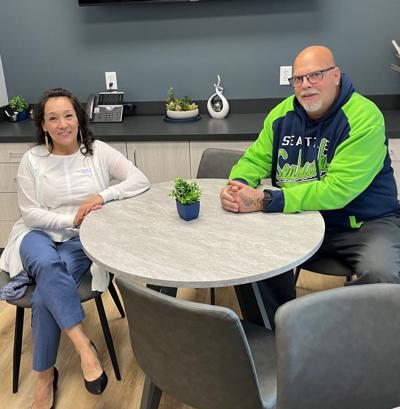
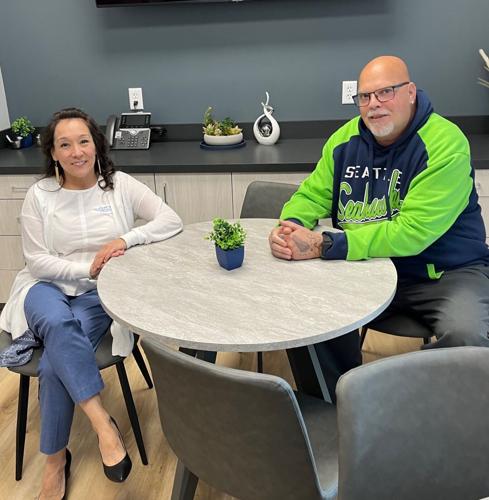
Pantley oversees this and several other locations for ORTC, and recently gave a tour to Columbia Gorge News of the new facility in The Dalles. She said the clinics are heavily regulated, requiring licensure from multiple federal and state agencies.
Pendleton Police Chief Charles Byram said of the opioid treatment clinic that has been in his town since 2018, “It doesn’t come up on my radar too often. I know there is a need for that, especially in this day and age when you want to get off the fentanyl. It’s a definitely needed resource.”
He said opioid treatment clinics will always have “people that don’t like it and people that are for it and people in the middle that don’t care. And those people in the middle outweigh the other two sides, that’s for sure.”
The clinic is open six days a week and has very early hours — from 5:30 a.m. to 1 p.m. Monday through Friday and 5-10 a.m. Saturdays. “We’ll be done medicating before most businesses around us are open,” Pantley said.
The clinic has privacy screening on the exterior windows so nobody can see inside.
The goal is to have clients get their medication early and then “go live their life.” Nearly 80% of ORTC clients have jobs, she said, and almost 80% are housed.
As clients stabilize, they can get take-home medication for longer and longer periods, she said.
Opioid treatment clinics help clients get housing and work by stabilizing their lives. Some 18% are unemployed when they start, but that drops to 11% after treatment, she said.
Clients can stay with the clinic for months or years, and the longer they stay, the better the outcome, she said. Regular screenings are done to monitor for any drug use, on a schedule set out by federal regulation.
It’s not just the medication that helps. Individual and group counseling, including for families, helps build coping skills and strengthen relationships, Pantley said.
“Our goal is to get people back to having a happy, healthy life,” she said. Perhaps the most impactful statistic behind the work the clinics do is that 67% of clients have a prior criminal history, but once they start as a client, just 5% will go on to have new criminal charges, Pantley said.
“Most importantly, success is defined by the client themselves — whether that means reconnecting with family, maintaining employment, or simply feeling safe and supported — ensuring the program is working ways that matter most to the people we serve,” she said.
The clinic tries to accommodate same-day appointments for new, walk-in clients, and can almost always do that. The intake process includes a counseling intake as well as a medical intake that includes an EKG, since methadone can affect the heart, Pantley said.
The clinic takes Medicaid, Medicare and private insurance, and they can usually get clients without insurance signed up for it, Pantley said.
“All of our clinics are very nice because that’s what they deserve,” she said. “They need somebody who is compassionate. They need someone who is gonna be there for the long run. We want our patients to be proud, they face so many barriers.”
It has four dosing booths where clients receive their liquid methadone. The clinic also has five counseling offices, a group meeting room, a medical room, and a bathroom to do observed urine drug screens.
The clinic will have onsite security personnel and has extensive cameras both inside and outside the building. “It’s a highly secured facility,” Pantley said.
The clinic offers group meetings all day long, including art groups, relapse prevention, mindfulness sessions, and working on the stages of behavior change.
The clinic will have about nine staff when fully operational.


Commented