
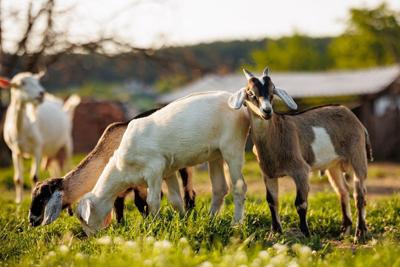
THE DALLES — If you’re a resident of The Dalles considering the urban homestead life, you’ll want to check out the city’s newest animal ordinance to ensure that your impending furred or feathered friends are allowed.
For example, if you were hoping to own a rafter of turkeys, a clowder of bobcats or a sounder of swine, you might be out of luck. However, you may be allowed to keep a tribe of goats, a drove of donkeys or a covey of quail with a permit from the city.
The updated ordinance, which passed at a regular city council meeting March 24 and will come into effect July 1, centers on clarifying the rules for the types of animals residents can keep, provisions for noise complaints, rules about animal welfare and neighborly concerns.
City Attorney Jonathan Kara noted the prior animal code lacked clarity on whether chickens, ducks, or certain types of rabbits should be considered “livestock” or “household pets,” leading to patchwork interpretation from residents and officials.
Dogs, cats, small caged rodents, and other similarly sized companion animals are classified as household pets and do not require any additional permit. Meanwhile, “livestock” now includes goats, sheep, alpacas, llamas, members of the horse family, and poultry. Within poultry, the city specifically lists chickens, ducks, geese, and quail.
Domesticated rabbits that many owners treat as indoor pets are no longer lumped into the livestock bracket, reducing confusion and paperwork for owners.
Keeping livestock will require a permit
The city expanded upon a livestock permit system intended to manage animals that can pose health and nuisance concerns in an urban environment. Unlike dog licenses, this permit would be for keeping goats or chickens in general — not each goat or chicken.
For livestock (other than poultry), the requirement is 20,000 square feet per adult animal, with additional space mandated if you surpass one.
For poultry, the city outlines three tiers:
Up to 12 birds with no lot-size requirement
Between 13 to 20 birds needing at least 10,000 square feet
More than 20 requiring an additional 1,000 square feet per bird.
Existing permit holders will be grandfathered in certain ways that do not force them to remove animals if they already exceed the new limits, though the ordinance sets conditions for compliance and includes potential revocation if a serious nuisance arises.
Kara said the chief of police may revoke a livestock permit if they find that the animal(s) are no longer in a sanitary condition, “which would include animals living in their own filth and prone to disease transmission because of the bacteria and things of that nature.”
Baa baa here and a baa baa there
One of the city’s major concerns was keeping neighbors amicable. A notable feature in the revised code is a tightened definition of “continuous annoyance.”
The standard is now set so that an animal’s repeated howling, bleating, or similar noise that lasts for 10 uninterrupted minutes, or intermittently 10 minutes in any 30 minute period can be labeled a public nuisance if it’s heard beyond the property line.
Kara noted this was a robust discussion item at the last city council meeting, where residents brought up concerns about livestock noise.
As charming as the idea of a neighbor goat peering through the fence might sound, boundary setbacks are also required for certain species, requiring livestock owners to keep their animals away from neighbor’s direct property line.
The code also notes that if 50% of a property’s neighbors have complaints about livestock, the city can revoke the holder’s permit.
How now town cow?
Residents of The Dalles brought questions to the city council about particular animals, and the potential for some gray areas around the categories.
“Before this all started, we’ve been looking at miniature Highland Scotland calves to buy for weed abatement,” said Debbie Richard, noting that the updated code seemingly bars them from within city limits. In Richard’s view, the city’s definitions were overly broad and did not allow for nuance, and she asked the council to delay voting.
City officials responded by clarifying that while full-size cattle remain explicitly prohibited, the ordinance does grant the chief of police broad discretionary authority to consider allowing other animals on a case-by-case basis.
Kara commented that the main rationale for broadly prohibiting typical cattle is odor, space requirements, and potential neighborhood impacts.
Count your chickens
Another resident, Jesse Trosper, shared with the council his plans to establish a self-sufficient urban homestead on his property, noting he currently has 18 chickens on his lot. Trosper said he would like to raise meat chickens, which grow to a harvestable size in 6 to 8 weeks.
“One of my future plans was to raise about 40 meat birds,” Trosper described. “By the time I take them to be harvested in Hillsboro, they would be considered adults.”
City Manager Matthew Klebes explained that the updated ordinance tries to accommodate exactly these kinds of temporary fluctuations by allowing 1.5 times the number of permitted adults for young poultry under one year old. This is designed so owners can expand their flocks seasonally without running afoul of the law.
“On a hypothetical 10,000 square foot lot, you can have up to 20 chickens, have an additional 30 chicks, or young chickens under the age of year one,” Klebes said.
Still, Trosper’s vision of 40 meat birds at once likely exceeds what the base code allows on his approximately 6,100-square-foot. Kara suggested adding a provision that the chief of police could sign off on an exception would permit Trosper to raise 40 meat birds.
The council made this amendment before passing the new animal ordinance unanimously.
For a full look at the amended animal ownership requirements for the city of The Dalles, read the March 24 city council meeting packet at www.thedalles.org/government/meetings___agendas/index.php.


Commented