
Fall might be the smartest time of year to travel, and not just because of the foliage. The crowds thin, the pace slows and small towns that spend all summer overrun with visitors finally get room to breathe. There’s a real charm in arriving somewhere without a waitlist, traffic or a packed itinerary standing between you and an actual vacation.
A quarter of fall travelers are choosing small towns
A recent survey found that nearly half of U.S. adults plan to travel this fall, with driving significantly more popular than domestic flying and 25% choosing small towns as their preferred destination type. Millennials, in particular, are renting cars for the trip at nearly four times the rate of baby boomers.
Door County is almost a textbook example of the trend. Its 66-mile Coastal Byway connects small waterfront communities, orchards, parks and historic sites, making it particularly well suited to the kind of driving-heavy fall trip the Hertz survey describes.
Ephraim sets the tone for the whole peninsula
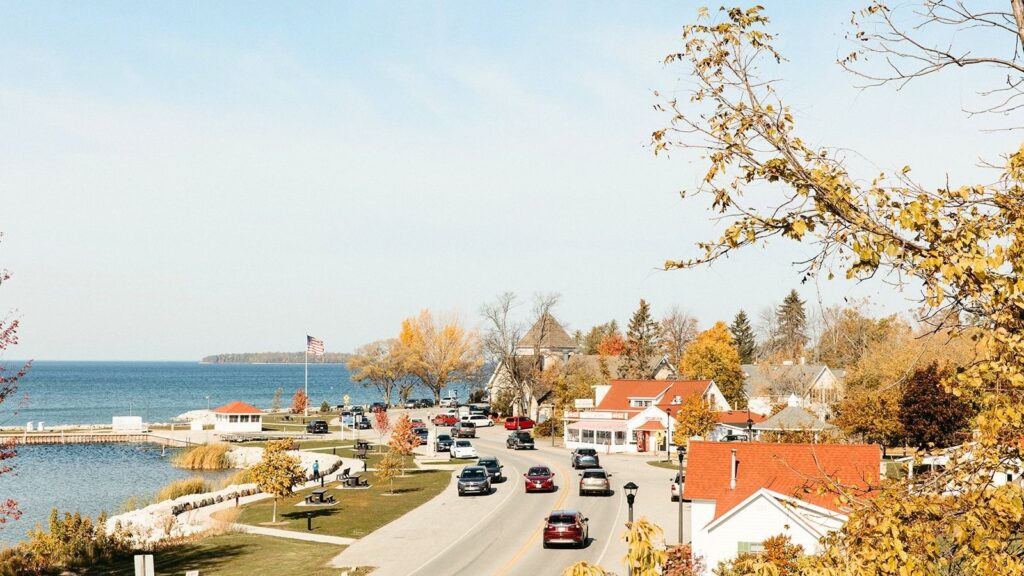
As the air cools, the village of Ephraim trades its summer bustle for a cozy, unhurried mood: cooler mornings, quieter docks and decorations that transform the historic district into something out of a postcard. A walk along the waterfront takes visitors past Anderson Dock and onto the newer North Side path, both busy in July and nearly empty by October.
Even the shops slow down. Browse the resale racks at The Simple Solution, grab a coffee at Leroy’s Water Street Coffee or play a round at Red Putter Mini Golf before letting the day come to a stop.
Pick apples instead of cherries
Sister Bay and Fish Creek turn the harvest into the main event. At Seaquist Orchards, a multi-generational family farm with 30 acres of apple trees, pick-your-own weekends run through October, and the Farm Market sells the ciders, jams and pie fillings made from what comes off the trees.
A few miles south in Fish Creek, Lautenbach’s Orchard Country has been family-run since 1955, growing 10 apple varieties across 100 acres of orchards and vineyards. Its estate wine and hard cider are made on-site, and the bakery’s cherry pie draws a line even after the cherry crowds are gone. Both properties stay open well into fall, giving visitors weeks, not days, to time a visit around.
The color show comes with its own lighthouses
Door County’s fall foliage runs along scenic highways and through village centers, but the best of it is on foot. Peninsula State Park, established in 1910, has sugar maple and white birch trails threading past bluffs more than 150 feet above the water, plus the Eagle Bluff Lighthouse, built in 1868.
In Baileys Harbor, the Ridges Sanctuary, a nonprofit nature preserve founded in 1937, runs naturalist-led foliage walks along 5 miles of trail to the Baileys Harbor Range Lights. A causeway leads out to Cana Island & Lighthouse, where 97 steps climb to a gallery deck with views back across the peninsula. None of it is tied to a single festival weekend. The lighthouses and trails stay open for self-guided touring throughout the season.
Sturgeon Bay keeps working through the season
Not every stop on the peninsula runs at resort speed. Sturgeon Bay is the county seat, with an active shipbuilding waterfront that keeps the town running year-round rather than shutting down after summer.
The Door County Maritime Museum, which draws about 95,000 visitors annually across three sites, including its Sturgeon Bay campus and the Cana Island Lighthouse grounds in Baileys Harbor, runs boat tours aboard the Schooner Utopia and the Tug John Purves alongside wooden boatbuilding classes. It’s a working-town counterpoint to the postcard villages up the peninsula, and fall is when it’s easiest to see both sides of Door County in the same trip.
Fall mood spreads well past any one village
By October, the mood spreads beyond any single village. Storefronts in Fish Creek and Sister Bay lean into the season with pumpkins and string lights, kids trick-or-treat down Main Street and Egg Harbor’s wineries and art galleries fill up as the foliage along Whitecliff Road turns. None of it is scheduled around one weekend on a calendar. It’s simply what the peninsula looks like once summer traffic clears out and the people who live here get their villages back for a few months.
Washington Island is how far some travelers go for quiet
For those who want to go further, a 5-mile ferry ride across the strait known as Death’s Door leads to Washington Island, which has a year-round population of around 600. It has more than 40 miles of quiet backroads for biking, running and paddling. Each fall, islanders press their own cider from apples grown right there. It’s the peninsula’s clearest answer to a simple question: How far are you willing to go to actually get away?
Jennifer Allen is a retired chef turned traveler, cookbook author and nationally syndicated journalist; she’s also a co-founder of Food Drink Life, where she shares expert travel tips, cruise insights and luxury destination guides. A recognized cruise expert with a deep passion for high-end experiences and off-the-beaten-path destinations, Jennifer explores the world with curiosity, depth and a storyteller’s perspective. Her articles are regularly featured on the Associated Press Wire, The Washington Post, Seattle Times, MSN and more.
The post Nearly half of Americans plan fall travel, and small towns are winning them over appeared first on Food Drink Life.


Commented