
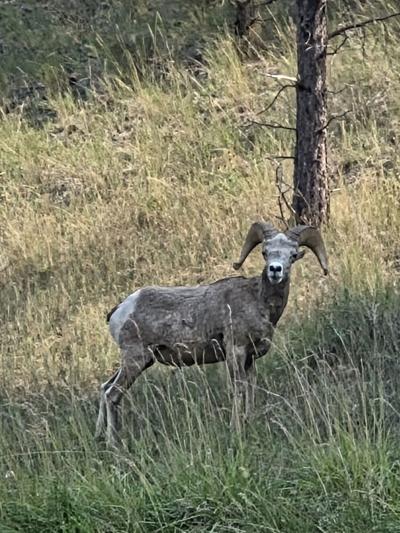
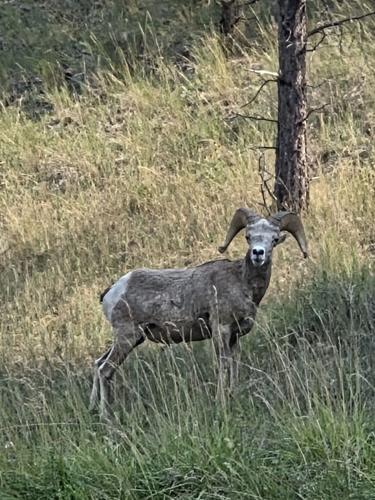
HELENA, Mont. — A Montana resident paid a $20,000 fine after collecting a sheep’s reproductive material during a guided hunt and selling it to a private ranch owner in Vaughn.
The case traced back to 2019 and centered on Arthur Schubarth, who was sentenced in 2024 to six months in prison for his role in an effort that lasted nearly a decade. Authorities said that effort focused on creating giant sheep hybrids to sell to captive hunting facilities.
NonStop Local spoke with a fish and wildlife ecology and management expert, who said cases like this were uncommon but still raised concerns for conservation in North America.
“We're just struggling to recover bighorn sheep throughout North America, and we don't need these kinds of activities to potentially threaten conservation and recovery of bighorn sheep,” said Doctor Robert Garrott, Montana State University professor of fish and wildlife ecology management.
Montana has about 5,700 bighorn sheep, and Garrott explained that some buyers want animals with larger horns as trophies. He said the chance to profit from that demand could push people to break the law.
“Some people are going to pay a lot of money to harvest the bighorn sheep with large horns, there is incentive then to try to create bigger and bigger trophies for that small class of people that are going to spend a lot of money in hybridization of bighorn sheep with other types of sheep that have larger horns is one potential way to create some market value,” said Garrott.
There is also a federal law at the center of the case. The Lacey Act restricts the sale and trade of an animal’s reproductive material across state lines.
Montana Fish, Wildlife and Parks officials said rules like that are meant to stop disease from being introduced and spreading while protecting native wildlife. In this case, two sheep in the hybrid-created herd tested positive for Johne’s disease, which officials described as highly contagious and deadly for bighorn sheep.
The agency said it is grateful it got control of the situation when it did.


Commented