
As National Barbecue Day approaches on May 16, this year’s grilling season looks a little different. Higher beef prices push many backyard cooks to rethink what goes on the grill, moving away from meals built around a single premium cut and toward menus that start with more affordable proteins.
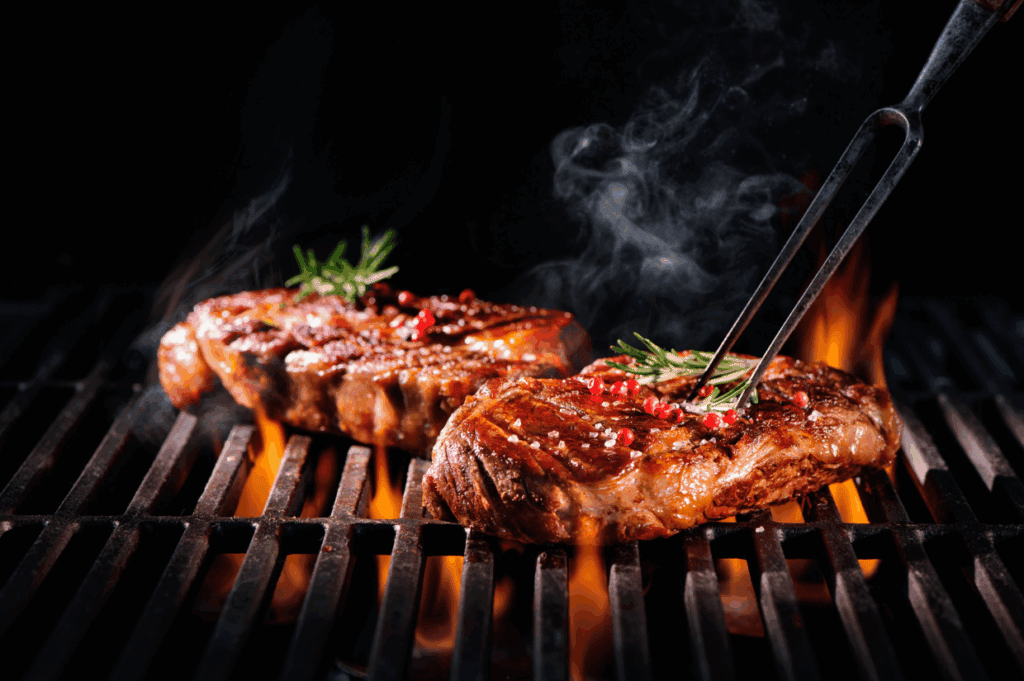
Data from the American Farm Bureau Federation shows the cost of a typical summer cookout is still 19% higher than it was five years ago, with beef among the most expensive items in the basket. At the same time, spending on outdoor cooking continues to grow, with the U.S. grill market projected by Mordor Intelligence to reach roughly $1.41 billion in 2026.
Higher beef prices force a reset at the grill
Beef is no longer the automatic centerpiece of the cookout, and that shows up in how people plan meals before they even light the grill. Instead of buying enough steaks or burgers to carry the entire gathering, many shoppers are pulling back on volume or mixing in other proteins, reserving beef for part of the meal rather than all of it, or skipping it entirely.
That change is also shifting expectations. A cookout built entirely around steaks can start to feel like more of a splurge, and even burgers are more likely to share space with something else, like hot dogs, sausage or chicken.
“For the last few years, I’ve been making my burgers from turkey meat instead of beef, and my family loves them,” Michelle Price, owner of Honest and Truly, said. “Now, chicken is cheaper than turkey, so I’m using that, as well.”
The cookout moves from a centerpiece to a spread
As beef becomes less dominant, the structure of the cookout opens up, and instead of committing to one main dish, many cooks are building meals around multiple dishes. They’re doing this by combining chicken, pork, sausages and smaller portions of beef and burgers into a single spread. That approach makes it easier to manage costs while still putting together a grill that feels active and varied, with different cooking times, flavors and textures all working at once.
“I make sure to flavor my meat well before I place it on the grill, and poultry needs to be well chilled before you grill it so it doesn’t fall through the grates,” explained Price. “Sometimes I even freeze the patties for 15 minutes, and always make sure to oil the grates so the meat releases.”
Sides can also take up more space on the table, with grilled vegetables, pasta salads, corn, beans and other familiar dishes stretching meals and helping balance out smaller portions of higher-cost proteins. Instead of a large main dish, the meal is served with multiple options.
Even with higher costs, the cookout isn’t slowing down
Higher prices haven’t deterred people from the grill, mainly because the infrastructure is already in place. Industry data from the Hearth, Patio & Barbecue Association shows about 70% of U.S. households own a grill or smoker, which means most people don’t need to spend anything extra to keep cooking outdoors. With the equipment already in place, adjusting the menu is the easiest way to address higher costs.
That helps explain why grilling remains steady even as grocery bills rise. The cookout isn’t just about the food; it’s tied to routine, weather and social habits that don’t shift as quickly as prices do. Warmer weekends still bring people outside, and once the grill is an option, it tends to get used, even if what’s going on looks different from what it did a few years ago.
People still spend, just not in the same place
While grocery spending is under pressure, investment in outdoor cooking equipment continues to grow. Mordor Intelligence’s projected growth of the grill market points to continued demand for outdoor cooking equipment, including smokers, pellet grills and multi-function setups. Instead of pulling back entirely, spending is shifting toward tools that make grilling more versatile and extend how often it gets used.
That lines up with how cookouts are evolving. More dishes can mean more time at the grill, more hands-on cooking and more attention to how food is prepared rather than just what is served. Grilling is becoming more about the experience, and less about the high-priced meats.
A different kind of cookout
Put together, these changes point to a cookout that hasn’t disappeared but has been rebalanced. Beef is still there, but in smaller roles. Other proteins and sides fill out the table, and the meal is spread across multiple dishes rather than centered on one. What used to be defined by a single main item is now defined by how everything comes together.
“The ground turkey and chicken burgers are a huge hit and save me so much money when I’m grilling now,” Price said.
“More hot dogs, less steaks” works as shorthand for the change, not because of one direct swap, but because it captures how the entire meal is being adjusted. The grill is still the center of the gathering; the difference lies in how people build the meal around it.
Jennifer Allen is a retired professional chef and long-time writer. Her work appears in dozens of publications, including MSN, Yahoo, The Washington Post and The Seattle Times. These days, she’s busy in the kitchen developing recipes and traveling the world, and you can find all her best creations at Cook What You Love.
The post It’s grilling season, but you won’t see much of this on BBQs this summer appeared first on Food Drink Life.


Commented