
(SHARE via SWNS)
By Blaise Cloran
A stunning mosaic floor has been uncovered by archaeologists investigating the remains of a fourth-century A.D. Roman villa.

(SHARE via SWNS)

(SHARE via SWNS)
A mix of clouds and sun during the morning will give way to cloudy skies this afternoon. Slight chance of a rain shower. High 89F. Winds light and variable..
A few clouds. Areas of smoke reducing visibility at times. Low 63F. Winds light and variable.
Updated: July 20, 2026 @ 10:20 am

(SHARE via SWNS)
By Blaise Cloran
A stunning mosaic floor has been uncovered by archaeologists investigating the remains of a fourth-century A.D. Roman villa.
Archaeologists have been digging on farmland between the villages of Halberton and Sampford Peverell, in Devon, after Roman remains were first flagged by local metal detectorist John Hill in 2004.
The Saving Halberton's Ancient Roman Environment (SHARE) project, led by teams at the University of Exeter and Cotswold Archaeology, is now steadily revealing the hidden Roman site.
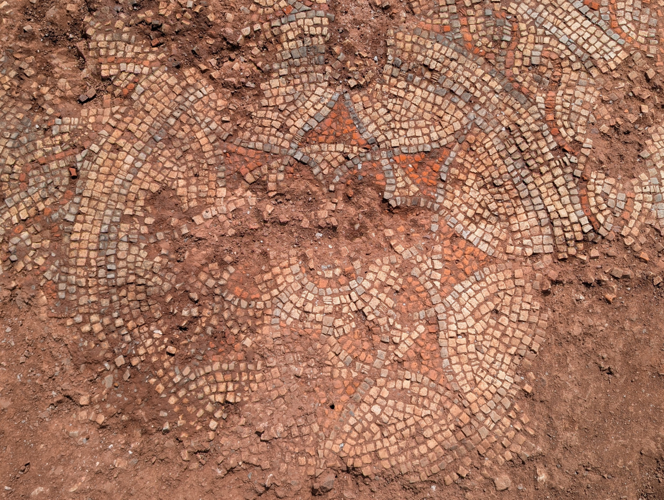
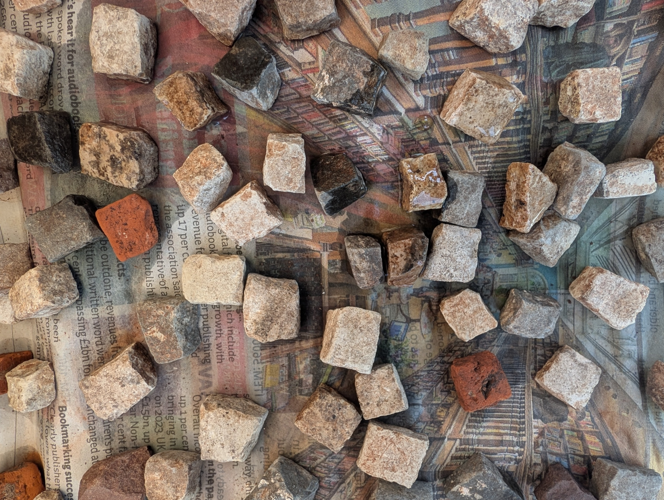
The latest discovery, tiny 12 mm square stone cubes, forms a rare mosaic that features a stylized flower pattern at its heart with eight overlapping teardrop-shaped petals.
The mosaic is formed of thousands of red, white and dark blue cubes and would have been a decorative floor feature of the villa when it was thought to have been installed sometime in the fourth century A.D.
The string of elaborate discoveries, such as a bathhouse with at least two plunge pools, has led experts to believe the villa belonged to people of wealth and status.
(SHARE via SWNS)
By TalkerProject lead Dr. Susan Greaney, of the University of Exeter’s Department of Archaeology and History, said: “At the outset, we knew this villa, and its surrounding working areas, was an important site for understanding the ‘Romanization’ of Devon.
“But from day one, it has offered us a wealth of interesting and sometimes surprising finds in addition to this striking polychrome mosaic. We did not expect to find such an elaborate bathhouse, for example. This villa was undoubtedly home to people of wealth and high standing.”
The mosaic's interlaced squares also form a common Roman pattern of a pair of knotted lines.
Specialists are now carefully lifting the mosaic so that it can be put on display at Tiverton Museum of Mid-Devon Life, along with the other Roman artifacts found during the dig.
Bill Horner, county archaeologist and historic environment manager at Devon County Council, said: “The polychrome mosaic is the most westerly example to have been found in a villa in Roman Britain.
“This, and the other trappings of Roman civilization and evidence of affluence that have been found, show how much even this far-flung part of the province had been integrated into the Roman Empire.”
Two further stone-built buildings have been excavated, and one contains at least two large water tanks that archaeologists believe were a plunge bath.
(SHARE via SWNS)
By TalkerThe other large rectangular building may have been used for agriculture as animal bones and a worked antler were found in the area.
Other items found on the site were a delicate copper alloy bangle sitting on top of the mosaic, and a fine silver-plated spoon was unearthed in one of the villa rooms.
Roman artifacts including an intaglio depicting the goddess, Victory, have also been found.
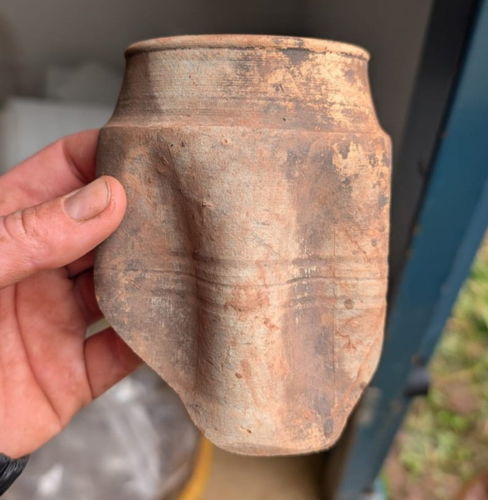
And there were also numerous pieces of pottery, including an indented beaker used for serving drinks.
The dig has been funded by a grant from The National Lottery Heritage Fund, and the SHARE project has attracted community volunteers as well as archaeology students from the university.
Councillor Jacqi Hodgson, Devon County Council’s cabinet member for the environment and biodiversity, said: “This has been a once-in-a-lifetime chance for local people to get involved in a groundbreaking excavation of a Roman villa.
“Opportunities like this are incredibly rare, and what makes this project even more special is that the public has been part of the story from the start — from the first discoveries through to the work that has helped confirm the importance of the site. Thanks to National Lottery players, local volunteers, schools and community groups have helped uncover and will protect an extraordinary piece of Devon’s Roman past.”
This year’s dig is the first of three annual visits to the site, with future excavations set to concentrate on neighboring land to find the wider estate.
Originally published on talker.news, part of the BLOX Digital Content Exchange.
Information from the News and our advertisers (Want to add your business to this to this feed?)
Success! An email has been sent to with a link to confirm list signup.
Error! There was an error processing your request.
Sign up to receive notifications when a new Columbia Gorge News e-Edition is published.
Would you like to receive our news updates? Signup today!
Receive weekly updates on obituaries and death notices.
Oregon Capital Press presented by Columbia Gorge News
Receive updates on upcoming promotions and special sections.
Receive weekly updates on local sports news.


Sorry, there are no recent results for popular videos.


Sorry, an error occurred.
Already Subscribed!
Cancel anytime
Thank you .
Your account has been registered, and you are now logged in.
Check your email for details.
Submitting this form below will send a message to your email with a link to change your password.
An email message containing instructions on how to reset your password has been sent to the email address listed on your account.
No promotional rates found.
Secure & Encrypted
Thank you.
Your gift purchase was successful! Your purchase was successful, and you are now logged in.
| Rate: | |
| Begins: | |
| Transaction ID: |
A receipt was sent to your email.

Commented