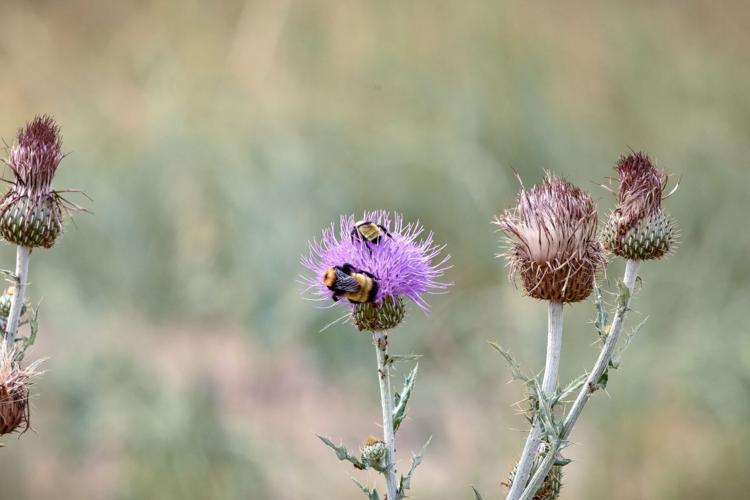
Canada Thistle is a troublesome weed that pops up in fields or pastures. This perennial can grow 3’ to 5’ tall with spiky, irregularly lobed leaves that are glossy on the top and wooly on the underside.
Canada Thistle is a troublesome weed that pops up in fields or pastures. This perennial can grow 3’ to 5’ tall with spiky, irregularly lobed leaves that are glossy on the top and wooly on the underside.
Talk to any gardener and the subject of weeds will invariably come up. There will be mentions of how much time they spend weeding (simultaneously so much and never enough!), what new or interesting weed is popping up (is that a weed or a new wildflower?) or how to prevent various types of weeds from spreading.
Among the many different weeds, invasive ones are the most pervasive which makes them, quite literally, the thorn in any gardener’s side. These pesky invaders are not merely eyesores threatening the perfect order of our lawns and garden beds; they are significant dangers to threatened and endangered species, with devastating impacts to our local ecosystems. The spread of the most intrusive of these weeds can contribute to the deterioration of our water quality and, ultimately, the loss of rare native plants and wildlife habitats.
As these super spreaders’ seeds can travel well beyond the borders of our own backyards or neighborhoods, their impacts can be far-reaching. Effective management and cooperation across communities are critical. And while management can be quite cumbersome, eradicating these invasive weeds doesn’t only help your land thrive; it helps all of those around you!
One of the most common invaders in the Columbia Gorge area is poison hemlock, a member of the parsley family that aggressively spreads in pastures, roadsides and riparian areas. This weed has fern-like green leaves and can grow up to 10 feet tall. Poison hemlock’s small white flower clusters, which bloom from April to July, resemble those of the harmless Queen Anne’s lace, so look out for the purple blotched stems that are clear markers of this weed.
The best method of removal is to pull the weed out, ensuring to get the entire taproot, and place it in the garbage. You can also try repeated mowing or plowing to remove it prior to flowering or, if all else fails, proper application of herbicides can be effective.
In all cases, be sure to wear the proper safety gear, including gloves and a dust mask, to avoid contamination when dealing with poison hemlock. This invasive weed is highly toxic; in fact, its toxins can remain in dead stems for up to three years! As acute toxicity from poison hemlock can be fatal to humans, livestock or wildlife, taking the proper safety measures is critical when handling this plant.
Canada Thistle is another troublesome weed that pops up in fields or pastures. This perennial weed can grow 3’ to 5’ tall with spiky, irregularly lobed leaves that are glossy on the top and wooly on the underside. Its ½ inch prickly pink to purple flower heads can be found blooming from June to October. The creeping lateral roots of the Canada Thistle can grow more than 3 feet deep and spread up to 20 feet wide making containment a challenge.
To effectively remove Canada Thistle, pull out the full plant, including its roots, by hand early in the season before it goes to seed. Make sure to properly bag and discard all plant parts and clean tools thoroughly after use to ensure seeds are not inadvertently spread. You can also mow or till every 3 weeks throughout the growing season. Just make sure to do this prior to flowering to avoid accidentally spreading seeds further. Repeating these methods through the season should help control the growth but diligence is key! If that doesn’t work, or becomes too cumbersome, try adding native plants that will overshadow the weeds. Canada Thistle is not shade-tolerant so a good dose of shade could help do the trick.
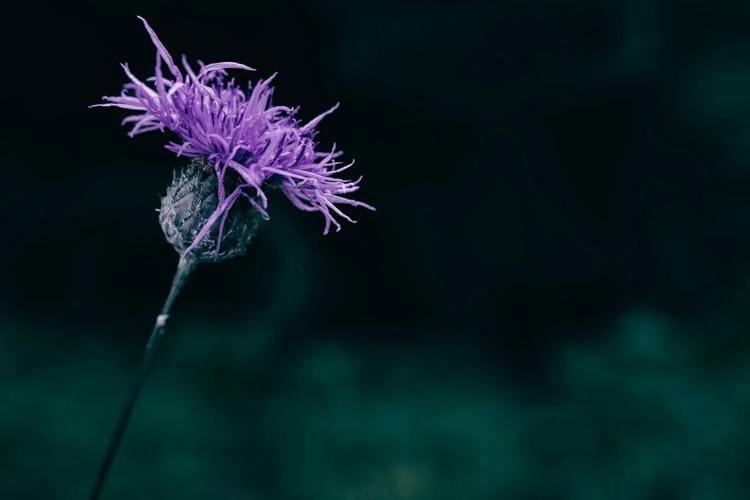
Knapweed is an invading weed that threatens pastures and grasses, causing a loss of forage for livestock and wildlife and increasing soil erosion.
Knapweed is another invading weed that threatens pastures and grasses, causing a loss of forage for livestock and wildlife and increasing soil erosion. This weed can be identified by its eye-catching pink to purple flowers, which bloom from June through September, sitting atop a tall main stem that can grow up to 40 inches tall. And while striking, don’t be tempted to let this invader linger! This pesky weed is really difficult to remove once it’s established, so it’s critical to act fast when you spot one.
Manual removal of the knapweed is the best method of control. To do this, dig out the entire plant, including the roots, before the seed heads begin forming, and place it in the garbage. Mowing is not an effective way to manage this weed as it can encourage new stem growth. Seeding land with native species can also help prevent further infestation.
These are just a few of the most pervasive and destructive weeds you might come across. Of course, there are many more invasive weeds in the Columbia Gorge area including knotweed, Tree of Heaven, Puncturevine, Scotch Broom, and Italian Arum. Luckily, the Columbia Gorge Cooperative Weed Management Area is an incredible local resource that offers advice on how to manage these weeds and many others. Find out more at columbiagorgecwma.org.
By staying vigilant, employing proper removal techniques, and supporting local initiatives, we can collectively combat the spread of invasive weeds and preserve the beauty and biodiversity of our beloved Columbia Gorge.



Commented