A new home, requesting a door like no other. The special door requested was similar to a sliding door, but with one key difference: It could lift. You may ask of these so-called “Liftslide” doors, “who would need a door to both lift up AND slide?” The answer is simple: When a door is too large to roll easily along a track or when your door has many moving panels but you just want to open a few, you want a Liftslide.
A new home, requesting a door like no other. The special door requested was similar to a sliding door, but with one key difference: It could lift. You may ask of these so-called “Liftslide” doors, “who would need a door to both lift up AND slide?” The answer is simple: When a door is too large to roll easily along a track or when your door has many moving panels but you just want to open a few, you want a Liftslide.
This past year, something special happened on the White Salmon bluff.
Like any other day, houses were being built and door technicians were setting out to install windows and doors, when a special order came in: A new home, requesting a door like no other. The fenestrators rejoiced, so rarely does an opportunity like this arise.
The special door requested was similar to a sliding door, but with one key difference: It could lift. You may ask of these so-called “Liftslide” doors, “who would need a door to both lift up AND slide?” The answer is simple: When a door is too large to roll easily along a track or when your door has many moving panels but you just want to open a few, you want a Liftslide.
A Liftslide works just like it sounds. You turn a handle to engage the wheels and “lift” the panel onto the track, then “slide” the panel along the track to the desired position, at which point you release the handle to lock it in place. Once the panels are lowered, they hide any track on the floor, creating a seamless transition between rooms or, in the case of the White Salmon bluff, between inside and outside.
This particular door, a Weiland Liftslide made by Andersen was just over 30 feet long. The track held six moving panels which, when completely open, pocket into the wall. The track, buried into the floor, is virtually invisible. These two features make possible a completely open and unobstructed opening between the inside and out, giving the homeowner the most literal definition of outside living space.
Now normally, a door this large buried into the concrete would have issues with water collecting in the track. To combat this, Weiland and Andersen designed the door to have its own plumbing system of sorts. During manufacturing, tubes are attached to weep points under the track. Then at the jobsite, these tubes receive actual PVC plumbing to create a full drainage system that runs all the water into a designated runoff area, similar to how your gutters work around your roof.
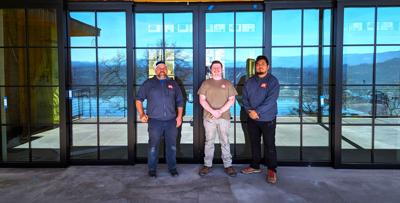
As a homeowner, one of the best features of this door is that virtually no maintenance is required. The door panels will never need to be adjusted between hot and cold seasons like a traditional sliding glass door does. The only exertion a homeowner needs to make is periodically cleaning off the sill and washing the glass when necessary. These doors will have your contractors taking pictures in front of it during install, wowing your friends when they see it and you enjoying a beautiful day outdoors in the comfort of your own home.



Commented