When COVID-19 hit in March 2020 and school went online, teachers had to scramble to find a way to understand their situation. Most teachers were faced with teaching in a completely new format with minimal training and direction, and they all had to struggle to figure something out.
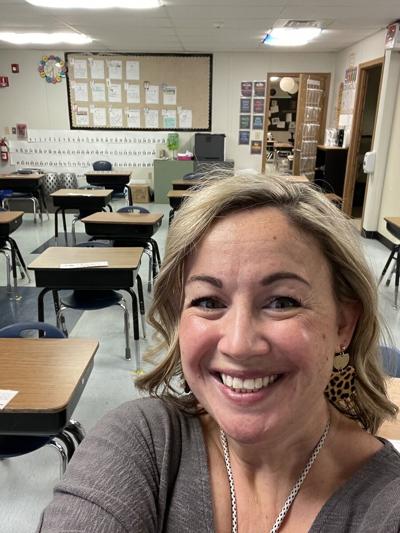
Deep dive into new technology a big part of teacher Abby Cyphers pandemic experience as a third grade teacher at The Dalles Dry Hollow Elementary.
Contributed photo
For Abby Cyphers, a current third-grade teacher at Dry Hollow Elementary who taught second grade at the time, the best way to combat the problem was to tackle it head first.
“For me, like most teachers, teaching during COVID was not ideal. It’s not something we were prepared for or were expecting and as teachers we’re kind of planners by nature, so I think our jobs changing overnight was stressful for all of us,” she said. “One thing that I did to get some control over the situation is I dove into the technology. I tried to see the things I could change in the situation and the things I could control to make my life easier and better.”
Because the school had access to the Google Workspace, they were using the Google suite, including Gmail, Classroom, and Google Drive. Though they had always had access, Cyphers said, it wasn’t something they had really taken advantage of before the pandemic.
Having to use something she wasn’t familiar with was a little intimidating at first, Cyphers said, but she went to Google’s website and found their teacher trainer portal. The portal was full of trainings for educators and she was able to go through levels one and two on her own time, she said.
“I took the exams to get level one and two certified, just so I could feel comfortable using these things that I know not everybody was really comfortable using,” Cyphers said.
After going through the trainings, Cyphers said she shared them with coworkers, especially the ones that were worried about using the technology because she knew that having more knowledge could help them be more confident.
“I’m not afraid to press buttons. That’s what I always tell people, ‘Technology is not scary, just go for it,’” she said. “If you don’t press the button you’re not going to know what it does.”
It’s difficult to engage small children through a screen, Cyphers said, and because she was teaching second graders, there were unique challenges that older students might not have faced. In order to help with engagement, she said she searched for online resources that could make things interesting.
“I tried to find what my age group and grade level would like and find things that would interest them,” she said. “And not just to stick with one thing, but to find a couple different things to mix it up, to gamify learning. So if they’re doing math, we would turn it into a game they could play online against each other.”
Now that they’re back in person, there have been new challenges, Cyphers said.
This year, she teaches second grade, which means that she’s teaching the first class who has never had a COVID-free year.
“Their kindergarten year ended in distance learning, their first-grade year was majority distance learning and it ended with a little bit of hybrid in the end unless they chose to continue online,” she said. “So this is the first group that really has not had a normal school year up until now and they definitely show it but I already see improvements throughout the last few weeks.”
Cyphers said some of the biggest challenges have been social and emotional development, since her students haven’t spent as much time together. She said it’s been important to be flexible, slowing down the curriculum as needed and giving students time to focus on social and emotional aspects.
“They went through the pandemic too,” she said. “They’re all dealing with some sort of effects from being at home.”
This year has offered other challenges as well, Cyphers said. COVID is still causing various challenges, she said.
“We’re trying very hard to balance a classroom that focuses on health and safety while also trying to manage academics,” she said.
Besides just trying to enforce masking and social distancing policies, Cyphers said, there’s also concerns with how to keep students in the loop when they’re out quarantining.
Because there’s no online alternative to being in-class, she said, it’s easy for students to get behind if they miss two weeks. There’s some work that can be done at home, though much of it is offered is on a case-by-case basis.
It’s hard to lose that hands-on learning, Cyphers said.
“You have kind of a revolving door of students coming in and out,” she said. “And it makes it difficult to move forward with the whole class when your whole class isn’t present.”
Even so, Cyphers said this year just needs to be looked at differently than other years.
“We hear a lot of people discuss the learning loss, but I don’t think you can really lose something you never had to begin with,” she said.



Commented
Sorry, there are no recent results for popular commented articles.